2026 Top Trends in Almelec Conducteur Technology and Innovation?
The Almelec Conducteur industry is on the brink of revolutionary changes in 2026. As we enter a new era of technology and innovation, experts predict remarkable advancements that will reshape our approach to electrical conduction. Dr. Emily Carter, a recognized leader in Almelec technology, states, "Innovation in Almelec Conducteur is the key to enhancing efficiency and sustainability." Her words resonate as we explore the latest trends.
In recent years, technology has rapidly evolved. The integration of AI in Almelec Conducteur systems is set to improve accuracy significantly. Moreover, sustainability practices are gaining momentum. Industries are now looking for eco-friendly materials in conductor manufacturing. It is not without challenges, however. Balancing innovation with environmental impact requires careful thought.
As we look forward, the potential of smart materials cannot be overlooked. These elements offer increased durability and performance. Yet, questions remain about scalability and affordability. Striving for improvement in Almelec Conducteur requires constant dialogue and exploration. The journey ahead is filled with opportunities and necessary reflections on our practices.

Emerging Technologies in Almelec Conducteur for 2026
Emerging technologies in Almelec Conducteur are set to transform the industry by 2026. Recent reports indicate a surge in the adoption of advanced materials and smart technology in conductor manufacturing. By 2025, the global market for conductive materials is projected to reach $5 billion, highlighting a growing emphasis on innovation.
The rise of nanotechnology in this sector is particularly notable. Nanomaterials improve electrical conductivity while reducing weight and increasing flexibility. For example, using carbon nanotubes can enhance the performance of traditional copper conductors. Additionally, advancements in composite materials could lead to lighter products with greater efficiency. These findings underscore the importance of research in guiding future developments.
However, challenges persist. The integration of these technologies can be complex and costly. Not all companies possess the resources to adopt these innovations. Data suggests that only 30% of firms are prepared for this technological shift. The industry must carefully navigate these barriers to fully realize potential benefits. Continuous adaptation will be key to staying competitive in a rapidly evolving landscape.
Innovative Applications of Almelec Conducteur in Various Industries
The innovative applications of Almelec Conducteur are transforming various industries in 2026. Recent studies indicate that the market for conductive materials is projected to surpass $45 billion by 2025. This surge reflects how critical these advanced materials have become in sectors like electronics, automotive, and renewable energy.
In electronics, Almelec Conducteur offers enhanced efficiency in circuit design. Its unique properties allow for thinner designs that maintain conductivity. For the automotive industry, this translates into lighter vehicles with lower energy consumption. According to industry reports, electric vehicle manufacturers are increasingly integrating these materials to optimize battery performance.
Tips: Consider exploring new partnerships with suppliers specializing in conductive materials. Testing various formulations can lead to improved product performance. Unearth potential cost savings through innovative sourcing strategies.
In renewable energy, Almelec Conducteur is pivotal in developing more efficient solar panels. The enhanced conductivity results in better energy conversion rates. However, challenges remain in scaling production. Not all formulations are suitable for every application, which necessitates continuous research and development. Being aware of material limitations is crucial as manufacturers strive for a competitive edge.
2026 Top Trends in Almelec Conducteur Technology and Innovation
| Trend |
Industry Application |
Innovative Application |
Impact on Efficiency |
| Smart Conductors |
Energy |
Real-time monitoring and data analytics |
Improved energy management |
| Eco-Friendly Materials |
Automotive |
Use of recyclable materials in conductor design |
Reduction in carbon footprint |
| Wireless Conducting Technology |
Telecommunications |
Wireless power transfer for devices |
Increased convenience and functionality |
| Nanotechnology Integration |
Healthcare |
Enhanced sensors for diagnostic tools |
Higher precision in medical applications |
| AI-Enhanced Production |
Manufacturing |
AI-driven optimization of conductor manufacturing processes |
Reduction in waste and cost |
Sustainability Trends in Almelec Conducteur Manufacturing
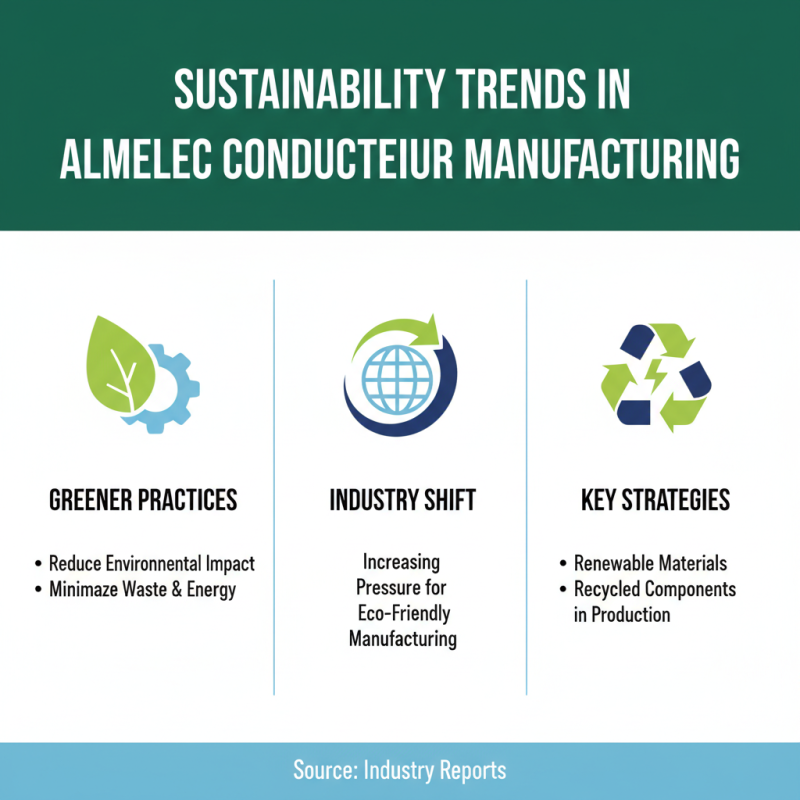
Sustainability is becoming a cornerstone in Almelec Conducteur manufacturing. Companies are adopting greener practices to reduce their environmental impact. This shift is essential, as the industry faces increasing pressure to minimize waste and energy consumption. Using renewable materials is a key strategy. For instance, recycled components are now common in production processes.
However, not every initiative is flawless. Some manufacturers struggle with the balance between cost and eco-friendly practices. Transitioning to sustainable materials can be expensive. This creates a dilemma for companies seeking to stay competitive. Additionally, efficient waste management systems are often underdeveloped. As a result, many firms find it challenging to reach their sustainability goals.
The trend towards sustainability also invites new technologies. Emerging innovations help streamline production while cutting emissions. Yet, not all solutions are scalable or practical for every business. This presents an ongoing challenge in the industry. Companies must carefully evaluate their options and seek reliable guidance. The journey towards sustainability in Almelec Conducteur manufacturing is complex, filled with opportunities for reflection and growth.
Challenges and Solutions in Almelec Conducteur Technology Development
The development of Almelec Conducteur technology faces significant challenges. One major issue is the integration of innovative materials. These materials must meet specific performance criteria while remaining cost-effective. Engineers often struggle to find the right balance. They require both durability and efficiency in their designs.
Another challenge lies in regulatory compliance. Navigating the complex landscape of regulations can be daunting for engineers. Different regions have varying standards, which adds confusion. This can slow down innovation and product rollout. Companies should invest in understanding these regulations thoroughly.
Tips: Maintain open communication with regulatory bodies. Regularly review compliance requirements to avoid surprises. Also, consider collaborating with research institutions. They can provide valuable insights into emerging technologies.
Additionally, workforce training is crucial. A skilled workforce can adapt to new technologies swiftly. Organizations must prioritize ongoing education and skill development. This ensures they keep pace with the rapid advancements in Almelec Conducteur technology. The lack of trained personnel can hinder progress and innovation.
In summary, addressing these challenges through dedication and collaboration is vital for the advancement of Almelec Conducteur technology. Progress may not always be linear, and reflection on setbacks is a key part of growth.
Future Forecast: Market Impact of Almelec Conducteur Innovations
The Almelec Conducteur technology landscape is evolving rapidly, with expected innovations set to reshape market dynamics by 2026. According to industry reports, the global market for conductor technologies is anticipated to grow at a compound annual growth rate (CAGR) of 8% through the next few years. This signifies a robust shift towards more efficient and sustainable conductor solutions.
Future innovations will likely focus on advanced materials and smart technologies. For instance, lightweight and high-conductivity materials will enhance performance and energy efficiency. The integration of IoT in conductor systems can optimize power distribution, promising significant cost savings. However, the challenge remains in balancing these innovations with environmental considerations.
Tip: Prioritize investments in research and development. Companies must stay ahead of regulations while meeting rising demand for eco-friendly options. Another key point is to remain flexible in the face of changing market needs. Understanding customer feedback can drive better design choices. Every innovation carries risks, and balancing progress with sustainability is critical.
2026 Top Trends in Almelec Conducteur Technology



 +86 13777722188
 WHATSAPP
 PHONE
PHONE E-MAIL