Top 10 Benefits of Using Aluminum Cable for Your Electrical Needs?
Aluminum cable has gained significant traction in the electrical industry due to its numerous advantages. According to a recent report by the Institute of Electrical and Electronics Engineers (IEEE), aluminum cables can reduce energy losses by up to 50% compared to traditional copper cables. Industry expert Dr. Susan Miller emphasizes, “Using aluminum cable not only enhances efficiency but also lowers costs in the long run.” This highlights the shift towards aluminum in modern electrical applications.
Moreover, aluminum cable is lightweight, making it easier and safer to handle during installations. Its resistance to corrosion adds durability, ensuring longer service life. These qualities have led to broader adoption in utility and construction sectors. Yet, the transition to aluminum cables is not without challenges. Installation practices must change, and there may be reluctance rooted in traditional methods.
The overall potential for aluminum cable is immense. As industries evolve, so does the need for innovation in electrical solutions. It is crucial to reflect on how we can better integrate aluminum cable into existing frameworks for a sustainable future.

Advantages of Aluminum Cable in Electrical Applications
When it comes to electrical applications, aluminum cable stands out for its unique advantages. It is lightweight and flexible, making it easier to handle and install. This can be especially beneficial in tight spaces or overhead installations. Its lower density compared to copper allows for significant weight savings when using long cable runs.
Using aluminum cable can lead to cost savings as well. It is generally less expensive than copper. This can reduce budget constraints for larger projects. However, aluminum requires careful handling due to its oxidizing surface. Poor connections can lead to issues later on.
Tips: Ensure all connections are tight. This prevents heat build-up. Inspect your cables regularly for signs of wear. Replacement may be necessary if you notice fraying or corrosion. Each installation is unique; consider consulting a professional for specific guidance based on local regulations.
Top 10 Benefits of Using Aluminum Cable for Your Electrical Needs
Cost-Effectiveness of Aluminum Over Copper Wiring
When considering the cost-effectiveness of aluminum cable, it’s essential to weigh its affordability against copper wiring. Aluminum is lighter and generally less expensive to produce. This can lead to significant savings on materials and transportation. For large projects, these savings can add up quickly.
Using aluminum can lower overall installation costs. However, it's crucial to know that aluminum requires careful handling. It oxidizes more quickly, which can create connections that may not be as reliable as copper. This is a factor that needs more reflection.
Tips for using aluminum wiring:
1. Ensure that connections are tight to minimize oxidation.
2. Use anti-oxidation compounds during installation.
3. Regularly inspect connections to avoid potential issues.
In the end, while aluminum can save you money upfront, careful installation is key to ensuring longevity and performance. Some may underestimate the importance of maintenance, leading to future expenses.
Top 10 Benefits of Using Aluminum Cable for Your Electrical Needs
| Benefit |
Description |
Cost-Effectiveness |
| Lightweight |
Easier to handle and install compared to copper wiring. |
Lower shipping and installation costs. |
| Resistance To Corrosion |
Does not corrode as easily as copper; longer lifespan. |
Reduced replacement costs over time. |
| Cost |
Less expensive than copper per pound. |
Significant savings on bulk purchases. |
| Conductivity |
Good conductivity with larger diameter cables. |
Cost-effective alternatives to copper in certain applications. |
| Flexibility |
Can be easily bent and shaped for installation. |
Reduction in installation time and labor costs. |
| Low Thermal Expansion |
Less expansion and contraction with temperature changes. |
Better performance and fewer issues over time. |
| Availability |
Widely available in various sizes and specifications. |
Easier to source for large projects. |
| Eco-Friendly |
Recyclable material with less impact on the environment. |
Potential regulatory and disposal cost savings. |
| Fire Resistance |
Resistant to high temperatures; reduces fire hazards. |
Potentially lower insurance premiums. |
| Sustainability |
Less energy-intensive to produce compared to copper. |
Cost savings from reduced energy use in production. |
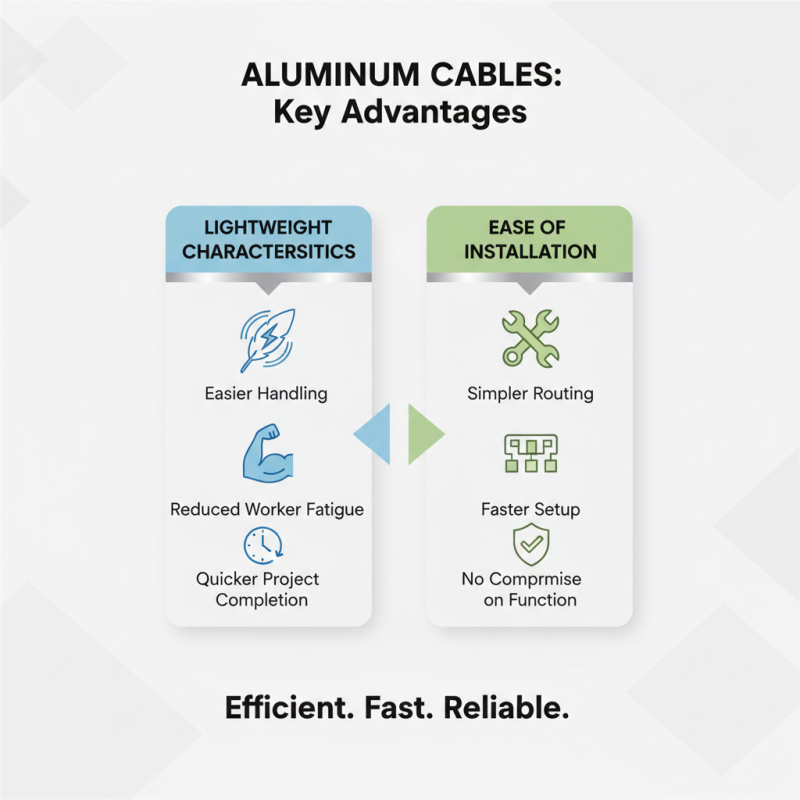
Lightweight Characteristics and Ease of Installation
When it comes to electrical installations, aluminum cables shine due to their lightweight characteristics. Unlike copper, aluminum is significantly lighter, making handling easier. This lightness reduces fatigue for workers during long installation tasks. It can often lead to quicker project completion. However, the reduced weight does not compromise its functionality.
Ease of installation is another key advantage. Aluminum cables are flexible and can be easily maneuvered around tight spaces. This flexibility allows for faster and more efficient routing. While this is beneficial, some installers may face challenges with connections. Proper fittings are crucial, as improper connections can result in inefficiencies. Moreover, workers may not always be fully aware of how to handle aluminum properly. Proper training can mitigate these issues. Not every installation goes smoothly, but understanding these characteristics makes a significant difference.
Corrosion Resistance and Durability of Aluminum Cables
Aluminum cables offer remarkable corrosion resistance, making them a top choice for various electrical applications. Unlike copper, aluminum does not corrode easily in harsh environments. This quality ensures longevity, especially in coastal areas where salt exposure is significant. Many industries benefit from this resilience, leading to reduced maintenance costs over time.
Durability is another advantage of aluminum cables. They can withstand extreme temperatures and heavy loads without losing performance. This makes them suitable for both residential and industrial settings. However, users must consider proper installation techniques. If not correctly installed, aluminum cables can develop issues over time. Ensuring that connections are secure and properly torqued is critical.
In some cases, people overlook the benefits of aluminum due to its lightweight nature. It’s easy to handle, but this can lead to assumptions about strength. Some might think it’s less robust, but that’s not the case. Aluminum cables can perform just as well as, if not better than, heavier materials in many situations. Awareness and understanding of these properties can help maximize their efficiency and safety.
Thermal Conductivity and Its Implications for Electrical Efficiency
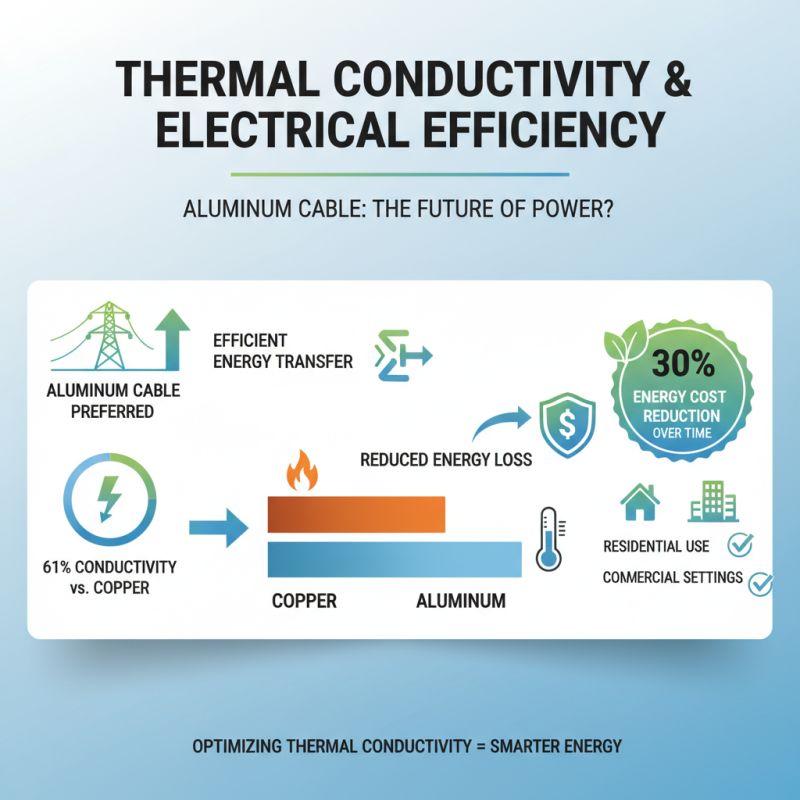
Aluminum cable is increasingly preferred in electrical applications, largely due to its remarkable thermal conductivity. With a conductivity rating of about 61% compared to copper, aluminum allows for efficient energy transfer. This efficiency reduces energy loss during transmission, making it a viable choice for both residential and commercial settings. Reports suggest that optimizing thermal conductivity can lead to a 30% reduction in energy costs over time.
Another intriguing aspect of aluminum cable is its lightweight nature. Weighing about one-third of copper, the ease of handling translates to lower installation costs. Yet, this can sometimes lead to oversights during installation. If not secured properly, aluminum can expand and contract more than copper, potentially causing connection issues. Industry experts emphasize that attention to detail is crucial. Proper crimping and the right connector type can prevent overheating and maintain optimal efficiency.
The need for regular inspections becomes essential. While aluminum has a high corrosion resistance, certain environments may still pose risks. A study highlights that maintaining proper insulation can extend the lifespan of aluminum cables by up to 50%. In conclusion, while aluminum cable offers significant benefits in thermal conductivity and efficiency, careful handling and maintenance are vital for its performance and longevity.



 +86 13777722188
 WHATSAPP
 PHONE
PHONE E-MAIL