How to Choose the Right Concentric Aluminum Cable for Your Needs?
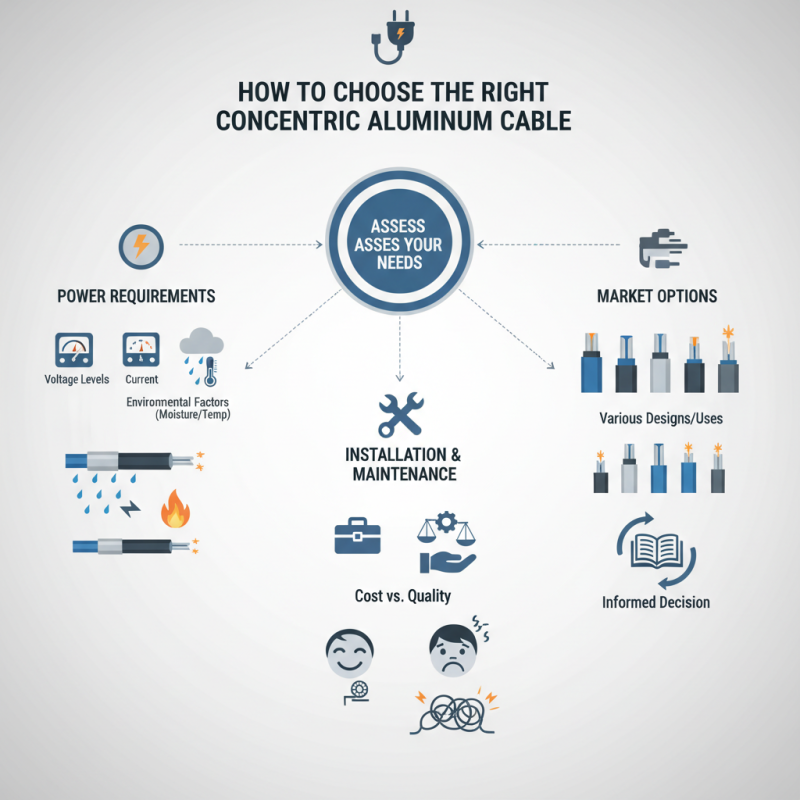
Choosing the right Concentric Aluminum Cable can feel overwhelming. Many factors influence your decision. It’s important to assess your specific requirements before making a choice. The market offers various options, each designed to fulfill different needs.
Consider the application's power requirements. Think about voltage levels, current capacity, and environmental factors. These aspects are crucial in determining the best cable for your project. For example, do you need a cable that is resistant to moisture or extreme temperatures? Some cables may not perform well under certain conditions.
Additionally, it's wise to reflect on installation ease and maintenance needs. Some Concentric Aluminum Cables require special tools or expertise. In some cases, cheaper cables may lead to future issues. Balancing cost with quality is essential. Ultimately, the more informed you are, the better your decision will be.
Understanding Concentric Aluminum Cables and Their Applications
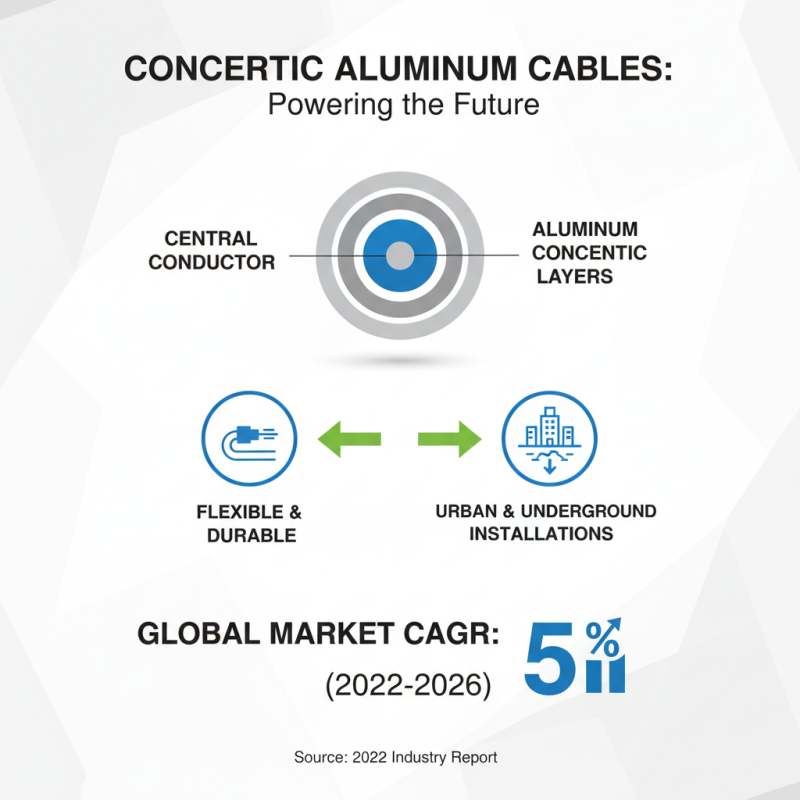
Concentric aluminum cables are gaining popularity in various applications, especially in power distribution. They feature a central conductor surrounded by concentric layers of aluminum, providing flexibility and durability. These cables are ideal for urban areas and underground installations. According to a 2022 industry report, the global market for concentric cables is projected to grow at a CAGR of 5% through 2026.
Understanding the specific needs of your application is crucial. Different configurations exist to meet various voltage and current requirements. For example, low-voltage concentric cables are often used for residential connections, while medium-voltage cables suit industrial applications. Selecting the right size ensures efficiency and safety. Keep an eye on specifications such as ampacity and voltage rating.
Tips: Always check the environmental factors before installation. Temperature, moisture, and chemical exposure can affect cable performance. Picking appropriate insulation materials is also vital. Remember, not all cables are created equal; some may not withstand harsh conditions. It’s wise to review your choices periodically and assess their performance, learning from past decisions.
Determining the Key Specifications for Your Concentric Aluminum Cable
When choosing the right concentric aluminum cable, several key specifications play a significant role. Understanding these specifications is crucial for making an informed decision. Wire gauge is one of the essential factors. It affects the current-carrying capacity and resistance. For instance, a thicker wire often handles more current and is more durable. Consider the specific requirements of your project before deciding on the gauge.
Another important specification is the cable's insulation material. Various options provide different levels of protection against environmental factors. Polyvinyl chloride (PVC) is common, but it may not be suitable for extreme temperatures. On the other hand, cross-linked polyethylene (XLPE) offers better thermal resistance. Evaluate the installation location and conditions to select the best material.
Tips: Always check the installation guidelines. Compatibility with existing systems matters. Ensure the cable meets your local industry standards. Additionally, don't overlook the length of the run. Longer distances may require larger gauge cables to prevent voltage drop. These considerations can significantly impact performance and safety. Trust your instincts. If something feels off about a choice, it might be wise to reconsider.
Assessing the Environmental Factors for Cable Selection
When selecting a concentric aluminum cable, environmental factors play a crucial role.
Temperature extremes can affect cable performance. According to a study by the Institute of Electrical and Electronics Engineers (IEEE),
high temperatures can reduce conductivity by up to 10%.
It's essential to understand local climate conditions.
Moisture is another critical factor. Cables exposed to high humidity may corrode faster.
A report from the National Electrical Manufacturers Association (NEMA) indicates that
moisture can decrease cable lifespan by 25%.
Areas prone to flooding require additional protective measures.
Consider environmental loads as well. Wind and snow can influence cable installation.
Proper support structures must be in place in regions with heavy snowfall.
A recent analysis highlighted that improper installation due to environmental neglect can lead to 15% more maintenance costs.
Always assess these factors to ensure durability and reliability in your cable selection.
Comparing Cost and Performance of Different Aluminum Cable Options
When selecting concentric aluminum cables, cost and performance are critical factors. Aluminum cables often offer a lower upfront cost compared to copper. According to industry reports, aluminum can be up to 50% less expensive than copper options. However, performance must also be evaluated. The conductivity of aluminum is about 61% of copper's, which means a larger diameter may be needed to carry the same current effectively.
The trade-offs can be significant. Using an aluminum cable helps reduce installation costs due to its lightweight nature. However, its lower tensile strength can lead to challenges during installation. Some professionals have reported issues with aluminum cables in harsh environments, suggesting that more rigorous testing is required.
Pay attention to long-term performance. While the initial savings seem attractive, maintenance costs can add up. Inappropriate connections can result in overheating. A study indicated that improper handling may decrease lifespan by nearly 30%, prompting industry experts to recommend careful consideration of installation practices. Choose wisely to balance cost and reliability.
Comparison of Cost and Performance of Different Aluminum Cable Options
Consulting Industry Standards and Guidelines for Proper Selection
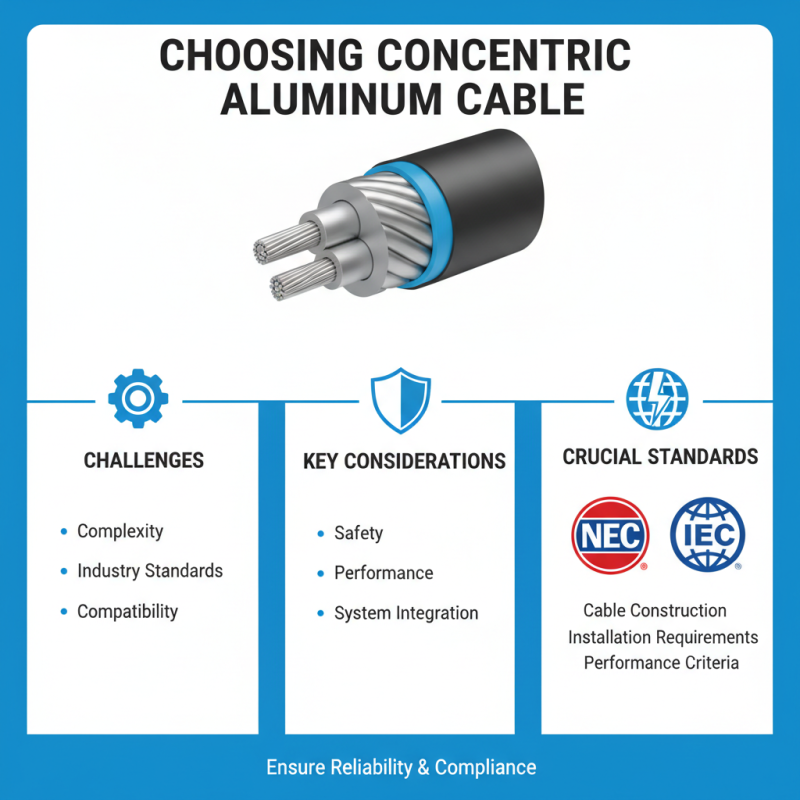
Choosing the right concentric aluminum cable can be challenging. It requires careful consideration of various industry standards and guidelines. These standards ensure safety, performance, and compatibility with electrical systems. In particular, the National Electrical Code (NEC) and International Electrotechnical Commission (IEC) standards are crucial. They provide the necessary requirements for cable construction, installation, and performance.
When selecting a cable, pay attention to specifications like ampacity and insulation type. Understanding these details can prevent potential issues. For instance, a cable that is not rated for the right temperature or environmental conditions may fail. This can lead to costly repairs and safety hazards. It's essential to consult these standards early in the selection process to avoid mistakes. Failure to do so might mean choosing cables that don't meet local regulations.
Consider the specific application and environment where the cable will be used. Think about factors like exposure to moisture, chemicals, and temperature fluctuations. Sometimes, guidelines may seem overwhelming. They can be complex and confusing. So, it's beneficial to seek expert advice if you're uncertain about any aspect. A little extra guidance can facilitate informed decisions and reduce worries.



 +86 13777722188
 WHATSAPP
 PHONE
PHONE E-MAIL