What is Concentric Cable and How is it Used in Telecommunications?
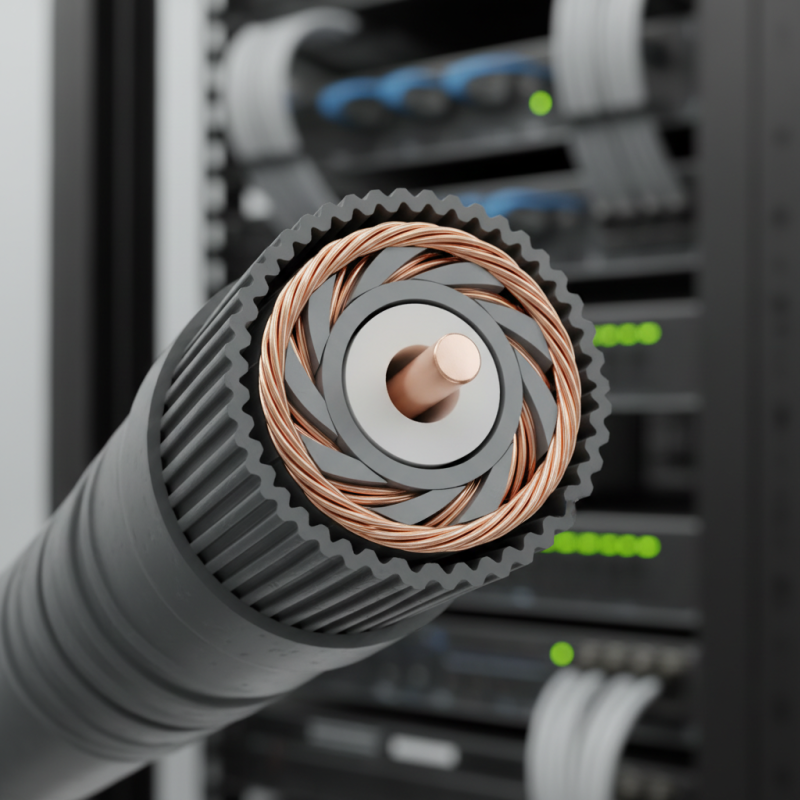
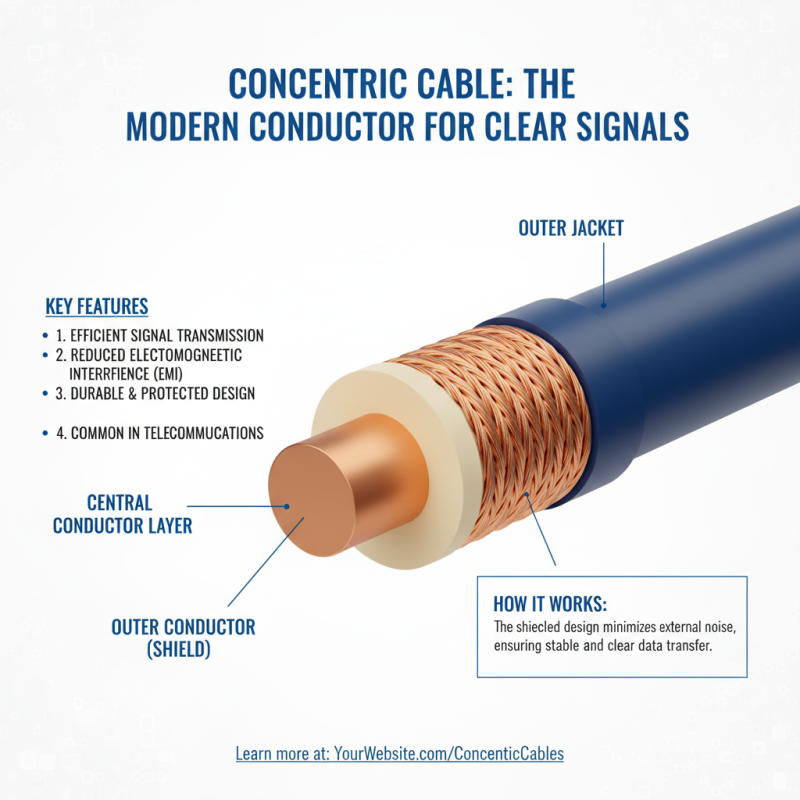
Concentric cable plays a vital role in modern telecommunications. This cable consists of a central conductor surrounded by insulating layers and outer conductors. Its design allows for efficient transmission of signals over long distances.
Telecommunications rely heavily on reliable wiring. Concentric cable provides a unique solution. It reduces electromagnetic interference and enhances performance. This means clearer signals and fewer disruptions. Many industries have begun to adopt this technology.
However, not everything is perfect. Connection issues can arise if poorly installed. Additionally, it may not suit all applications. These challenges require reflection and careful planning. Embracing innovations like concentric cable helps improve communication systems, but awareness of its limitations remains crucial.
What is Concentric Cable and Its Basic Structure in Telecommunications?
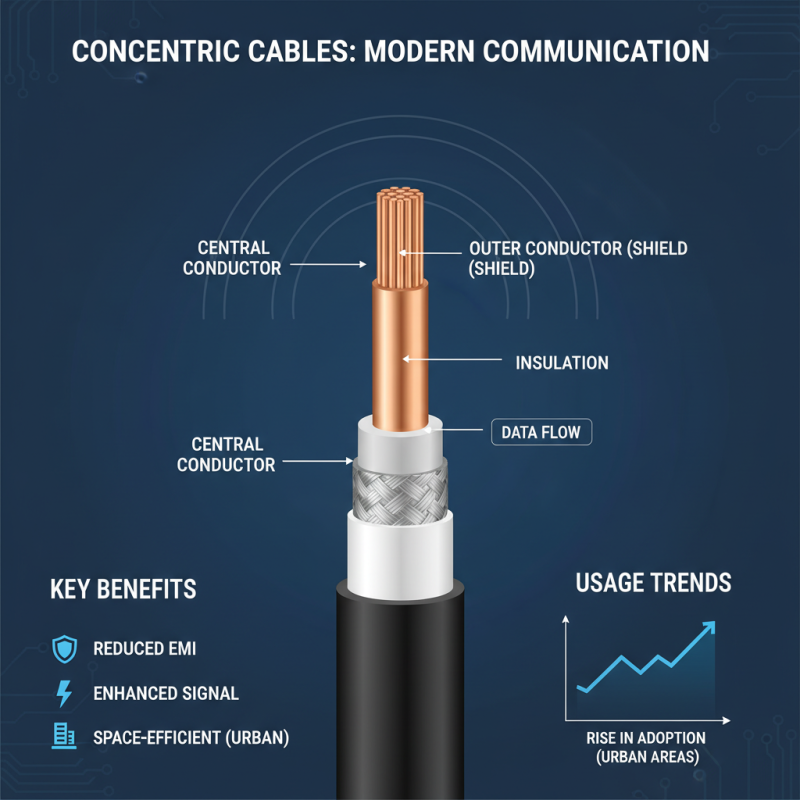
Concentric cable is a type of electrical conductor often used in telecommunications. It has a distinct structure that separates it from traditional wiring. The basic design features a central conductor, surrounded by layers of insulating material and an outer conductor. This design helps reduce electromagnetic interference, which is crucial for clear signal transmission.
In telecommunications, concentric cables play a vital role. They are often used for cable television and internet services. The arrangement allows for multiple connections while maintaining signal integrity. These cables are typically more flexible, making them easier to install in tight spaces. However, despite their benefits, they can be challenging to work with if not handled properly.
Tips: Always ensure the cable is undamaged before installation. A small tear can lead to significant signal loss. When cutting the cable, avoid using excessive force; this can cause the inner conductor to bend. Take your time to ensure a smooth installation.
Historical Development of Concentric Cable in the Telecommunications Industry
The history of concentric cable in telecommunications is quite intriguing. It began in the late 19th century. At that time, engineers sought better ways to transmit signals over long distances. They discovered that by layering conductors, they could reduce interference. This innovation led to the development of concentric cables.
These cables consist of an inner conductor surrounded by one or more outer conductors. They have unique advantages. For example, they can carry electricity and data simultaneously. This dual capability was a breakthrough in telecommunication technology. However, these cables are not without their challenges. The manufacturing process can be complex, and quality control is crucial. Small defects can lead to significant signal loss.
Over the years, concentric cables have evolved. They became essential in urban areas, where space is limited. Despite advancements, some issues remain. Installation can be cumbersome, and the material's durability varies. Engineers continue to explore ways to improve performance and reliability. The journey of concentric cable reflects the ongoing quest for better solutions in telecommunications.
Applications of Concentric Cable in Modern Communication Systems
Concentric cable plays a crucial role in modern communication systems. This type of cable consists of a central conductor surrounded by concentric layers of insulation and conductors. Its design allows for enhanced signal transmission and reduced electromagnetic interference. According to industry reports, concentric cables have seen a rise in usage, especially in urban areas where space is limited.
In telecommunications, concentric cables are used for various applications. They are favored for underground communication networks, providing reliable connectivity. These cables are often employed for delivering power and telecommunications services to remote locations. In a recent study, it was noted that concentric cables can minimize data loss by up to 30%, making them a valuable asset for data-intensive operations.
However, challenges exist. Installation costs for concentric cables are higher than for traditional cables. Maintenance can also be tricky, especially in aging infrastructures. While their performance benefits are clear, the initial investment requires careful consideration. As technology advances, the demand for reliable communication systems will continue to grow. Concentric cables might be an essential part of the future, yet their limitations need addressing.
Performance Characteristics and Advantages of Concentric Cable
Concentric cable is increasingly popular in telecommunications due to its unique design and performance characteristics. This cable consists of multiple layers, typically a central conductor surrounded by concentric insulating and conducting layers. This innovative structure reduces electromagnetic interference, making it ideal for high-frequency applications. According to industry data, concentric cables can decrease signal loss by up to 50% compared to traditional cable types.
One notable advantage of concentric cable is its compact size. It allows for more efficient installations in densely populated areas. This is crucial in urban environments where space is limited. The thermal performance of concentric cables is also noteworthy. They maintain their integrity under heat, often rated for temperatures exceeding 90°C. Such resilience is necessary for reliable telecommunications and power distribution.
However, the cost of manufacturing can be higher than standard cables, prompting ongoing discussions in the industry about balancing performance with affordability. Moreover, concentric cables offer enhanced safety features. Their design minimizes the risk of electric shock. This is vital for powering urban infrastructure. Despite these advantages, some challenges remain. Installation techniques and expert knowledge can be a barrier. The industry continues to assess how to improve training and adoption rates for this promising technology.
Future Trends and Innovations in Concentric Cable Technology
Concentric cable technology is evolving. Innovations are shaping the future of telecommunications. Recent industry reports highlight significant growth in demand. By 2025, the global market for concentric cables is expected to reach $3 billion. This growth is fueled by increased data transmission needs.
One exciting trend is the development of lighter, high-capacity cables. These cables can support faster internet speeds. They're easier to install, reducing labor costs. Furthermore, the integration of smart technology is becoming more prevalent. Smart cables can monitor performance in real-time, ensuring optimal connectivity.
**Tip:** When choosing concentric cable, consider its capacity and durability. Higher quality materials offer better performance and longevity.
Nonetheless, challenges remain. Production costs can be high, affecting widespread adoption. Additionally, the demand for eco-friendly materials is growing. Finding a balance between performance and sustainability is crucial. Industry players must reflect on these issues as they innovate.
**Tip:** Stay informed on new materials and technologies in the industry. They can significantly influence your project's success.
Concentric Cable in Telecommunications
| Attribute |
Description |
| Definition |
A type of electrical cable consisting of one conductor surrounded by another conductor, which is typically grounded. |
| Primary Use |
Commonly used for telecommunications transmissions and power distribution. |
| Advantages |
Higher immunity to electromagnetic interference, improved safety, and reduced signal loss. |
| Future Trends |
Integration with smart technology, increased demand for high-speed data transmission, and advancements in cable materials. |
| Innovations |
Development of lightweight and flexible designs, enhanced thermal properties, and multi-functional conductors. |



 +86 13777722188
 WHATSAPP
 PHONE
PHONE E-MAIL