10 Essential Tips for Choosing High Voltage Cables?
When selecting High Voltage Cables, expert John Smith emphasizes, "The right choice can prevent disasters." Cables carry immense voltage. Thus, selecting the best options is crucial. Poor choices can lead to failures or even accidents.
High Voltage Cables must meet specific quality standards. Consider factors such as insulation material and voltage rating. High-quality materials improve safety and longevity. A high voltage cable is not just a product, but an investment in reliability. Buyers often overlook certifications like ISO and CE. Not having these may lead to severe consequences.
Moreover, reflecting on the needs of your project is necessary. Consider the environment where the cables will be installed. Will they face harsh weather or chemical exposure? Poorly chosen cables can lead to unexpected costs and hazardous situations. Choosing wisely is key to ensuring safety and efficiency in any high voltage application.
Understanding the Basics of High Voltage Cables and Their Applications
High voltage cables play a crucial role in modern power systems. They are vital for transmitting electricity over long distances, which helps connect urban areas with power plants. According to the International Energy Agency (IEA), investments in high voltage infrastructure have surged by nearly 25% in recent years. This surge reflects the growing demand for renewable energy and enhanced grid stability.
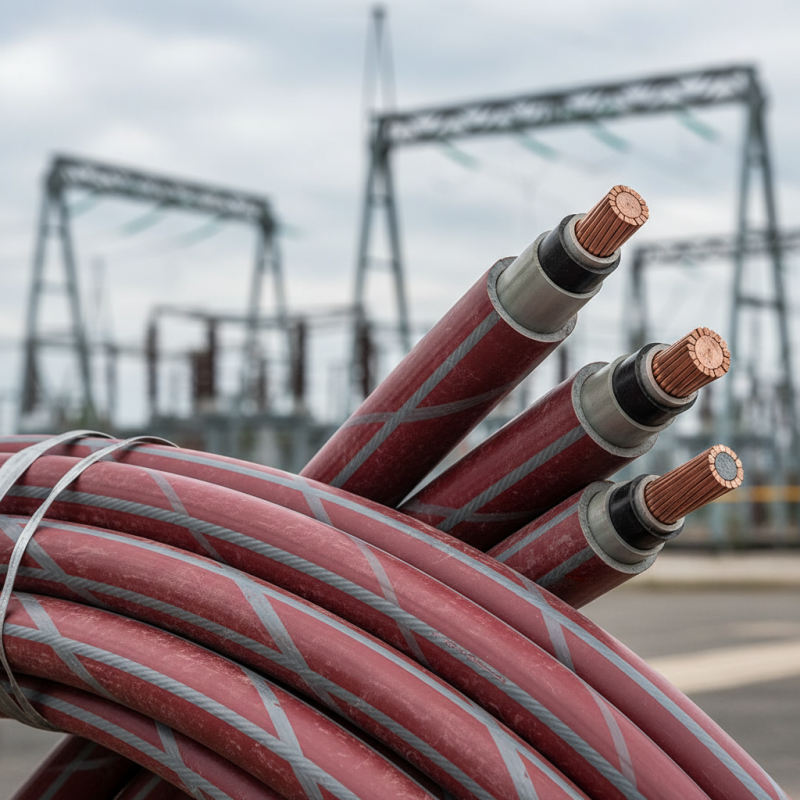
When choosing high voltage cables, understanding their applications is key. Cables are used in various sectors, including industrial, commercial, and renewable energy. It's essential to assess their insulation type, conductor material, and overall ratings based on specific needs. For example, XLPE (cross-linked polyethylene) insulation is common for its thermal and electrical stability. Many industry reports indicate that these cables can handle temperatures up to 90°C.
Tip: Always consider the environmental conditions where cables will be installed. Factors such as moisture, temperature, and chemical exposure can significantly impact cable performance. A cable that works well in one environment may fail in another.
Another important factor is to ensure cables comply with relevant safety standards. Poor quality or mismatched cables can lead to unforeseen hazards. High voltage systems require meticulous planning and stringent quality checks. Even minor mistakes can have serious consequences, which is why thorough assessment is critical.
Key Factors to Consider When Selecting High Voltage Cables
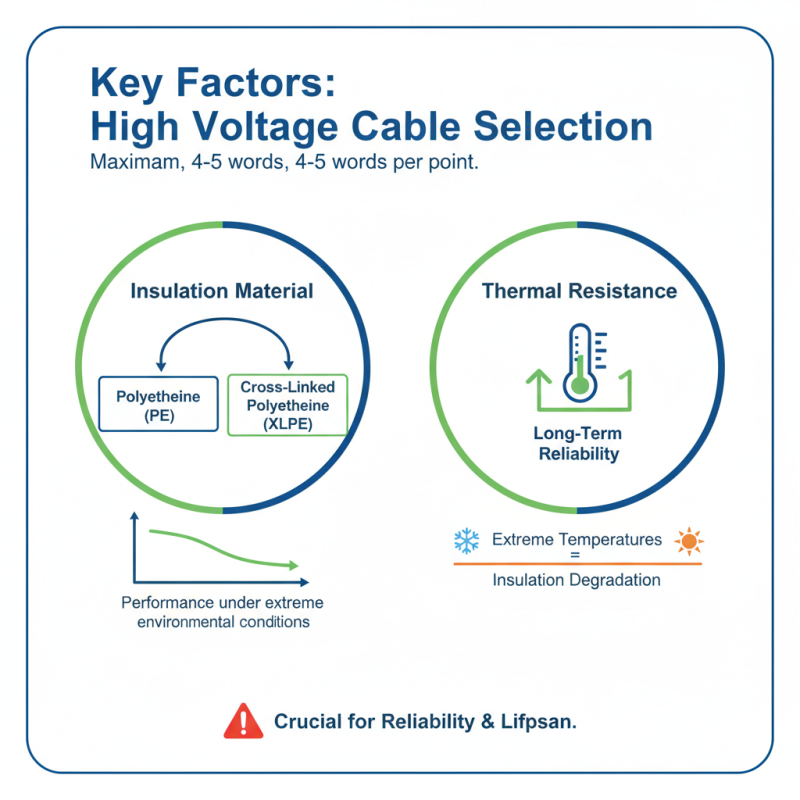
Selecting high voltage cables requires careful consideration of various key factors. One crucial aspect is the insulation material. Polyethylene and cross-linked polyethylene are widely used, but their performance varies under different environmental conditions. Studies have shown that insulation can degrade under extreme temperatures. Thus, examining thermal resistance is essential for long-term reliability.
The cable's conductor type also plays a vital role. Copper offers superior conductivity, but aluminum cables are lighter and often preferred for long distances. According to a recent industry report, copper cables can have up to 60% lower resistance than aluminum counterparts. However, cost differences must be evaluated against project budgets.
Lastly, the installation environment cannot be overlooked. Cables installed underground might face moisture issues, while overhead installations need to withstand varying weather conditions. A comprehensive risk assessment is often lacking in many projects, leading to unforeseen failures. Continuous monitoring systems can play a significant role in maintaining performance and safety.
Evaluating Material Types for Optimal Performance and Durability
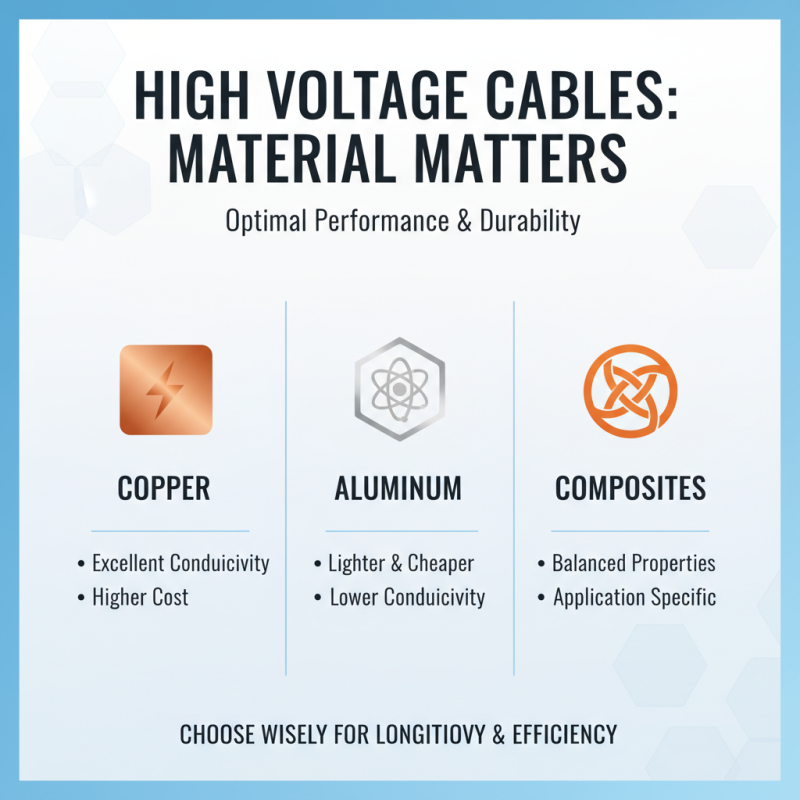
When selecting high voltage cables, evaluating material types is crucial for performance and durability. The right materials can enhance the cable's longevity and conductivity. Common materials include copper, aluminum, and composites. Each has distinct advantages and drawbacks. Copper offers excellent conductivity but can be more expensive. Aluminum is lighter and often more affordable but may have lower conductivity.
Tip: Consider the environment. If cables will face extreme temperatures, choose insulation materials designed for such conditions. They can prevent damage and extend the cable's life. Another key factor is the cable's voltage rating. Ensure materials can handle the expected voltage levels without degrading.
Tip: Don’t overlook installation conditions. Moisture, sunlight, or chemicals can compromise certain materials. Use jackets or coatings designed for the specific environment. Doing so minimizes risks of failure.
High voltage cables can be an investment. Evaluate the trade-offs between cost, performance, and durability. It’s essential to think critically about each material's capabilities. The right choice can prevent costly repairs in the future.
Assessing Voltage Ratings and Temperature Limits for Safety Compliance
When selecting high voltage cables, understanding voltage ratings is crucial for safety. Each cable has a specific voltage rating. This rating tells how much voltage the cable can handle without breaking down. A mismatch can lead to failure or dangerous situations. Always check this specification closely.
Temperature limits are equally important. Cables can be affected by heat. If a cable overheats, it might lose its insulation properties. This can lead to serious hazards. Know the operating environment and choose cables that can withstand it.
Tip one: Never compromise on quality. Cheaper options might look attractive. But they often lack the durability needed for high voltage applications.
Tip two: Inspect the insulation material. It should suit your specific environment, especially if it's exposed to extreme conditions.
Oftentimes, buyers overlook these factors. They focus too much on costs rather than safety. This can have dire consequences. Think critically about your choices and always prioritize compliance with safety standards.
Conducting Cost-Benefit Analysis for Long-Term Investment in Cables
When investing in high voltage cables, a cost-benefit analysis is crucial. This process helps determine if the initial expense is justified over time. High-quality cables may cost more upfront, but their longevity often pays off. Consider factors like installation costs, maintenance, and energy efficiency. Each element impacts the overall expenditure.
Additionally, evaluate potential risks. Cheaper cables may lead to frequent failures. This results in unexpected costs and downtime. A thorough assessment should include performance metrics. Look for cables with a proven track record. Sometimes, investing a bit more can save significant money later. Balance short-term savings with long-term stability.
Lastly, scrutinize environmental impacts. Eco-friendly cables might be pricier, but they tend to be more sustainable. Investing in green options shows social responsibility. Weigh your choices carefully. Reflect on what truly adds value to your project. Caution is key in this decision-making process.
10 Essential Tips for Choosing High Voltage Cables - Conducting Cost-Benefit Analysis for Long-Term Investment in Cables
| Tip Number |
Tip Description |
Potential Cost Savings (%) |
Longevity (Years) |
Application Areas |
| 1 |
Select appropriate insulation material |
15% |
30 |
Industrial, Utilities |
| 2 |
Consider cable size and current rating |
10% |
25 |
Power Distribution |
| 3 |
Evaluate environmental conditions |
5% |
20 |
Outdoor, Marine |
| 4 |
Assess the installation method |
12% |
15 |
Construction, Industrial |
| 5 |
Check compliance with regulations |
20% |
35 |
All sectors |
| 6 |
Select durable materials |
18% |
40 |
Utilities, Infrastructure |
| 7 |
Factor in maintenance costs |
8% |
30 |
Renewable Energy |
| 8 |
Plan for future expansion needs |
15% |
50 |
Commercial, Industrial |
| 9 |
Check supplier reputation and support |
10% |
25 |
All sectors |
| 10 |
Conduct a total cost of ownership analysis |
25% |
50 |
Industrial, Utility |



 +86 13777722188
 WHATSAPP
 PHONE
PHONE E-MAIL