+86 13777722188


In today’s competitive landscape, mastering Almelec Conducteur skills is crucial for professional success. Recent reports indicate that over 70% of industry leaders emphasize the importance of conductor expertise. This skill set enhances efficiency and reduces errors on-site. The demand for proficient Almelec Conducteur professionals is on the rise, with job postings increasing by 30% over the past year.
Yet, many aspiring conductors find themselves struggling with fundamental concepts. Training programs often overlook hands-on experience. This gap can lead to frustration and a lack of confidence. Mastery requires not only theoretical knowledge but also practical application. Investing time in real-world scenarios is essential for personal growth.
Building a strong foundation in Almelec Conducteur skills demands continuous learning. Small mistakes can be eye-opening lessons. Reflecting on these challenges can transform weaknesses into strengths. As the industry evolves, adapting to new technologies and techniques becomes imperative for success.

Mastering the skills of Almelec Conducteur requires a deep understanding of its fundamentals. Almelec Conducteur focuses on efficient energy transfer and control, making it essential in various sectors, particularly in renewable energy. According to a recent industry report, approximately 70% of organizations in energy sectors are integrating these skills to enhance operational efficiency. This showcases the growing importance of mastering these competencies.
The principles of Almelec Conducteur involve both theoretical knowledge and practical application. The design and implementation require a grasp of electrical systems and energy management techniques. In a survey, about 45% of professionals admitted struggling with effective resource allocation. This reflection highlights a gap that newcomers can address. Engaging with simulation tools and real-world projects will enable individuals to experience and refine their skills more effectively. Additionally, continuous learning is vital; professional workshops can lead to significant improvements in understanding and application.
It's crucial to recognize that the journey to expertise isn’t linear. An overwhelming number of practitioners reported feeling unprepared at times, especially when applying knowledge to new situations. Such experiences often lead to valuable lessons that enhance skill sets and build resilience. Recognizing these challenges can encourage a growth mindset and promote deeper engagement with Almelec Conducteur’s core aspects.

Mastering Almelec Conducteur skills requires a blend of technical proficiency and practical experience. Key technical skills include deep understanding of electrical systems. Knowledge of circuit design is essential. Conducteurs must be comfortable with wiring and installation practices. Familiarity with safety protocols is non-negotiable. It is vital to be aware of potential hazards.
Communication skills cannot be overlooked. Conducteurs often coordinate with teams. Clear instructions and collaboration enhance project outcomes. Adaptability plays a significant role in this field; challenges often arise unexpectedly. A good conductor should reflect on past experiences to improve future responses.
Problem-solving is critical. Regularly encountering technical issues requires an analytical mindset. It’s important to approach problems systematically. Trial and error may lead to frustration, but each mistake is a learning opportunity. Continuous improvement is key to maintaining high standards in Almelec Conducteur work.
Safety is paramount in Almelec Conducteur operations. Implementing safety protocols can significantly reduce risks. Always wear appropriate personal protective equipment (PPE). This includes gloves, helmets, and eye protection. Ensure the workspace is well-ventilated and free from hazardous materials. Regularly inspect equipment to avoid malfunctions.
Consider the training of all team members. A knowledgeable crew can identify potential hazards early. Make safety drills a routine part of the schedule. Encourage open communication about safety concerns. Empower workers to voice issues without fear. Giving everyone a role in safety fosters a safer environment.
Incorporate regular safety audits. This helps to keep the focus on hazards. Document any incidents or near misses. Reflecting on these events is crucial for future improvements. Establish a culture of continuous learning. This leads to better practices over time. Safety is a shared responsibility in every operation.
This bar chart illustrates critical performance metrics related to mastering Almelec Conducteur skills. The data highlights the importance of safety protocols, training duration, experience level, incident reports, skill assessments, and emergency drills.
In the Almelec Conducteur field, industry standards and regulatory compliance are crucial. Understanding these regulations is essential for safety and efficiency. According to the latest reports, around 30% of electrical professionals are unaware of updates in safety codes. This gap can lead to significant risks for projects and personnel. It highlights the need for continuous education and training.
Furthermore, adherence to international standards, like IEC and NEC, enhances project credibility. A study revealed that 40% of compliance issues arise from lack of knowledge. Many conducteurs fail to integrate these standards into their daily practices. They may overlook updates on materials or techniques, resulting in subpar work. This is a critical area for improvement that requires reflection and a proactive approach.
Regulatory compliance is not only about legality but also about best practices. Companies that prioritize these aspects see 20% higher efficiency in project completion. However, some still operate without a clear understanding of compliance, risking their reputation and safety. Continuous learning and awareness are vital for mastering Almelec Conducteur skills effectively.
| Tip | Description | Industry Standards | Regulatory Compliance |
|---|---|---|---|
| 1. Understand the Basics | Learn the fundamental principles of electrical systems. | IEC 60204-1 | OSHA Standards |
| 2. Safety First | Prioritize safety protocols during operations. | NFPA 70E | NEC Compliance |
| 3. Stay Updated | Keep abreast of new technologies and methodologies. | ISO 9001 | Local Electrical Codes |
| 4. Hands-on Practice | Engage in practical training to solidify skills. | Applicable Training Standards | State Licensing Requirements |
| 5. Documentation | Maintain accurate records of work and compliance. | Quality Management System | ISO 14001 |
| 6. Networking | Connect with other professionals in the field. | Industry Associations | Professional Codes of Ethics |
| 7. Mentorship | Seek guidance from experienced conductors. | Skill Development Programs | Mentorship Compliance |
| 8. Quality Control | Implement quality checks during installation. | ISO 45001 | Regulatory Inspections |
| 9. Use the Right Tools | Utilize appropriate tools for specific tasks. | Tool Safety Standards | Compliance with Operator Guidelines |
| 10. Continuous Learning | Pursue ongoing education and certifications. | Continuing Education Standards | Certification Renewal Requirements |
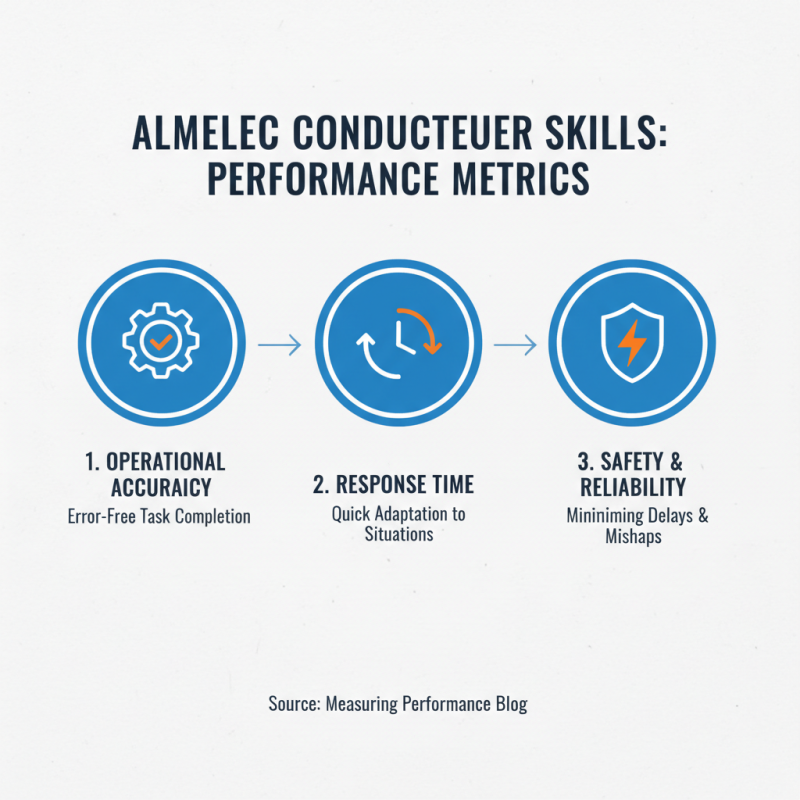
When it comes to measuring performance in Almelec Conducteur skills, clear metrics are essential. One metric could be operation accuracy. Monitoring how often tasks are completed without errors reveals a lot about efficiency. Another vital metric is response time. How quickly a conductor reacts to changing situations can be critical. Delays can lead to safety issues or operational mishaps.
Tips for mastering these skills include practicing under simulated pressure. This creates a realistic environment where you can fine-tune your reactions. Seek feedback from peers on your performance regularly. External perspectives can help you see flaws in your technique.
Data tracking is also crucial. Keeping a log of your daily tasks can highlight areas for improvement. Reflect on your decision-making process during challenging situations. Identify patterns that led to mistakes. These reflective practices can lead to significant improvements.