2026 How to Choose the Right Electrical Cable for Your Project?
Choosing the right electrical cable for your project is crucial. The right cable can ensure safety and efficiency. Incorrect selections may lead to failures or hazards.
Electrical cables come in various types and sizes. Each type serves a different purpose. Factors to consider include voltage, current capacity, and the environment. Specific projects need specific cables, yet many underestimate this aspect.
Be aware of the potential mistakes when selecting electrical cables. Sometimes, individuals overlook manufacturer's specifications or ignore safety ratings. Research and proper assessment are necessary for making informed decisions. Consider seeking advice from professionals to avoid pitfalls. This careful approach can save time and resources in the long run.
Understanding Different Types of Electrical Cables for Your Project
When embarking on an electrical project, understanding various types of electrical cables is crucial. There are three primary categories: power cables, communication cables, and control cables. Each type serves a specific purpose. Power cables transmit electricity to power devices. Communication cables facilitate data transfer. Control cables manage operations between different systems. Choosing the right type can impact efficiency.
Data from the National Electrical Manufacturers Association indicates that improper cable selection can lead to increased energy costs and downtime. For example, using inadequate cables can result in voltage drops, reducing equipment performance. Moreover, safety is paramount. Overheating and short circuits often stem from using the wrong wire gauge. This can cause significant damage, not to mention pose risks to safety.
Sometimes, less common cables, like fiber-optic or flexible cables, offer unique advantages. They may suit specialized applications where traditional cables fall short. However, the key is to ensure they meet project specifications. Many professionals skimp on research, leading to costly mistakes. Analyzing specific project needs is essential for optimal performance. Addressing these aspects can save time and reduce headaches.
Evaluating the Voltage and Current Requirements for Cable Selection
Selecting the right electrical cable is crucial. Start by evaluating voltage and current needs. Each project demands specific requirements. Voltage ratings indicate the amount of power the cable can safely carry. Exceeding this limit can lead to overheating.
Current ratings determine how much electricity passes through the cable. Too much current can cause a fire hazard. Look for local codes, as they might vary. Check the environment too. Cables exposed to sunlight, moisture, or chemicals need special consideration.
Many forget to factor in distance. Longer runs may require larger cables to reduce voltage drop. It's easy to overlook this detail but essential for performance. Consider the installation method as well. Will it be buried, or run along ceilings? Each scenario affects cable choice. Reflection and careful thought are vital in this decision-making process.
Assessing Environmental Factors Influencing Cable Performance
When selecting electrical cables, environmental factors play a significant role in performance. Temperature fluctuations can affect insulation materials. Cables exposed to extreme heat may degrade faster. In colder climates, cables might lose flexibility, leading to potential breaks.
Moisture is another critical aspect. Cables in humid environments are at risk of corrosion. This can decrease conductivity and lead to failures. Consider the soil type for underground installations. Sandy soil may expose cables to more abrasion than clay.
Lastly, UV exposure should not be overlooked. Outdoor cables require robust shields against sunlight. This helps maintain their lifespan. Reflect on your specific project needs. Each factor should be carefully evaluated. Adjusting for local conditions can make a significant difference.
2026 How to Choose the Right Electrical Cable for Your Project? - Assessing Environmental Factors Influencing Cable Performance
| Cable Type |
Temperature Range (°C) |
Moisture Resistance |
UV Resistance |
Flexibility Rating |
Cost (per meter) |
| THHN |
-20 to 90 |
Moderate |
Low |
Medium |
$0.25 |
| PVC Insulated |
-10 to 70 |
High |
Moderate |
High |
$0.30 |
| XLPE |
-40 to 90 |
Very High |
High |
Medium |
$0.40 |
| PUR |
-30 to 80 |
Moderate |
Very High |
Very High |
$0.50 |
| Silicone Rubber |
-60 to 200 |
High |
High |
Medium |
$0.70 |
Determining Cable Length and Routing Considerations
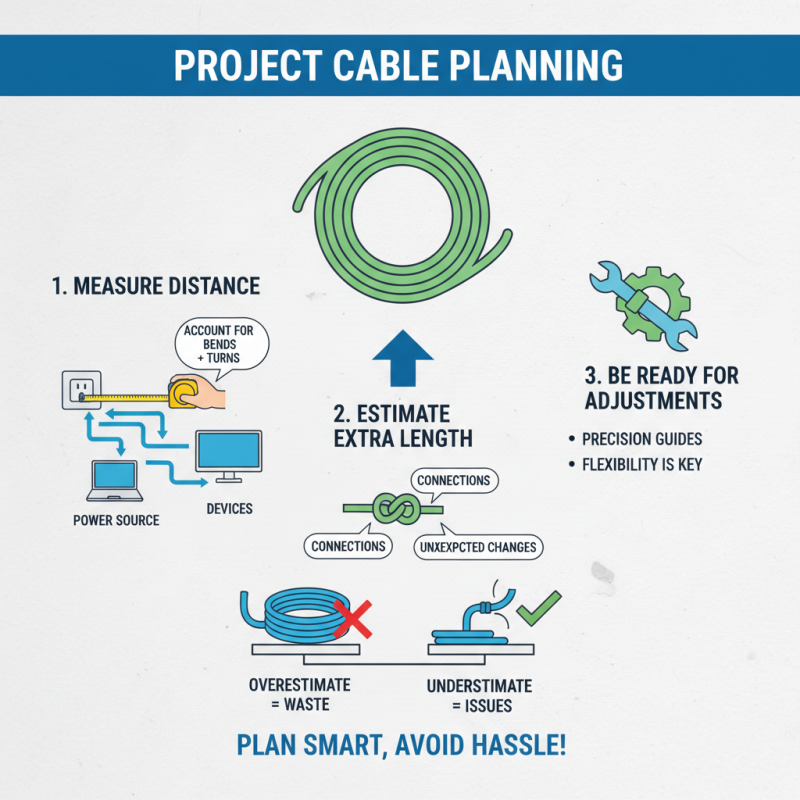
When planning a project, determining cable length and routing is crucial. Start by measuring the distance between your power source and devices. This measurement should account for all bends and turns. Use a tape measure for accuracy. Estimate extra length for connections and unexpected changes. Aim for precision, but be ready for adjustments. Overestimating can lead to waste, while underestimating may cause issues.
Routing considerations play an equally important role. Identify potential obstacles in the path. Walls, furniture, or other installations can complicate the route. Consider vertical and horizontal runs for the cable. Keep it neat and organized. It is essential to avoid sharp bends, which can damage the cable. Using clips or conduits may help secure the cable in place.
Be mindful about environmental factors. Outdoor locations expose cables to weather and temperature changes. Indoor vents or heat sources can alter cable performance. Not all cables handle humidity or extreme temperatures well. Review specifications and adapt your strategy accordingly. In the end, taking the time to plan your cable length and routing can save headaches down the line.
Safety Standards and Regulations to Guide Your Cable Choice
When choosing the right electrical cable, safety standards and regulations play a crucial role. Understanding local codes is vital. These codes dictate the type of cables that can be used in specific applications. This helps to ensure safety in residential, commercial, and industrial spaces. Ignoring these standards can lead to severe consequences, including fire hazards.
Different projects may require various types of cables. For instance, outdoor cables need additional protection from weather elements. Indoor cables must meet different specifications. Misjudging these requirements can result in using inadequate cabling, which might seem easier or cheaper at first. However, this can compromise the safety of the entire electrical system.
Always check for certifications on cables. These indicate compliance with safety regulations. If you're unsure, consulting local electricians can provide clarity. A well-informed choice is essential, yet many overlook this step. Remember, safety is not only about regulations but also about making informed decisions that protect lives.



 +86 13777722188
 WHATSAPP
 PHONE
PHONE E-MAIL