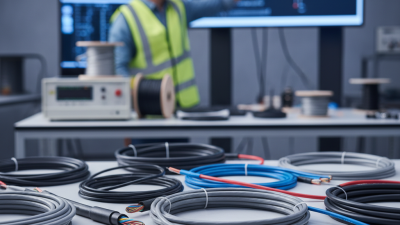
Top 10 Power Cable Types for Global Buyers in 2026?
As the demand for reliable energy solutions grows, the global market for Power Cables is undergoing significant transformation. According to the latest industry report from Research and Markets, the Power Cable market is projected to reach USD 178 billion by 2026. This growth reflects a surge in renewable energy projects and expanding infrastructure developments worldwide.
Industry expert Dr. John Smith, a renowned analyst at CableTech, emphasizes the importance of understanding the evolving Power Cable landscape. He stated, “Choosing the right Power Cable type is crucial for operational efficiency and safety.” This highlights the necessity for global buyers to be informed about various cable types, their specifications, and applications.
Power Cables come in multiple varieties, each suited to specific environments and uses. However, decision-makers often face challenges in selecting appropriate options. Limited awareness of new technologies and standards can lead to costly mistakes. As we explore the top ten Power Cable types for 2026, it's essential to reflect on these complexities while making informed choices for future energy needs.

Key Factors Influencing Power Cable Selection in 2026
Choosing the right power cable in 2026 requires careful consideration. Buyers must evaluate various factors to ensure optimal performance. The application type significantly influences this choice. For instance, industrial environments demand robust cables that can withstand harsh conditions. Conversely, residential needs may prioritize flexibility and ease of installation.
Material selection plays a crucial role as well. Copper cables offer superior conductivity, while aluminum is lighter and more cost-effective. Buyers should weigh these attributes against their specific requirements. Additionally, environmental standards are increasingly important. Cables must comply with regulations, especially in energy-efficient projects.
Buyers also face challenges in understanding the latest technologies. Emerging innovations, such as smart cables, could enhance efficiency but require significant investment. Information overload can create confusion. Striking a balance between performance and cost-effectiveness is essential. As industry standards evolve, ongoing education will be vital for making informed decisions.
Top 10 Power Cable Types for Global Buyers in 2026 - Key Factors Influencing Power Cable Selection in 2026
| Cable Type |
Conductor Material |
Max Voltage (kV) |
Typical Applications |
Weight per 100m (kg) |
| Low Voltage Cable |
Copper |
0.6/1 kV |
Residential Wiring |
50 |
| Medium Voltage Cable |
Aluminum |
3.6/6 kV |
Industrial Applications |
120 |
| High Voltage Cable |
Copper |
132 kV |
Transmission Networks |
200 |
| Submarine Cable |
Copper |
1 kV - 200 kV |
Offshore Wind Farms |
400 |
| Aerial Bundled Cable |
Aluminum |
0.6/1 kV |
Overhead Power Lines |
90 |
| Flexible Cable |
Copper |
0.6/1 kV |
Portable Equipment |
40 |
| Earth Cable |
Copper |
up to 6 kV |
Grounding Systems |
60 |
| XLPE Insulated Cable |
Aluminum |
6 kV - 35 kV |
Utilities |
150 |
| Paper Insulated Cable |
Copper |
10 kV - 220 kV |
Power Distribution |
250 |
| Composite Cable |
Copper and Aluminum |
1 kV - 35 kV |
Mixed Use |
110 |
Overview of Power Cable Types Available Globally
The power cable industry is evolving rapidly, with diverse options available for global buyers. By 2026, demand for specific power cable types is expected to rise significantly. According to the International Energy Agency (IEA), the global market for power cables is projected to grow at a CAGR of 6.2%, reaching $45 billion by 2026. This growth reflects the increasing need for efficient energy transmission solutions.
Among the available types, high voltage cables are vital for long-distance energy transport. These cables minimize energy losses and ensure reliability. In contrast, low voltage cables are suitable for residential and commercial applications. They facilitate power distribution within local grids. Data from the International Cable Association shows that low voltage cable installations are expected to account for 30% of the market share by 2026.
Additionally, cable types vary based on insulation material. Cross-linked polyethylene (XLPE) cables are preferred for their thermal stability and dielectric strength. However, challenges remain, such as variations in manufacturing quality and compatibility with existing infrastructure. The need for diligence in sourcing reliable products cannot be overstated. Buyers must prioritize quality to avoid potential issues down the line.
Top 10 Power Cable Types for Global Buyers in 2026
Comparative Analysis of the Top 10 Power Cable Types
In 2026, the choice of power cables will be crucial for global procurement strategies. Recent industry reports indicate that copper cables remain the most widely used due to their excellent conductivity. However, aluminum cables are gaining traction. Data shows that the aluminum segment is expected to grow by 6% annually, driven by lower costs and reduced weight. This shift can impact logistics and overall project budgets.
Emerging technologies also influence the market. For instance, fiber optic cables are on the rise. They provide high-speed data transmission alongside traditional power delivery. Reports highlight a projected increase in demand for mixed-use cables, which combine power conductors and fiber optics. This dual functionality can save space and streamline installation processes.
It's essential to assess cable insulation types as well. Cross-linked polyethylene (XLPE) insulations offer better thermal stability and resistance to environmental factors compared to conventional PVC. Misconceptions persist about the reliability of new materials, leading to caution among buyers. While innovations promise improved efficiency, they require thorough testing to ensure long-term performance. Experts recommend evaluating each option based on specific project requirements before making decisions.
Emerging Technologies in Power Cable Manufacturing
The landscape of power cable manufacturing is changing rapidly. Emerging technologies are reshaping how we approach this vital industry. Innovative materials, such as graphene and advanced composites, offer improved conductivity and durability. These advancements lead to lighter cables that can withstand extreme conditions.
Smart technologies are also becoming integral in power cables. Sensors embedded within cables can monitor performance in real-time. This allows for predictive maintenance, reducing downtime and costs. Data analytics play a crucial role here, identifying issues before failure occurs. Adapting to these technologies can help businesses stay competitive.
Tips: Consider investing in flexible power cables. Their adaptability makes them suitable for various applications. Explore eco-friendly options as sustainability is now a key concern. Collaborating with technology partners can enhance your capabilities and innovation. Emphasizing training for your team on new technologies can also boost efficiency and reliability. The future of power cables is bright but requires a commitment to continuous improvement and adaptation.
Market Trends and Demand Projections for Power Cables in 2026
In the rapidly evolving power cable market, understanding trends and demand projections for 2026 is crucial for global buyers. As countries shift towards renewable energy sources, the need for efficient and reliable power cables is expected to rise. The demand for high-voltage cables, especially in wind and solar projects, will continue to grow. This change is not just about making cables; it's about integrating them effectively into new infrastructure.
Tips: Consider the environmental impact of cable production. Opting for cables made from sustainable materials can enhance your brand's reputation and appeal to eco-conscious consumers.
Technological advancements will also play a key role in shaping the market. Buyers should remain informed about innovations in cable materials and designs, which can enhance performance and reduce costs. The trend towards smart grids will require cables that not only transmit power but also facilitate data communication. This presents challenges but also new opportunities for suppliers and buyers.
Tips: Regularly review your cable supplier's offerings. Ensure they are aligned with the latest industry standards and technology trends to stay competitive in the market.



 +86 13777722188
 WHATSAPP
 PHONE
PHONE E-MAIL