


 +86 13777722188
Leave Your Message
-
 WHATSAPP
-
 PHONE
-
 E-MAIL
For global buyers, choosing a Single Core Cable involves more than comparing conductor sizes and prices. A cable may look straightforward. Its insulation, voltage rating, temperature range, and installation environment still determine whether it suits a project. This guide introduces common options for 2026, from copper and aluminum conductors to PVC, XLPE, and rubber insulation. Details matter.
Different applications call for different priorities. Building wiring may require a different balance of flexibility and heat resistance than solar installations, control panels, or vehicle wiring. Buyers should review the intended use, conductor cross-section, insulation material, rated voltage, and operating conditions together. A low purchase price can be misleading if the specification does not match the installation. Not every cable fits. Product names alone rarely tell the full story.
Supplier documents help turn a shortlist into a sound decision. Check technical datasheets, applicable test reports, manufacturing details, and certificates relevant to the destination market and project. Requirements can vary, so confirm them with qualified project professionals rather than assuming one specification works everywhere. Even experienced teams can focus too heavily on conductor size; that shortcut deserves a second look. This overview compares key cable types and practical selection factors, while recognizing that no single option is right for every buyer. A careful review may take longer. It can prevent costly mismatches later.
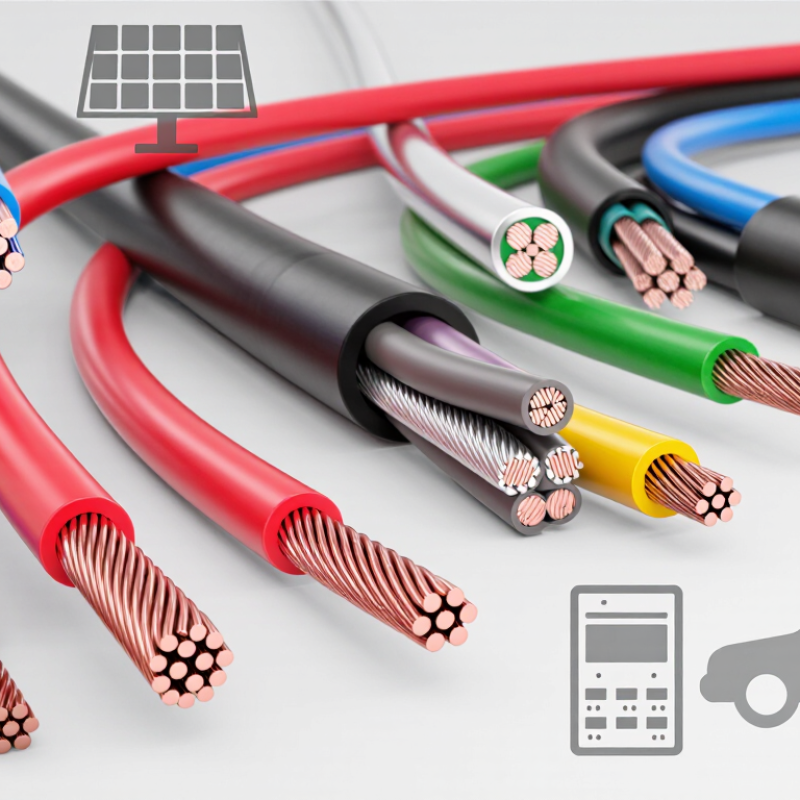
Single-core describes one insulated conductor. IEC 60228 classifies the conductor construction, not the entire cable design. Class 1 is solid; Class 2 is stranded and commonly selected for fixed wiring. Class 5 is flexible, while Class 6 uses finer strands for greater flexibility. IEC 60228:2023 specifies maximum conductor resistance values by material and nominal cross-sectional area. Check the class. Small details matter.
The International Energy Agency’s 2023 report, Electricity Grids and Secure Energy Transitions, says annual grid investment needs to rise above USD 600 billion by 2030. For buyers, that scale makes precise specifications more important: match conductor class to installation, movement, termination, and the equipment manufacturer’s requirements. A class label alone is not enough. Insulation, voltage rating, temperature limits, and installation conditions also affect suitability. A practical point can be missed: extra flexibility may help during routing, but it does not automatically make a cable right for every moving application.
Tips: Confirm the conductor class and resistance data on the technical sheet. Check that terminals accept the strand construction, especially with Class 5 or 6. If the installation details are uncertain, ask the cable supplier for written confirmation.
It has one insulated conductor. The term describes the cable’s conductor count, not its full construction.
Class 1 is solid, and Class 2 is stranded. Classes 5 and 6 are flexible, with finer strands in Class 6. Small details matter.
No. Flexible strands can help when routing around a tight bend, but they do not automatically suit repeated movement. Check the equipment requirements.
Confirm the class, conductor material, cross-sectional area, and resistance data on the technical sheet. Terminals must also accept the strand construction.
It can add mechanical protection on routes exposed to impact or crushing, such as open trenches or busy industrial areas.
It is lighter and easier to pull through protected ducts or trays. The route itself must provide adequate physical protection.
Yes. Magnetic steel armour can create heating and losses. Cable design should account for current, spacing, and armour material.
Check the installation drawing, fault level, pulling conditions, construction, and test requirements. A datasheet helps, but it cannot replace a site assessment.

