Leave Your Message

Top 10 Uses of Copper Cable in Modern Technology?

Copper Cable plays a vital role in modern technology. Its applications are vast and varied, shaping the world we live in today. From telecommunications to power distribution, copper cable is the backbone of countless systems.

In telecommunications, copper cables enable efficient data transmission. They connect homes to the internet and facilitate phone communications. This connectivity has transformed how we interact, making instant communication possible.

Power distribution is another critical application of copper cable. It efficiently carries electrical current, ensuring reliable energy supply. However, not all uses of copper cable are without challenges. Some installations may not meet modern standards. This raises questions about sustainability and future needs. As we explore the top 10 uses of copper cable, it’s important to reflect on its impact on society.

Top 10 Uses of Copper Cable in Modern Technology?

Applications of Copper Cable in Telecommunications Infrastructure

Copper cable plays a crucial role in telecommunications infrastructure. It forms the backbone of wired communication systems. Many homes and offices rely on copper cables for internet and phone services. This metal is conductive and cost-effective, making it a popular choice.

In telecommunications, copper cables connect users to the network. For instance, twisted pair cables are common in telephone lines. They carry voice and data signals efficiently. However, these cables are not without their flaws. They can be susceptible to interference, which hampers data quality. Additionally, signal strength decreases over long distances.

Copper's durability is a benefit, yet it has limitations. Older infrastructures may struggle to support modern data demands. This leads to slower internet speeds in some areas. Even so, copper cables remain a vital component in many telecommunications setups. Continuous advancements aim to improve their performance and reliability.

Top 10 Uses of Copper Cable in Modern Technology

Application Description Advantages Common Types
Telecommunications Copper cables are used for voice, data, and video transmission. High conductivity, reliable signal quality. Twisted Pair, Coaxial
Network Infrastructure Used in LAN for connecting devices. Fast data transfer rates, easy installation. Ethernet cables (Cat5, Cat6)
Home Networking Connects various home devices to the internet. Widely available, cost-effective. RCA cables, HDMI over copper
RFID Systems Used in communication between RFID tags and readers. Low resistance, excellent conductivity. RFID antennas
Surveillance Systems Transmits video feeds from cameras to monitors. Stable signal, supports long distances. Camera cables, BNC connectors
Industrial Automation Interconnects machinery and control systems. Durable, withstands harsh environments. Control wires, sensor cables
Electric Vehicles Used in wiring harnesses for power transmission. Efficient energy transfer, lightweight. Battery cables, charging cables
Data Centers Connects servers and storage systems. High bandwidth capabilities, low latency. SATA cables, SCSI cables
Audio Systems Transmits high-quality audio signals. Enhanced sound quality, minimal interference. Speaker wires, RCA cables

Use of Copper Cable in Power Distribution Systems and Electrical Grids

Top 10 Uses of Copper Cable in Modern Technology?

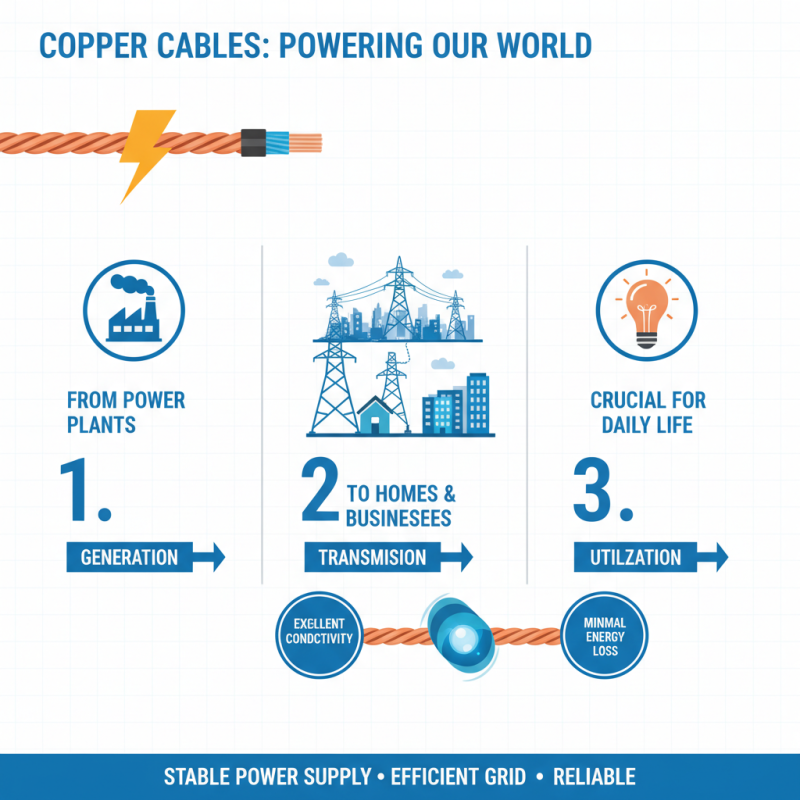
Copper cables play a vital role in power distribution systems. They carry electricity from power plants to homes and businesses. This transmission is crucial for our daily lives. The efficiency of copper makes it a preferred choice in the electrical grid. Its excellent conductivity ensures minimal energy loss during transmission. This is important for maintaining a stable power supply.

However, challenges do exist. Copper cables can be expensive compared to alternatives. Their physical weight can also make handling and installation more difficult. Additionally, areas prone to corrosion may experience deterioration over time. Regular maintenance is necessary to ensure long-term performance. Despite these drawbacks, copper remains a staple in the industry.

Innovations in technology are also emerging. New coatings and materials aim to enhance the longevity of copper cables. These developments address some of the vulnerabilities. Yet, the reliance on copper continues to prompt discussions about sustainability. How we manage copper resources will affect future power systems. Alternate materials are being explored, but for now, copper stands strong.

Role of Copper Cable in Data Centers and Cloud Computing Technologies

Copper cables play a crucial role in the backbone of data centers and cloud computing technologies. With the rise of digital transformation, data centers require reliable and high-speed communication infrastructure. Reports show that copper cabling can transmit data at impressive speeds, reaching up to 10 Gbps within a limited distance. This connectivity is vital for handling vast amounts of data generated daily.

In this sector, copper cables are favored for their cost-effectiveness and durability. They handle electrical signals efficiently, which is essential in densely packed environments. However, they have limitations. High-speed needs often push the boundaries of copper, leading to signal degradation over distance. Many facilities now face a dilemma: balance cost and performance.

As cloud computing continues to expand, the need for robust copper cabling becomes even more apparent. Data centers must contend with the growing demand for bandwidth, which is expected to increase by 25% annually. This pressure raises questions about whether copper can keep pace. Investing in future-proof technologies might be essential, even if it means reevaluating existing infrastructures. How long can copper cables meet the needs of modern technology? This remains an open question for many data center operators.

Copper Cable's Contribution to Home and Commercial Networking Solutions

Top 10 Uses of Copper Cable in Modern Technology?

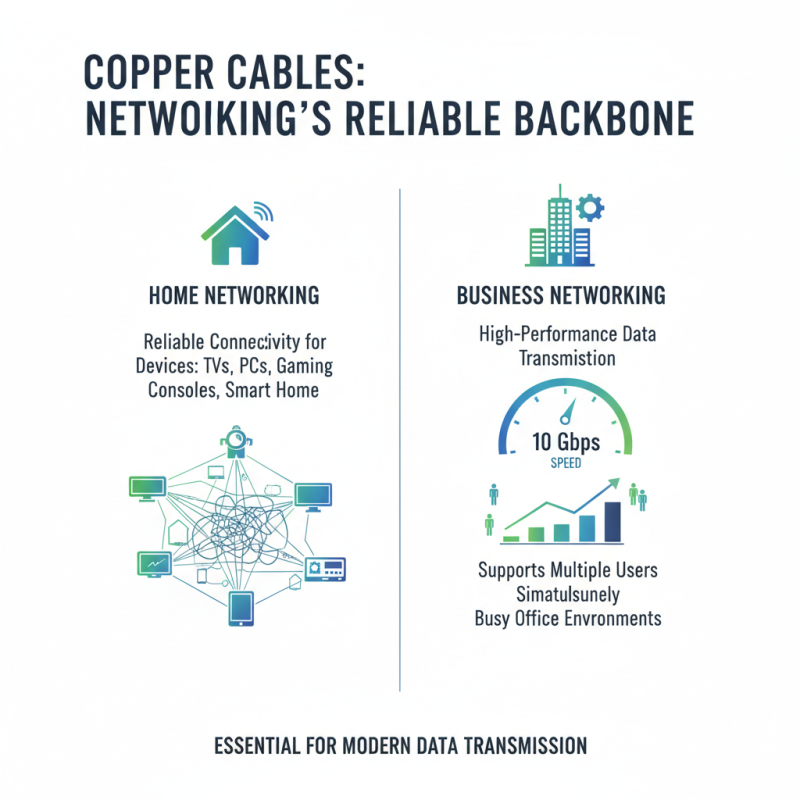
Copper cables are a backbone of modern networking solutions in both homes and businesses. They are widely used for data transmission, providing reliable connectivity for various devices. In commercial settings, their performance statistics are impressive. According to industry reports, copper cabling can transmit data at speeds reaching 10 Gbps. This capacity is crucial for supporting multiple users simultaneously, especially in bustling office environments.

In residential settings, copper cables play an essential role in home networking. They connect devices, such as routers, computers, and smart TVs, creating a seamless digital ecosystem. Residential users benefit significantly from copper cables, which offer a cost-effective solution for internet access. However, it's worth noting that while copper is effective, it has limitations such as signal degradation over long distances.

**Tip 1:** to maximize your network performance, ensure that your copper cables are of high quality and properly shielded.

**Tip 2:** Consider regular maintenance of your cables. Small kinks and bends can affect their efficiency.

In a world increasingly dependent on technology, the role of copper cables cannot be overlooked. Yet, as we advance, exploring alternatives may be necessary to meet future demands. Balancing performance and innovation is key in networking solutions.

Integration of Copper Cable in Industrial Automation and Robotics Systems

Copper cables play a pivotal role in industrial automation and robotics systems. They ensure seamless communication between machines, sensors, and controllers. According to a report by the International Copper Association, about 70% of modern machinery relies on copper for wiring. This highlights its importance in creating efficient systems. Copper’s high conductivity allows rapid transmission of signals, which is crucial in real-time operations.

Robotic systems often require reliable and durable connections. Copper cables can endure harsh environments while maintaining performance. In fact, many factories report reduced downtime when using copper wiring. These cables also support various automation technologies, such as IoT and AI. However, the rise of wireless technologies presents a challenge. Some industries might consider shifting away from copper due to advanced wireless alternatives. But, wire connections remain essential for many applications, especially those requiring high-speed data transfer.

Additionally, challenges like copper supply fluctuations and environmental impacts need attention. The extraction of copper can lead to ecological concerns. Therefore, industries must explore sustainable practices. Balancing performance with environmental responsibility will be a crucial reflection point for the future of industrial automation.

Top 10 Uses of Copper Cable in Modern Technology