


 +86 13777722188


During the "14th Five-Year Plan", It Is Planned to Invest 2.4 Trillion Yuan in the Power Grid
2025-06-27
The power grid is a key link in building a new type of power system. During the 14th Five-Year Plan period, it is planned to invest 2.4 trillion yuan in the power grid, vigorously promote the construction of a new energy supply and consumption system, and support the "three-in-one" transformation of existing coal-fired power units, namely energy conservation and carbon reduction transformation, flexibility transformation and heating transformation. During the 14th Five-Year Plan period, it is aimed to complete a cumulative transformation of 220 million kilowatts in the "Three North" regions and 100 million kilowatts in the eastern and central regions.
Accelerate the construction of pumped storage power stations and strive to have the installed capacity of pumped storage in the company's operating area reach 50 million kilowatts and 100 million kilowatts respectively by 2025 and 2030.
Support the large-scale application of new energy storage. It is expected that the installed capacity of new energy storage in the company's operating area will reach 100 million kilowatts by 2030.
The full text is as follows:
Recharge for a better life and empower a beautiful China
Xin Bao 'an
It has pointed out the development direction and provided fundamental guidance for the clean and low-carbon transformation of China's energy in the new era. Energy is the cornerstone of economic development and the lifeblood of modern society. The power grid is an important platform for energy conversion and utilization, optimal allocation and supply-demand matching. As a super-large state-owned key backbone enterprise closely related to national energy security and the lifeline of the national economy, State Grid Corporation of China strives to play the role of a "major national asset" and a "pillar", and endeavors to be a promoter, pioneer and leader in the clean and low-carbon transformation of energy, charging for a better life and empowering a beautiful China.
China has achieved historic accomplishments in its clean and low-carbon energy transformation
Since the 18th National Congress of the Communist Party of China, China has unswervingly advanced the energy revolution, achieving historic accomplishments in the clean and low-carbon transformation of energy and taking solid steps towards high-quality energy development.
The energy consumption structure has been continuously optimized. Since the 18th National Congress of the Communist Party of China, China's energy utilization efficiency has been continuously improving. With an average annual growth rate of about 3% in energy consumption, it has supported an average annual growth rate of 6.5% in the national economy. Clean and low-carbon have become the main direction of energy structure adjustment. The proportion of fossil energy consumption such as coal has continued to decline, while the proportion of clean energy consumption has been constantly increasing. By the end of 2021, the proportion of coal consumption in China had dropped to 56%, while the proportion of clean energy consumption had increased to 25.5%. The transformation of low-carbon and energy-saving production has been advanced in depth. The charging infrastructure and charging network for electric vehicles have been continuously improved, and the level of terminal electrification has steadily increased. The number of new energy vehicles in use has reached 7.84 million, showing a sustained and rapid growth trend. The number of charging infrastructure in use exceeds 2.6 million, and the scale of the charging network ranks first in the world. The area of clean heating in the northern region is approximately 15.6 billion square meters, and the clean heating rate reaches 73.6%.
The capacity to ensure energy supply has been continuously enhanced. China's energy security guarantee capacity has been continuously enhanced. It has become the world's largest energy producer and has formed a multi-wheel driven energy production system of coal, oil, gas, electricity, nuclear, new energy and renewable energy. The energy transmission network has been continuously improved. The foundation for power supply security has been continuously consolidated, the installed capacity and power generation capacity have been continuously expanded, and the level of development and utilization of renewable energy has been continuously improved. By the end of 2021, China's crude oil output had risen for three consecutive years, and its natural gas output had increased by over 10 billion cubic meters for five consecutive years. The installed power capacity and power generation had grown to 2.38 billion kilowatts and 8.4 trillion kilowatt-hours respectively. The installed capacity of renewable energy power generation exceeded 1 billion kilowatts, and the installed capacity of hydropower, wind power and photovoltaic power generation all exceeded 300 million kilowatts, ranking first in the world. The construction of large-scale wind and photovoltaic bases in deserts, Gobi and wastelands is accelerating. China's installed capacity of pumped storage power stations has risen to the top of the world.
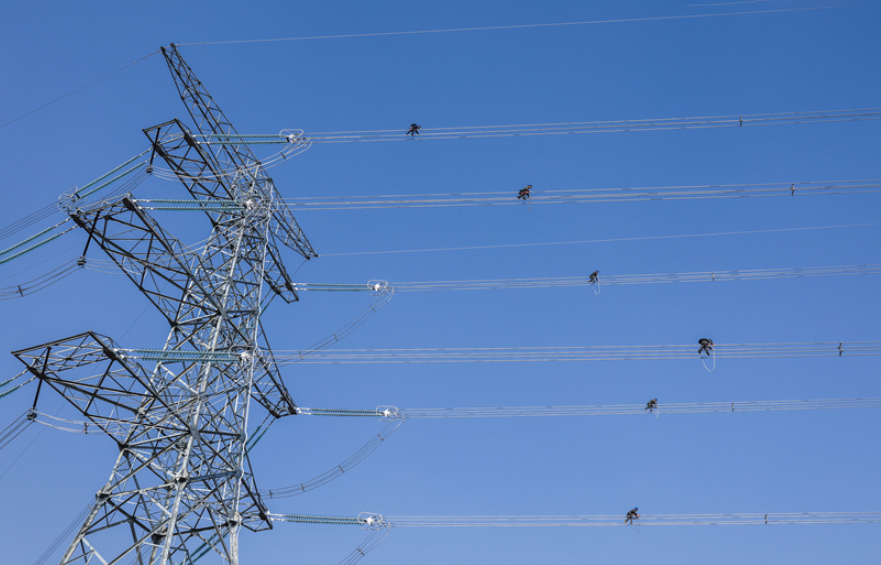
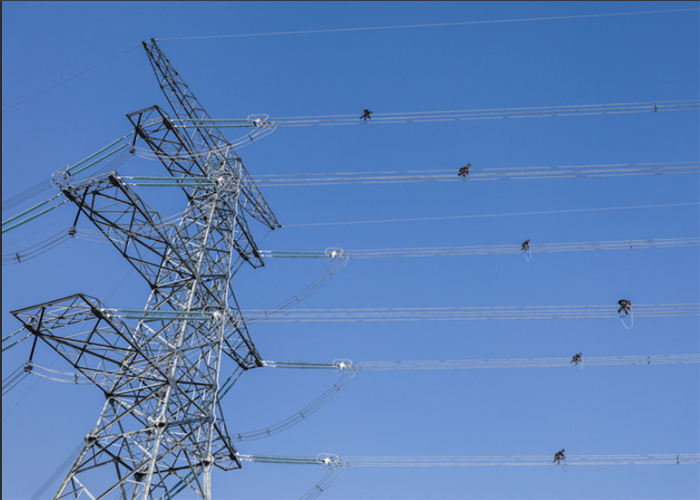
The ± 1,100-kilovolt ultra-high voltage direct current transmission project from Zhundong to Wannan is the world's highest voltage level, largest transmission capacity and longest transmission distance ultra-high voltage project independently developed by China. The project can reduce coal consumption in East China by approximately 38 million tons annually and become the "Electricity Silk Road" connecting the western frontier with East China. The picture shows the Transmission Line of the Hami section of the project in Xinjiang.
Energy technology innovation and industrial cultivation have been accelerated. China has fully leveraged the advantages of the new national system, and all sectors of society have made joint efforts to promote the level of energy science and technology innovation to a new stage. The world's largest clean coal utilization system has basically taken shape, and indicators such as air pollutant emissions are at the world's advanced level. Major breakthroughs have been made in technologies such as deepwater drilling and shale gas exploration and development, effectively supporting the increase in oil and gas reserves and production. Solid progress has been made in scientific and technological research and demonstration applications in fields such as nuclear power, renewable energy, clean and efficient utilization of coal, and gas turbines. Continuously overcome key core technologies such as ultra-High Voltage transmission, flexible direct current transmission, safety of large power grids, and grid connection and consumption of new energy. The world's first commercial high-temperature gas-cooled reactor nuclear power plant has been connected to the grid for power generation, and the construction of the demonstration project of State Nuclear Power Plant No. 1 has made significant progress. New energy business forms such as "Internet +" smart energy are booming and have become advantageous fields for innovation and creation in China.
Second, the clean and low-carbon transformation of energy is facing new situations and new requirements
At present, the century-old transformation and the pandemic are intertwined. Economic globalization is encountering headwinds, and the world has entered a new period of turbulence and transformation. The new round of scientific and technological revolution and industrial transformation is developing in depth, and a new situation has emerged in the global response to climate change. Accelerating the clean and low-carbon transformation of energy is an inherent requirement for ensuring national energy security and achieving carbon peaking and carbon neutrality on schedule. It is also the only way to promote high-quality energy development and accelerate the building of an energy power. It will bring systematic and fundamental changes to the energy system and provide new opportunities and challenges.
The layout of the energy structure will undergo profound adjustments. Clean and low-carbon energy will be developed and utilized on a large scale, gradually replacing the dominant position of traditional fossil energy in the energy system. It is expected that by 2030 and 2060, the proportion of non-fossil energy in China's primary energy consumption will increase from 16% in 2020 to 25% and 80% respectively. The energy development mode will present the characteristics of both centralized and distributed approaches.
The ways of energy utilization will present complex and diverse. The utilization scope of electric energy has extended to many fields that previously did not require electricity. A large number of new energy consumption methods and service demands, such as electric vehicles, data centers, and energy efficiency services, have emerged. The multi-energy complementarity and flexible conversion of electricity, gas, cold, heat, hydrogen, etc., and the terminal energy substitution based on electricity have become the mainstream. The ways of energy utilization have become more diverse, personalized, comprehensive and interactive.
Energy technology innovation will accelerate integrated development. New technologies and equipment are constantly emerging in fields such as new energy development, multi-energy conversion, advanced energy storage, carbon capture, utilization and storage, and energy system control. Digital technology and energy technology are deeply integrated, making energy systems smarter, more open, more efficient and more friendly.
The energy industry ecosystem will accelerate its leapfrog upgrading. A large number of dynamic new market entities have entered the market, and traditional energy enterprises have accelerated their transformation, giving rise to a large number of new businesses, new forms of business and new models such as comprehensive energy services, energy big data, platform business and energy aggregators. The industrial chain pattern and ecosystem have undergone profound changes, forming a brand-new energy ecosystem.
Electric energy is a clean, efficient and convenient secondary energy source. Electricity is a key area for the clean and low-carbon transformation of energy. The development and utilization of new energy resources mainly involve power generation. Electricity is the main choice to replace terminal fossil energy consumption. Promoting energy technology innovation and industrial cultivation, electricity is an advantageous field. With the acceleration of the "dual carbon" process and the in-depth advancement of energy transformation, the traditional power system is evolving towards a new type of power system that is clean and low-carbon, safe and controllable, flexible and efficient, open and interactive, and intelligent and friendly. Its technical foundation, operation mechanism and functional form will undergo profound changes, and the power system is also facing unprecedented pressure for transformation and upgrading.
From the supply side, it is reflected in the fact that clean energy power generation is gradually becoming the main body of installed capacity and electricity consumption. To promote the clean and low-carbon transformation of energy, the key lies in accelerating the development of non-fossil energy, especially new energy sources such as wind power and solar power. In China, about 95% of non-fossil energy is mainly utilized by being converted into electricity. It is expected that by 2030, the installed capacity of new energy power generation such as wind power and solar power in China will exceed that of coal power and become the largest power source. By 2060, the proportion of new energy power generation is expected to exceed 50%, becoming the main source of electricity.
From the consumption side, it is reflected in the high electrification of terminal energy consumption and the emergence of a large number of power "producers and consumers". It is estimated that the electrification level of terminal energy consumption in China will increase to around 39% and 70% respectively by 2030 and 2060. With the rapid development of diverse power consumption loads and energy storage, many power users are both consumers and producers of electricity, and the relationship between power production and sales has undergone profound changes.
From the perspective of the power grid side, it is reflected that the development of the power grid will form a pattern dominated by large power grids and with the coexistence of multiple power grid forms. The AC/DC hybrid large power grid remains the dominant force in the optimal allocation of energy resources. Meanwhile, microgrids, distributed energy, energy storage and local DC power grids will develop rapidly, complementing and coordinating with the large power grid, supporting the efficient development and utilization of various new energy sources and the friendly access of all types of loads.
From the perspective of the system as a whole, it is manifested as profound changes in the operation mechanism and balance mode. With the large-scale replacement of conventional power sources by new energy power generation and the wide application of adjustable loads such as energy storage, the "dual high" (high proportion of renewable energy and high proportion of power electronic equipment) characteristics of the power system have become more prominent. The power system will gradually shift from a real-time balance where power sources follow loads to a non-complete real-time balance where power sources, grids, loads and storage interact and coordinate.
To promote the clean and low-carbon transformation of energy, it is necessary to accelerate the construction of a new type of power system
The new power system is an important component of the modern energy system that is clean, low-carbon, safe and efficient. The power grid is a key link in building a new type of power system. Based on the functional positioning of the power grid, State Grid has put forward and adhered to the principle requirements that clean and low-carbon is the direction, energy supply security is the foundation, energy security is the key, energy independence is the essence, energy innovation is the driving force, and energy conservation and efficiency improvement should be supported. It will play the role of the power grid as a "bridge" and "link", and accelerate the construction of a new power system. Contribute wisdom and strength to promoting the clean and low-carbon transformation of energy and building a strong energy nation.
The National Wind-Solar-Storage-Transmission Demonstration Project is the world's largest new energy demonstration power station project integrating wind power generation, photovoltaic power generation, energy storage systems and intelligent power transmission. Relying on this demonstration project, State Grid successfully completed the world's first grid-connected performance test of a high-proportion new energy system. This project has enabled all venues of the Beijing Winter Olympics to be supplied with 100% green electricity. The slogan "The wind from Zhangbei lights up Beijing" has become a shining calling card of the green Winter Olympics. The picture shows the National Wind-Solar-Storage-Transmission Demonstration Project located in Zhangbei County, Hebei Province.
Adapt to the increasingly platform-based energy allocation and innovate the development mode of the power grid. As a major manufacturing country, China must hold the energy bowl in its own hands to develop the real economy. China's energy resources and demand are inversely distributed. The energy bases in the west and the load centers in the east and central regions are generally 1,000 to 3,000 kilometers apart. State Grid has been continuously improving its core backbone grid framework, accelerating the construction of power grids at all levels, and making concerted efforts on both the supply and demand sides. It actively serves the development of new energy and promotes the orderly replacement of fossil energy by clean energy. A total of 29 stable, safe and reliable ultra-High Voltage transmission projects have been completed, with the farthest transmission distance reaching 3,300 kilometers and the cross-regional and cross-provincial transmission capacity exceeding 240 million kilowatts. It has become the power grid with the longest transmission distance and the strongest energy resource allocation capacity in the world. We have resolutely shouldered the responsibility of the power supply guarantee grid, firmly held the safety line of the large power grid, and regarded ensuring people's livelihood as the top priority in power supply guarantee. We have played an important role in major tests such as disaster relief and epidemic prevention and control.
During the 14th Five-Year Plan period, it is planned to invest 2.4 trillion yuan in power grids and vigorously promote the construction of a new energy supply and consumption system. On the one hand, we will continue to improve the ultra-High Voltage and power grid networks at all levels, provide good services for the construction of large-scale wind and photovoltaic power bases in deserts, Gobi and wastelages, and support and promote the intensive development and long-distance transmission of large-scale power sources. On the other hand, efforts should be made to accelerate the construction of modern smart distribution networks, promote the development of microgrids and distributed energy, and meet the requirements of convenient access and plug-and-play for various power facilities. The company aims to achieve a cross-provincial and cross-regional power transmission capacity of 300 million kilowatts in its operating area by 2025 and 370 million kilowatts by 2030, with the proportion of clean energy in the transmitted electricity reaching over 50%.
Adapt to the accelerated clean-up of energy production and enhance the development and utilization level of new energy. After the Central Committee of the Communist Party of China proposed the "dual carbon" goals, State Grid Corporation of China promptly studied and deployed them, released and implemented the "dual carbon" action plan, and introduced a series of practical measures. New energy power generation is susceptible to the influence of climate and environment, with unstable output. The characteristics of "extremely hot without wind and extremely cold with little light" are obvious. It is necessary to pool various resources to participate in regulation and enhance the flexibility and adaptability of the system. State Grid has been vigorously developing pumped storage power stations to enhance the system's regulation capacity. By the end of 2021, the operational and under-construction capacity of pumped storage power stations in the operating area of State Grid had reached 26.31 million kilowatts and 46.43 million kilowatts respectively. Through the complementarity of wind, solar and hydropower and the mutual assistance of the surplus and shortage of the large power grid, a world record of 31 consecutive days of full clean energy supply was set in Qinghai Province. By the end of 2021, the installed capacity of new energy in the operating area of State Grid had reached 540 million kilowatts, and the utilization rate of new energy had reached 97.4%, making it the power grid with the largest grid-connected installed capacity of new energy in the world.
State Grid will support the "three-in-one" transformation of existing coal-fired power units, namely energy conservation and carbon reduction transformation, flexibility transformation and heating transformation. During the "14th Five-Year Plan" period, it aims to complete a total of 220 million kilowatts of transformation tasks in the "Three North" regions and 100 million kilowatts in the eastern and central regions. Adhering to the concept of open development, we will strengthen cooperation with all sectors of society, accelerate the construction of pumped storage power stations, and strive to achieve 50 million kilowatts and 100 million kilowatts of pumped storage installed capacity in the company's operating area by 2025 and 2030 respectively. Support the large-scale application of new energy storage. It is expected that the installed capacity of new energy storage in the company's operating area will reach 100 million kilowatts by 2030. Through comprehensive measures and multiple approaches, we will promote the consumption and utilization of new energy.
Adapt to the highly electrification of energy consumption, promote energy conservation and consumption reduction, and meet diverse energy demands. The level of electrification is an important indicator of the progress of modern civilization. Enhancing the electrification level on the consumption side is an important way to promote the continuous optimization of the energy consumption structure. State Grid has steadily and orderly promoted electric energy substitution in a way that suits local conditions. It has promoted clean heating with electricity instead of coal in northern regions and comprehensively carried out electric energy substitution projects such as all-electric scenic spots, all-electric ships, and the electrification of highways and railways. A total of 867.7 billion kilowatt-hours of electricity substitution have been achieved, equivalent to reducing the burning of loose coal by 480 million tons and cutting carbon dioxide emissions by 870 million tons. Accelerate the construction of charging infrastructure and build a "ten vertical, ten horizontal and two ring networks" fast charging network to effectively alleviate the "range anxiety" of electric vehicles during long-distance travel.
State Grid will further enrich its service content, innovate service methods and improve service quality. We will vigorously carry out comprehensive energy services such as energy consumption diagnosis and energy efficiency improvement, actively promote the complementary and efficient utilization of multiple energy sources including electricity, hydrogen, gas, cold and heat, and build a modern comprehensive energy system with high elasticity and resilience. Focus on industry and transportation
The power grid is a key link in building a new type of power system. During the 14th Five-Year Plan period, it is planned to invest 2.4 trillion yuan in the power grid, vigorously promote the construction of a new energy supply and consumption system, and support the "three-in-one" transformation of existing coal-fired power units, namely energy conservation and carbon reduction transformation, flexibility transformation and heating transformation.