+86 13777722188


Choosing the right Wire Cable in 2026 will require more than comparing prices or catalogue photographs. Global buyers must examine conductor material, insulation, voltage rating, temperature range, shielding, flexibility, and installation conditions. A cable placed in a factory ceiling faces different demands from one buried underground or exposed beside saltwater. Small details matter.
The market includes bare copper wire, PVC-insulated cable, XLPE power cable, coaxial cable, twisted-pair data cable, control cable, and fire-resistant designs. Each type solves a different problem. As cable-industry expert Valerio Battista has stated, “A cable is not a commodity; it is a system.” That principle remains highly practical. A low-cost product can become expensive when heat, vibration, moisture, or signal loss causes failure.
This guide examines the top Wire Cable types expected to attract global buyers in 2026. It considers performance, typical applications, material choices, certification expectations, and purchasing risks. IEC, UL, RoHS, and project-specific requirements may influence selection, but compliance documents should be checked carefully. A familiar logo is not enough. Ask for test reports, construction details, batch traceability, and technical data.
Some choices are easy. Others are not. Copper usually offers dependable conductivity, while aluminium can reduce weight and cost. However, connection quality and installation skill become more important. I may be overly cautious, yet many cable problems begin with assumptions made before the site conditions are understood. The best purchase is not always the most advanced cable. It is the cable that reliably fits the application, environment, and long-term maintenance plan.
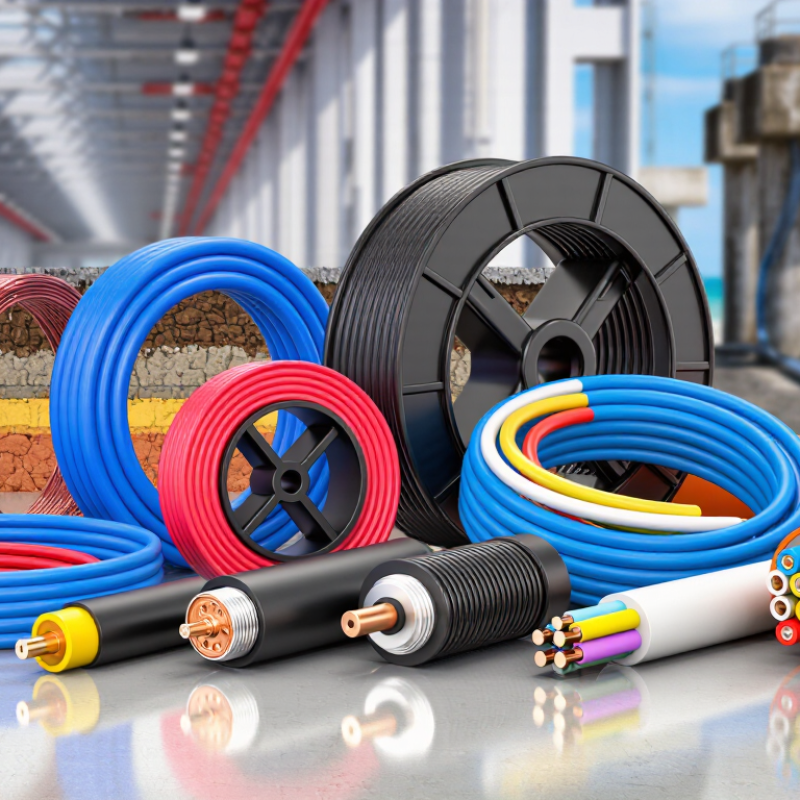
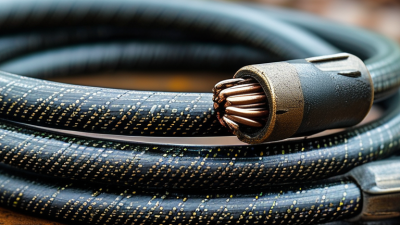
Wire cable basics begin with the conductor. It carries electrical current through copper, aluminum, or another approved metal. Solid conductors use one metal core. Stranded conductors contain many thin wires twisted together. Stranding improves flexibility, especially in moving equipment. The insulation surrounds the conductor and controls leakage, heat, and contact risks. A sheath adds external protection against moisture, abrasion, chemicals, and sunlight. Structure matters.
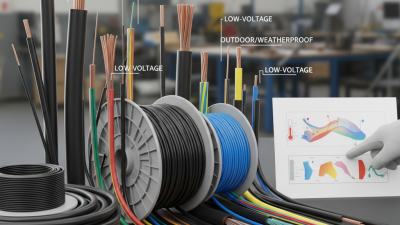
Common 2026 purchasing categories include building wire, flexible power cable, control cable, coaxial cable, shielded cable, and photovoltaic cable. Building wire usually serves fixed installations. Flexible cable suits repeated movement and tight routing. Coaxial cable has a central conductor, dielectric layer, metallic shield, and outer jacket. Shielded control cable reduces electromagnetic interference near motors or switching equipment. Photovoltaic cable needs suitable weather and ultraviolet resistance. Not every type fits every climate.
Buyers should compare conductor size in mm² or gauge, rated voltage, temperature range, ampacity, insulation material, and fire performance. Ampacity means the safe continuous current under stated conditions. The bending radius shows how sharply a cable can curve without damage. Shield coverage, stranding class, and sheath markings also deserve inspection. In real sourcing work, similar labels can hide different test methods. I still verify the datasheet, cross-section, and installation environment before approval. Small details matter. A thicker cable is not automatically better. It may be harder to install, waste space, and increase cost. Specifications need context, not guesswork.
Wire cables are classified by both material and construction, not by appearance alone. Copper offers high conductivity and reliable termination, while aluminum reduces weight and material cost. Copper-clad aluminum can lower cost further, but its connections require careful inspection. The choice is never purely economic.
Construction changes performance. IEC 60228 identifies solid, stranded, flexible, and extra-flexible conductor classes. Solid conductors suit fixed indoor wiring. Stranded conductors tolerate repeated bending and vibration better. Insulation materials also matter: PVC supports general applications, while XLPE handles higher temperatures and demanding power installations. Shielding limits electromagnetic interference, and armoring adds mechanical protection in exposed routes.
The International Energy Agency’s Electricity 2024 report projects global electricity demand to grow by an average 3.4% annually through 2026. Its Electricity Grids and Secure Energy Transitions report also estimates that annual grid investment must exceed $600 billion by 2030. These figures point to strong demand for power, control, and data cables, but they do not justify one universal specification. A humid coastal site may need different insulation than a dry factory floor. A flexible robotic cable may fail quickly in a fixed conduit. Small details matter.
Check the standard. Then inspect the installation.
Global buyers need cable choices that match voltage, data speed, installation space, and local regulations. Copper power cables remain practical for buildings, machines, and short distribution runs. They offer strong conductivity and simple termination. Aluminum cables reduce weight and material cost on longer power routes. Their larger conductor size requires careful lug selection and torque control. Flexible stranded cables suit moving equipment. Solid conductors fit fixed installations better. Small detail, big consequence.
For data networks, twisted-pair cables handle structured connections, while coaxial cables support radio-frequency signals and video systems. Fiber optic cables provide long-distance transmission, high bandwidth, and electrical isolation. Single-mode fiber suits extended links. Multimode fiber often fits shorter indoor routes. Outdoor buyers should examine ultraviolet resistance, water blocking, temperature range, and crush protection. Indoor cables may need low-smoke, flame-retardant jackets. Indoor is not one specification.
From a purchasing perspective, request conductor size, insulation material, voltage rating, bending radius, test reports, and batch traceability. Confirm applicable regional standards before comparing prices. A low quote can hide thinner insulation or incomplete documentation. I have seen projects delayed because cable drums lacked clear length markings. That mistake was avoidable. Samples should be inspected for print quality, jacket consistency, and conductor flexibility. Yet visual checks cannot replace laboratory tests. Buyers should allow time for independent verification, especially when several countries share one supply plan.
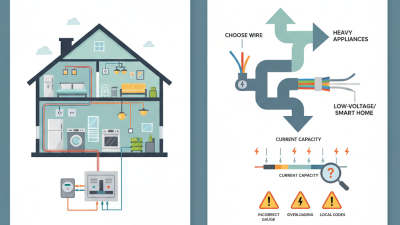
Choosing the right wire cable starts with the application, not the catalogue name. A flexible copper cable suits moving machinery and tight control panels. XLPE-insulated power cable handles higher temperatures and heavy industrial loads. For wet soil, tunnels, or exposed construction areas, armored cable adds mechanical protection. Do not over-specify blindly.
Environment changes the decision. LSZH cable is preferred in crowded buildings, transport hubs, and enclosed public spaces because it limits smoke and corrosive gases during fire conditions. Outdoor installations need UV resistance, water blocking, and suitable temperature ratings. In corrosive coastal zones, material selection deserves extra attention. PVC may perform well indoors, but it can become a weak choice under heat, oil, or severe sunlight.
The IEA’s Energy and AI report estimates data-centre electricity use may rise from about 415 TWh in 2024 to roughly 945 TWh by 2030. That growth increases demand for reliable power distribution, grounding, and communication cabling. Fiber optic cable fits high-bandwidth networks and avoids electromagnetic interference. Shielded twisted-pair cable remains practical for shorter industrial links. Installation details matter: bending radius, tray fill, connector quality, and separation from power circuits can decide performance. A perfect cable on paper may fail after poor routing. Field teams sometimes discover this too late. Standards help, but site inspection still needs human judgment.
Matching cable insulation types with applications and operating environments
Values show typical continuous conductor-temperature ratings for widely used insulation systems. Confirm voltage rating, current capacity, fire performance, installation method, and applicable IEC or local standards before specification.
Global buyers should choose wire and cable by application, not appearance. Common options include power, control, instrumentation, photovoltaic, and armored cables. Each type must match voltage, current, temperature, flexibility, and installation conditions. Copper offers strong conductivity, while aluminum can reduce weight and cost. However, termination quality becomes more critical with aluminum conductors.
Standards deserve careful checking. Request test reports for conductor resistance, insulation performance, flame behavior, and mechanical strength. Compare the cable with applicable IEC, EN, or national electrical requirements. Safety also depends on the installation environment. Outdoor cables may need UV resistance and water protection. Industrial sites may require oil resistance, shielding, or armor. A familiar certificate is not always enough. Its scope, testing date, and product model should match the actual shipment. This step is often rushed, and that is a costly weakness.
Tips: Ask for a complete technical datasheet, batch traceability, sample testing, and clear marking on every cable reel. Confirm conductor material, cross-sectional area, sheath compound, packing method, and storage limits. For supply planning, review factory capacity, minimum order quantities, lead times, spare production capacity, and port routes. Keep approved samples for comparison. Small changes in insulation color or printing can reveal batch inconsistency. I have found that the cheapest quotation can become expensive after delays, retesting, or rejected installation work. Availability matters, but dependable evidence matters more.
| Cable Type | Typical Global Applications | Common Conductor and Insulation | Typical Voltage Class* | Key Standards or Regulations | Main Safety Considerations | Supply and Purchasing Factors | Global Buyer Selection Note |
|---|---|---|---|---|---|---|---|
| Low-Voltage Building Wire | Residential, commercial, and light industrial fixed wiring | Bare or tinned copper; PVC, thermoplastic, or low-smoke insulation | Usually up to 450/750 V or 600 V, depending on the applicable system | IEC 60227, IEC 60332, EN 50525, national wiring rules, or applicable electrical code | Correct ampacity, insulation temperature, bend radius, conduit fill, and flame performance are essential | Common sizes are widely available; conductor class, color coding, packaging length, and local approvals affect cost | Best for standard indoor wiring when the selected construction matches the destination country’s code |
| XLPE Power Cable | Industrial distribution, renewable-energy plants, infrastructure, and utility networks | Copper or aluminum conductor; cross-linked polyethylene insulation; PVC or LSZH sheath | Low voltage through medium voltage; common MV classes include 6/10 kV, 8.7/15 kV, and 12/20 kV | IEC 60502-1, IEC 60502-2, IEC 60840, AEIC or national utility requirements | Verify partial-discharge performance, screen grounding, thermal rating, water-blocking, and installation stress control | Large conductor sizes and MV accessories can create longer production times; copper and aluminum prices strongly influence quotations | A strong choice for high-load networks where higher continuous operating temperature and lower dielectric losses are required |
| Armored Power Cable | Buried routes, industrial sites, outdoor distribution, tunnels, and mechanically exposed installations | Copper or aluminum conductor; PVC or XLPE insulation; steel wire, steel tape, or aluminum armor | Commonly 0.6/1 kV; higher ratings are available under the relevant cable standard | IEC 60502, IEC 60332, IEC 60754, IEC 61034, BS or national installation standards where applicable | Armor must be properly earthed or bonded; check corrosion protection, crushing resistance, gland compatibility, and minimum bend radius | Heavier reels increase freight and handling costs; armor material and drum dimensions require early logistics planning | Select armor type according to mechanical risk, magnetic effects, burial conditions, and local termination practice |
| LSZH Power and Control Cable | Hospitals, airports, rail systems, public buildings, data facilities, and enclosed spaces | Copper conductor; halogen-free, low-smoke thermoplastic or thermoset insulation and sheath | Commonly 300/500 V, 450/750 V, or 0.6/1 kV | IEC 60754, IEC 61034, IEC 60332, IEC 60502, EN 50575, and local fire regulations | Low smoke and low corrosive-gas emissions support evacuation and equipment protection; verify flame and circuit-integrity classification | Usually costs more than standard PVC; confirm compound availability, fire classification, and required documentation before ordering | Preferred where smoke toxicity, corrosion, or strict building-fire requirements are major concerns |
| Fire-Resistant and Circuit-Integrity Cable | Fire alarms, emergency lighting, smoke-control systems, pumps, and life-safety circuits | Copper conductor; mica-based, mineral, ceramic, or other fire-resistant insulation systems with suitable sheath | Often 300/500 V or 0.6/1 kV, subject to system design and certification | IEC 60331, IEC 60332, IEC 60754, IEC 61034, EN 50200, and project-specific fire codes | The complete system includes cable supports, glands, joints, and terminations; all components must maintain the required circuit-integrity rating | Certification scope and witnessed test reports are critical; specialized constructions may require longer production planning | Buy only against a defined survival-time requirement, such as 30, 60, or 120 minutes, rather than using a generic “fire-resistant” label |
| Flexible Industrial Cable | Robotics, cranes, machine tools, automated production lines, and moving equipment | Fine-stranded copper; PVC, PUR, or thermoplastic elastomer insulation and jacket | Commonly 300/500 V, 450/750 V, or 0.6/1 kV | IEC 60227, IEC 60245, IEC 60332, EN 50525, and machine-safety requirements | Dynamic bend radius, torsion, travel speed, oil resistance, abrasion, shielding, and drag-chain compatibility must be validated | Dynamic-life performance can vary significantly; request cycle-test data and define movement parameters in the specification | Choose by motion profile and environmental exposure, not simply by conductor cross-sectional area |
| Control and Instrumentation Cable | Process plants, building automation, motor control, sensors, and low-energy signal systems | Copper pairs, triads, or multicore conductors; PVC, PE, XLPE, or LSZH insulation; individual or overall shielding | Signal and control circuits commonly below 300 V; designs vary by application | IEC 60228, IEC 60332, IEC 60754, IEC 61034, EN 50288, and process-industry specifications | Shield termination, separation from power circuits, electromagnetic compatibility, pair identification, and grounding are key | Custom pair counts, capacitance limits, drain wires, armor, and fire classification can affect minimum order quantity and lead time | Define impedance, capacitance, screening coverage, and signal protocol before comparing supplier quotations |
| Data and Ethernet Cable | Structured cabling, industrial networks, offices, data rooms, and building-management systems | Balanced twisted copper pairs; solid or stranded conductors; PVC or LSZH jacket; shielded or unshielded construction | Extra-low-voltage data circuits; performance is defined primarily by transmission category and bandwidth | ISO/IEC 11801, IEC 61156, ANSI/TIA-568, IEC 60332, and applicable building-fire classifications | Control pair geometry, separation from power cables, bend radius, alien crosstalk, shielding continuity, and PoE heat rise require attention | Category, conductor gauge, jacket rating, test frequency, and connector compatibility influence procurement and certification | Specify the required transmission category and permanent-link performance instead of purchasing by appearance alone |
| Coaxial Cable | Radio-frequency systems, video distribution, antennas, measurement equipment, and telecommunications | Solid or stranded copper conductor; dielectric; metallic shield; PVC, PE, or low-smoke jacket | Low-voltage signal cable; frequency performance typically ranges from MHz to GHz depending on construction | IEC 61196, EN 50117, applicable EMC requirements, and regional telecommunications regulations | Impedance matching, shielding effectiveness, attenuation, return loss, connector quality, and bend radius affect system safety and reliability | Specify impedance, attenuation at target frequencies, shield coverage, and jacket environment; avoid substituting cables with different impedance | Best selected from measured RF performance data rather than conductor size alone |
| Optical-Fiber Cable | Telecommunications, broadband, data centers, industrial communications, and long-distance networks | Glass fiber with acrylate coating; loose-tube, tight-buffered, ribbon, indoor, outdoor, or armored construction | Not rated by electrical voltage; optical performance is specified by fiber type, wavelength, attenuation, and bandwidth | IEC 60793, IEC 60794, ISO/IEC 11801, ITU-T recommendations, and local fire or telecom rules | Protect against excessive pulling tension, crushing, moisture ingress, contamination, and bend-radius violations; laser-safety procedures also apply | Fiber count, mode type, connectorization, armoring, fire rating, and route length affect manufacturing and testing requirements | Confirm single-mode or multimode design, attenuation budget, installation environment, and network equipment compatibility |
| Renewable-Energy and Solar Cable | Photovoltaic arrays, battery systems, inverters, and outdoor renewable-energy installations | Tinned or bare copper; cross-linked halogen-free insulation and sheath designed for UV and weather resistance | Commonly 1.0/1.0 kV DC or 1.5/1.5 kV DC, subject to the cable designation and system design | IEC 62930, EN 50618, IEC 60332, IEC 60228, and applicable photovoltaic installation standards | UV exposure, ozone, temperature cycling, connector compatibility, DC arc risk, polarity, and routing near sharp edges must be controlled | Demand is project-sensitive; verify outdoor aging tests, conductor class, cut lengths, connector system, and delivery timing for site schedules | Use purpose-designed PV cable for exposed DC circuits instead of general-purpose building wire |
| Submarine and Underwater Power Cable | Offshore renewable energy, subsea interconnection, marine facilities, and water-crossing infrastructure | Copper or aluminum conductor; XLPE or other qualified insulation; metallic screen, water barriers, armor, and protective sheath | Medium- and high-voltage classes, commonly from 6 kV upward depending on the network | IEC 60228, IEC 60840, IEC 62067, IEC 60287, marine rules, and project-specific installation standards | Water-tree resistance, longitudinal water blocking, tensile strength, seabed protection, thermal capacity, and installation bending limits are critical | Long engineering and manufacturing cycles are normal; route survey, drum length, testing, vessel access, and installation windows affect total cost | Procure against a complete system specification covering cable, joints, terminations, installation, and post-installation testing |

| *Voltage and performance values are typical reference ranges, not universal ratings. Final selection must follow the destination country’s electrical code, installation method, ambient conditions, fire regulations, conductor size, and manufacturer test documentation. Buyers should request certificates of conformity, routine-test records, type-test evidence where applicable, material declarations, reel measurements, and traceability documents before shipment. | |||||||