2026 How to Choose the Best Insulated Cable for Your Needs?
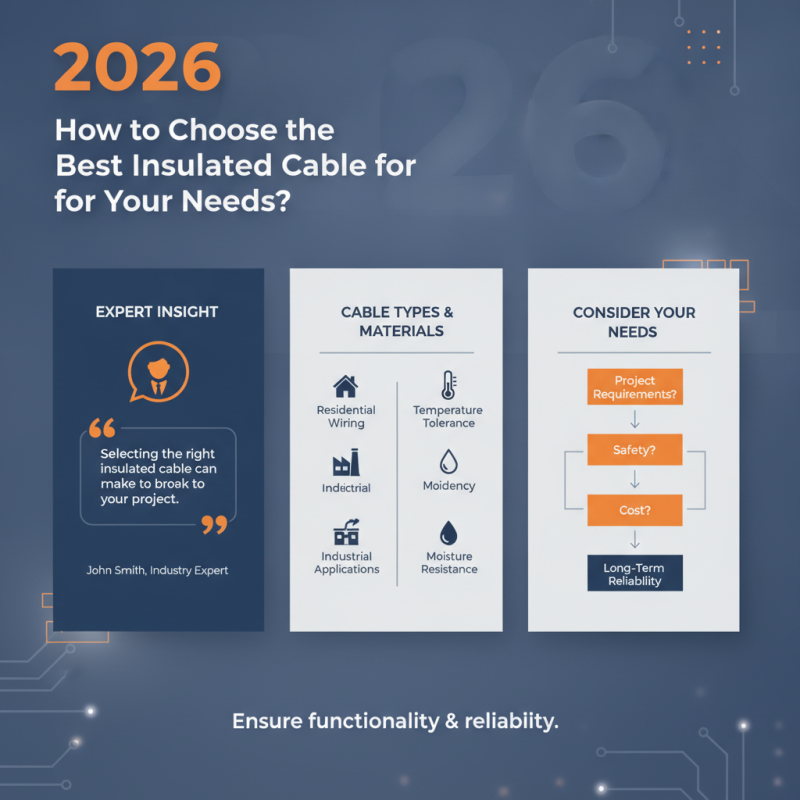
Choosing the right insulated cable is crucial for safety and performance in various applications. John Smith, an industry expert with over 20 years of experience, emphasizes, "Selecting the right insulated cable can make or break your project." His insights remind us that the stakes are high when it comes to electrical safety.
Insulated cables come in different types and materials. Each type serves distinct purposes, from residential wiring to industrial applications. The insulation type affects durability and performance in various environments. Consider aspects like temperature tolerance and moisture resistance. Test your knowledge and preferences against the vast options available in the market.
As you explore insulated cable options, reflect on your needs carefully. What are your project requirements? Are you prioritizing safety, efficiency, or cost? Think deeply about these questions. Ensuring you make the right choice could influence not just functionality but also long-term reliability in your projects.
Understanding the Importance of Insulated Cables in Electrical Projects
Insulated cables play a crucial role in any electrical project. They provide safety by preventing short circuits and electrical shocks. Without proper insulation, wires can easily become hazardous, leading to accidents or equipment damage. Understanding the specific needs of your project is essential for choosing the right type of insulated cable.
When selecting insulated cables, consider the environment in which they will be used. Will they be exposed to moisture, heat, or chemicals? Different insulation materials offer varying levels of resistance to these factors. Yet, it's easy to overlook these details. Some might pick cables based only on price, ignoring their intended use. This can result in higher costs down the line due to failures or replacements.
Proper insulation also influences efficiency. Poorly insulated cables can lead to energy loss. This reflects not only on costs but also on the environmental impact. It's vital to recognize that the right choice in insulated cables can enhance performance and longevity. Each project has unique demands; understanding these is key to making informed decisions.
Types of Insulated Cables and Their Specific Applications
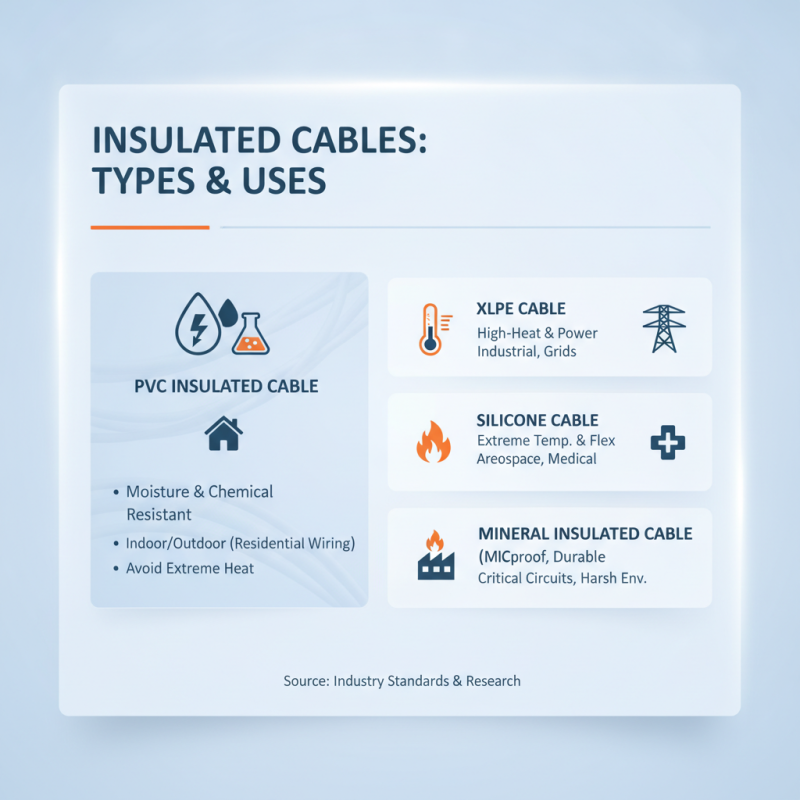
Insulated cables come in various types, each designed for specific applications. One common type is PVC insulated cable. PVC insulation provides excellent resistance to moisture and chemicals, making it ideal for indoor and outdoor use. It's often found in residential wiring. However, it may not perform well in extreme heat, leading to potential risks.
Another type is XLPE insulated cable. This polyethene-based insulation offers greater thermal resistance and durability. It’s suitable for industrial applications. XLPE cables perform well in high-voltage settings but can be more expensive. Users must consider the environment where the cable will function.
Rubber insulated cables are also noteworthy. They provide flexibility and resistance to environmental factors. They’re perfect for temporary setups, like construction sites. Despite their versatility, they may have a shorter lifespan compared to other insulation types. Understanding these specifics helps in choosing the right insulated cable for your needs.
Factors to Consider When Choosing Insulated Cables
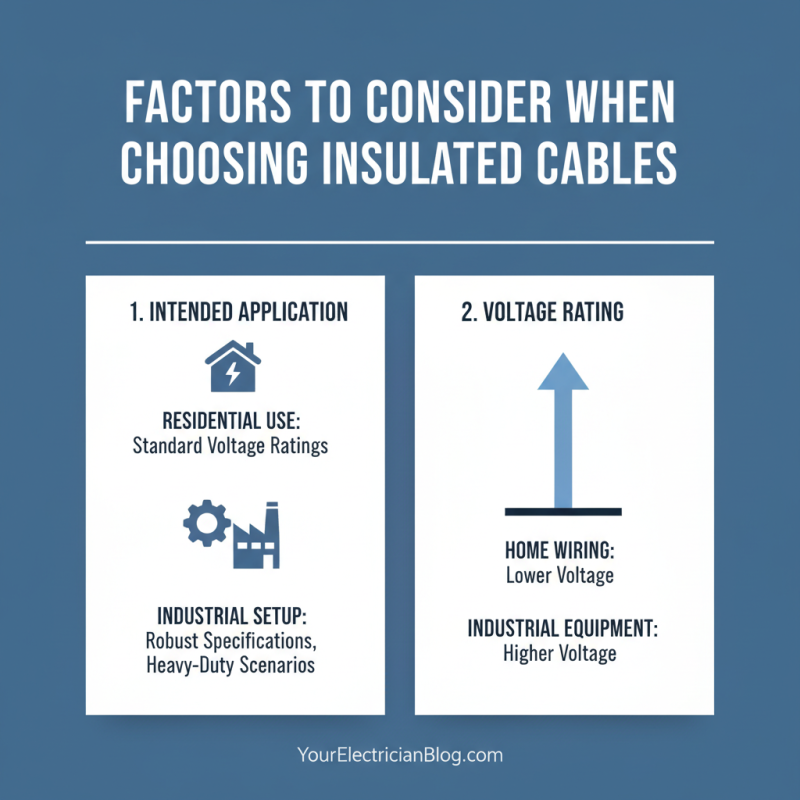
When selecting insulated cables, several factors are crucial. The intended application shapes your choice significantly. Are you wiring a home, or is this for an industrial setup? For residential use, standard voltage ratings often suffice. In heavy-duty scenarios, more robust specifications are necessary.
The material of the insulation impacts performance. PVC and rubber are common, but they vary in durability and temperature resistance. Consider the environmental factors as well. Will the cables be exposed to sunlight or moisture? Such conditions require specialized insulation.
Thickness and flexibility also matter. Thicker insulation can protect against abrasion and heat. Yet, it might reduce flexibility, complicating installation. Reflect on your workspace—narrow spaces may need more pliable options. Balancing durability with ease of use is essential. Choosing the right insulated cable demands thorough assessment and continuous reflection on your specific needs.
Evaluating Temperature and Environmental Conditions for Cable Selection
When selecting insulated cables, the environmental conditions play a key role.
Temperature extremes can greatly affect cable performance. If the cable works in high temperatures, choose materials that resist heat.
Conversely, in cold environments, ensure cables remain flexible and resistant to cracking.
Consider humidity and moisture levels. Cables in damp areas require insulation that prevents water ingress. This is crucial for durability and safety.
Outdoor installations should also combat UV exposure. Choosing cables suited for such conditions is vital to avoid premature failure.
Reflecting on specific projects helps refine choices. A past installation may have faced issues due to inadequate insulation.
Analyzing those experiences guides better decisions. Remember to balance cost with reliability and safety.
Taking the time to evaluate these factors leads to better long-term solutions.
Best Practices for Installing and Maintaining Insulated Cables
When it comes to installing insulated cables, proper practices are essential. Start by evaluating the environment where the cable will be used. This includes temperature range, moisture levels, and exposure to chemicals. Poorly chosen cables may lead to premature failure. Studies suggest that the right cable can last significantly longer and perform better under stress.
Installation requires attention to detail. Proper securing of cables avoids stress points. Use cable ties or clamps appropriately, ensuring they do not pinch the cable. Even the installation surface matters; rough edges can cause future damage. Regular inspections are key. Look for signs of wear, moisture ingress, or physical damage. Maintaining a log of inspections can help identify patterns or issues.
Lastly, be cautious when connecting cables. Ensure all connections are secure, and use appropriate tools for the job. Mistakes during this stage can lead to hazardous situations or equipment failures. Reflecting on past installations can highlight areas for improvement. Always prioritize safety over speed in any electrical installation.
2026 How to Choose the Best Insulated Cable for Your Needs? - Best Practices for Installing and Maintaining Insulated Cables
| Cable Type |
Temperature Rating (°C) |
Voltage Rating (V) |
Applications |
Maintenance Tips |
| PVC Insulated Cable |
-15 to 70 |
600 |
Indoor Wiring |
Regular visual inspections and keeping away from moisture. |
| XLPE Insulated Cable |
-40 to 90 |
1000 |
High Voltage Applications |
Ensure proper storage and avoid mechanical stress. |
| Rubber Insulated Cable |
-25 to 60 |
450 |
Construction Sites |
Inspect for wear and replace damaged sections promptly. |
| Low Voltage Power Cable |
-20 to 90 |
300 |
General Power Distribution |
Routine testing for potential failures and good labeling. |



 +86 13777722188
 WHATSAPP
 PHONE
PHONE E-MAIL