+86 13777722188


Global sourcing is changing how manufacturers evaluate Wire Cable. Price still matters, but it cannot carry the entire decision. A low-cost reel may look attractive beside a loading dock. Later, weak insulation, inconsistent stranding, or unclear certification can stop production. That delay costs more than the original saving.
Dr. Markus Keller, a cable-design specialist with experience in industrial supply chains, states, “Reliable cable begins with visible evidence, not promising specifications.” His point is practical. Buyers need measurable conductor resistance, tensile strength, insulation thickness, temperature ratings, and verified production records. They also need suppliers who explain tolerances honestly. A polished brochure is not enough. A factory audit, sample test, and batch report reveal more.
Global sourcing can provide broader capacity, competitive manufacturing, and access to specialized designs. It can also expose buyers to communication gaps, shifting lead times, and uneven quality control. This is where disciplined sourcing becomes essential. Compare technical drawings line by line. Request samples from the intended facility. Check how each reel is labeled, packed, and traced. Photograph the cable surface, connector fit, and winding condition before shipment. Small details matter.
Not every supplier will meet every application. That is uncomfortable. It is also useful. A strong sourcing decision accepts this limitation and tests alternatives early. The best Wire Cable partner is not always the cheapest factory. It is the supplier that combines stable materials, repeatable production, responsive documentation, and realistic delivery commitments. Those qualities support safer installation, fewer replacements, and more dependable global operations.
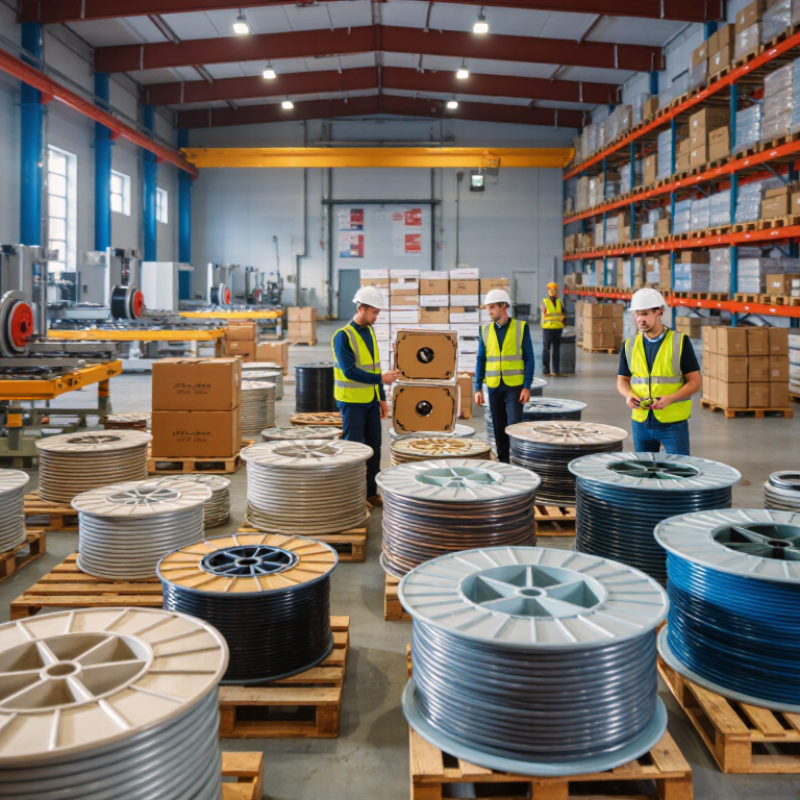
When buyers source wire cable globally, the conductor is the starting point, not the whole decision. Copper carries current efficiently, while aluminum reduces weight and material cost. Stranding improves flexibility around terminals and moving equipment. Yet strand count alone does not prove performance.
Insulation controls heat, moisture, abrasion, and chemical exposure. PVC may suit general indoor routing, while tougher compounds handle oil, sunlight, or repeated bending. Check temperature and voltage ratings together. A cable can feel thick and still fail early.
During supplier reviews, I examine cut samples, conductor diameter, insulation concentricity, and batch test records. Small gaps become expensive failures.
Shielding manages electromagnetic interference from motors, inverters, and data equipment. Braided shields offer flexibility, while foil shields provide broad coverage when properly grounded. Armoring adds mechanical protection where cables face crushing, impact, or rodents. It also increases diameter and installation effort. That trade-off is easy to underestimate.
I have seen drawings specify armor without enough bend radius, forcing awkward field routing. Better sourcing compares the operating environment, not just the unit price.
Ask for traceable material data, repeatable testing, and samples from actual production. Then challenge your assumptions: laboratory performance may not match a wet, crowded installation.
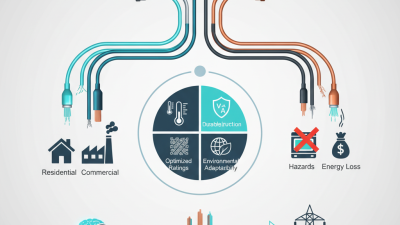
Why Choose Wire Cable for Global Sourcing?
Electrical Efficiency: Copper Conductivity of About 58 MS/m at 20°C
Copper remains a practical choice when electrical losses matter. At 20°C, its conductivity is about 58 MS/m. This equals a resistivity near 0.01724 Ω·mm²/m, the reference value used in IEC 60228 calculations. Lower resistance helps cables deliver current with less voltage drop and heat. In a factory, that difference appears as steadier motor performance and cooler cable surfaces.
Performance depends on more than copper purity. Conductor cross-section, strand construction, insulation temperature, and connection quality also affect real efficiency. IEC 60228 provides resistance requirements for finished conductors, making supplier comparisons more reliable. Ask for test reports taken at 20°C, not only a material certificate. Small details matter.
Global demand is adding pressure to electrical infrastructure. The International Energy Agency’s Electricity Grids and Secure Energy Transitions report estimates that over 80 million kilometers of grids may need to be added or replaced by 2040. That scale makes sourcing consistency important. The U.S. Geological Survey reported global refined copper production at roughly 26 million metric tons in 2023, showing a large but carefully managed supply base. However, conductivity figures can mislead when production tolerances are ignored. I have seen cables meet a nominal specification yet perform poorly because terminals were loose or measurements lacked temperature correction. Reliable sourcing should therefore combine standardized testing, traceable batches, and practical installation checks.
Why Choose Wire Cable for Global Sourcing?
Global projects need a shared technical language. IEC 60228 defines conductor classes 1, 2, 5, and 6. Class 1 uses solid conductors for fixed installations. Class 2 uses stranded conductors with greater installation flexibility. Class 5 is flexible, while Class 6 provides even finer strands and easier movement. These classes describe conductor construction, not every cable-performance feature.
Selection should match the working environment. A Class 1 copper conductor suits a fixed panel route with few bends. Class 5 may perform better near moving equipment, where repeated flexing is expected. Class 6 can simplify tight routing, but its finer strands may require suitable terminals and careful stripping. The wrong class can increase installation time.
Small details matter.
The IEA Electricity 2024 report projects average global electricity-demand growth of 3.4% from 2024 to 2026. IRENA’s Renewable Capacity Statistics 2024 recorded 473 GW of renewable capacity additions in 2023. These figures suggest stronger demand for consistent, transferable cable specifications. Buyers should request IEC 60228 classification, conductor material, cross-sectional area, resistance results, and batch traceability. A certificate alone is not enough. Inspectors should compare markings, measure dimensions, and review test records. This process takes time. It also exposes an uncomfortable truth: “IEC compliant” can be too vague without the exact conductor class and applicable cable standard.
Choosing wire cable for global sourcing requires more than comparing price and delivery dates. Safety evidence must match the actual construction, voltage, insulation, and installation environment. IEC 60332 flame tests evaluate how a cable reacts to fire under defined conditions. They do not prove that every cable installation is fireproof.
A practical review should request the relevant IEC 60332 test method, report number, laboratory details, and sample description. The conductor size and insulation material should match the production cable, not just a similar sample. Traceability matters. Each shipment should connect to a production lot, inspection record, and retained sample. That matters.
RoHS compliance requires special attention to lead. The commonly referenced limit is 0.1% by weight in each homogeneous material, subject to applicable scope and exemptions. A supplier declaration alone may be incomplete. Ask for material-level testing, especially for insulation, soldered parts, coatings, and metal surfaces. Records matter.
In real sourcing work, documentation sometimes looks convincing but lacks batch information. That is a weakness worth challenging. An accredited laboratory report is stronger when its methods, detection limits, and sample identity are clear. Testing should also be repeated when the compound, supplier, or manufacturing site changes. No certificate replaces incoming inspection. Even careful teams miss details when specifications are copied between projects. A short technical review before purchase can prevent costly disputes, delayed customs clearance, and unsafe substitutions.
| Sourcing Dimension | Applicable Requirement or Standard | Verified Data Point | Why It Matters in Global Sourcing |
|---|---|---|---|
| Single-cable flame behavior | IEC 60332-1-1 and IEC 60332-1-2 | IEC 60332-1-2 specifies a vertical flame test for a single insulated wire or cable, using a 1 kW pre-mixed flame. | Provides a comparable baseline for evaluating whether insulation or sheath materials restrict flame spread on an individual cable. |
| Flaming particles and droplets | IEC 60332-1-3 | This part defines procedures for assessing flaming droplets or particles generated during the vertical flame test. | Helps identify ignition risks to nearby materials and supports more consistent safety comparisons between cable constructions. |
| Bunched or grouped cables | IEC 60332-3 series | The IEC 60332-3 series evaluates vertical flame spread of vertically mounted bunched wires or cables under defined test categories. | A single-cable result should not automatically be treated as evidence of performance when cables are installed in bundles. |
| Flame-test selection | Application-specific IEC 60332 test selection | IEC 60332-1 tests individual cables; IEC 60332-3 tests groups of cables. The applicable method depends on installation conditions and purchasing specifications. | Reduces the risk of selecting a cable based on an unsuitable test scope or an overstated compliance claim. |
| RoHS restricted substance: lead | EU RoHS Directive 2011/65/EU, as amended by Delegated Directive (EU) 2015/863 | The maximum concentration value for lead is 0.1% by weight, equivalent to 1,000 mg/kg, in each homogeneous material. | Supports consistent material declarations and helps buyers screen insulation, sheathing, metallic parts, solder, and other cable components. |
| Meaning of homogeneous material | RoHS homogeneous-material assessment principle | A homogeneous material is a material that cannot be mechanically disjointed into different materials, such as a plastic insulation layer or a metal coating. | Testing the complete cable as one combined item may not demonstrate compliance for every individual material layer. |
| Evidence requested from suppliers | Technical file and conformity documentation | Recommended records include flame-test reports identifying the tested construction, RoHS declarations, material composition data, and traceable production information. | Documented evidence improves supplier comparison, customs support, change control, and market-access readiness. |
| Compliance limitation | Standard and regulatory scope review | IEC 60332 flame performance and RoHS substance compliance address different risks; neither one alone confirms all electrical, mechanical, environmental, or regional requirements. | A complete sourcing specification should also define voltage rating, conductor size, insulation temperature, mechanical performance, marking, and destination-market rules. |
Note: Test classification, regulatory exemptions, and applicable documentation should be confirmed against the latest edition of the relevant standard and the destination market’s legal requirements.
Global wire-cable sourcing begins with voltage drop, not the lowest quotation. IEC 60228 lists conductor resistance at 20°C; copper is approximately 0.0175 Ω·mm²/m. A 10-meter, 2.5 mm² copper circuit carrying 16 A may lose about 2.24 V across both conductors. Temperature can increase resistance further. That loss matters in motors, sensors, and outdoor equipment. Bigger cables cost more. Failed equipment costs more.
Service life depends on heat, bending, moisture, and sheath quality. A 90°C rating does not guarantee thirty years of service. Request aging evidence, test methods, and batch traceability. The IEA’s Electricity Grids and Secure Energy Transitions report states that annual grid investment must exceed $600 billion by 2030. Growing demand increases sourcing pressure. It also exposes weak technical files. Price-only comparisons age badly.
MOQ and lead time directly affect cash flow. Custom colors, printing, shielding, and spool lengths may increase MOQ. Standard constructions usually move faster, but “in stock” still needs verification. The World Bank’s 2023 Logistics Performance Index shows major differences in border handling and delivery reliability. UNCTAD’s Review of Maritime Transport 2024 also reports continuing volatility in shipping routes and capacity. A practical RFQ should request MOQ, production days, inspection release, carton dimensions, gross weight, HS classification, and Incoterms. Logistics is part of cable cost. Sometimes, the cheapest spool arrives too late.