2026 Best Aerial Cable Suppliers for Global Buyers
Choosing among the 2026 Best Aerial Cable Suppliers for Global Buyers requires more than comparing catalog prices. A reliable supplier must prove material quality, testing discipline, delivery capacity, and field experience. Aerial Cable may cross highways, forests, coastal zones, and dense urban streets. Each environment creates different risks, including wind vibration, ultraviolet exposure, ice loading, corrosion, and difficult maintenance access.
Jim Hayes, a veteran fiber-optics educator and president of the Fiber Optic Association, offers a useful industry principle: “Performance depends on the installation, not just the cable.” That observation shapes this guide. We examine supplier certifications, fiber performance, messenger design, jacket materials, drum protection, factory inspection, and technical support. We also consider whether suppliers provide clear drawings, test reports, packing photographs, and responsive after-sales communication.
Details matter.
A strong supplier should explain allowable span lengths, sag limits, tensile ratings, and operating temperatures. Global buyers should also check lead times, export documentation, replacement policies, and local installation guidance. A low quotation can become expensive after damaged drums, unclear specifications, or delayed customs clearance. This article does not treat every supplier as equally suitable. Some companies perform well in standard deployments but struggle with remote routes or demanding climates.
No ranking is perfect. Buyer requirements change, and public information can remain incomplete. Therefore, the selected suppliers are assessed through a practical, evidence-based lens rather than promotional claims. The goal is simple: help network operators, contractors, and distributors identify Aerial Cable partners that can support safe deployment, consistent quality, and dependable long-term performance.

Aerial Cable Types and Their Global Applications
2026 Best Aerial Cable Suppliers for Global Buyers
Aerial cables support communication, power distribution, and rural connectivity across varied environments. Their design must match the pole system, span length, weather, and installation method. In field projects, cable choice often matters more than a low purchase price.
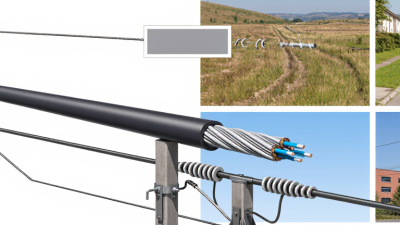
ADSS cable uses no metallic messenger and suits high-voltage corridors. Its lightweight structure reduces pole loading and supports long fiber spans.
OPGW combines optical fibers with a grounding function on transmission towers. It requires careful tension control and verified electrical performance.
Figure-8 cable includes a supporting wire, making it practical for compact telecom networks.
Aerial bundled cable places insulated conductors together, which can improve safety in crowded urban streets.
Applications differ by region. Tropical projects need water blocking, UV resistance, and protection against fungal growth. Cold areas demand stable jackets that tolerate ice and repeated temperature changes. Coastal routes face salt spray, while dry regions create dust and strong daytime heating. Installation teams should also check sag calculations, wind pressure, and local clearance rules.
Experience shows that supplier reliability depends on more than factory capacity. Buyers should request test reports, traceable materials, sample inspection records, and clear warranty terms. One common mistake is selecting a cable from a catalog without reviewing actual pole spacing. That decision can create excessive sag or difficult maintenance later. It is also wise to verify installation tools and training support before shipment. Specifications look complete. Real sites are less predictable.
Key Standards for Evaluating Aerial Cable Suppliers in 2026
2026 Best Aerial Cable Suppliers for Global Buyers
Key Standards for Evaluating Aerial Cable Suppliers in 2026
Selecting an aerial cable supplier requires more than comparing prices. Buyers should verify compliance with relevant IEC, EN, ASTM, or national standards. Test reports must identify the cable structure, conductor size, insulation material, and testing date. A certificate alone is not proof.
Review tensile strength, sag performance, UV resistance, temperature range, and water penetration protection. For fiber aerial cables, check fiber attenuation, bending performance, and mechanical loading data. For bundled power cables, examine insulation thickness and short-circuit resistance. Ask for routine test records from the actual production batch. Small details matter.
Factory experience also deserves careful review. Reliable suppliers maintain traceable raw-material records, calibrated laboratory equipment, and documented quality procedures. Request production photos, sample inspections, and references from similar climate zones. A cable designed for dry conditions may perform poorly in coastal wind or severe winter temperatures. Delivery promises should include packaging standards and replacement procedures. Mistakes still happen. Some suppliers provide excellent samples but inconsistent mass production. Independent pre-shipment inspection can expose this gap before installation. Clear technical drawings, responsive engineers, and honest limitation statements often reveal more than polished sales language.
Leading Aerial Cable Suppliers by Region and Product Range
2026 Best Aerial Cable Suppliers for Global Buyers
Leading suppliers differ by region and product range. North American projects often require ADSS, messenger-supported cables, and rugged drop cables. European buyers may prioritize compact fiber designs for dense FTTH networks. Asia-Pacific suppliers frequently offer high-volume optical and power cable production. Latin American and African projects need weather-resistant jackets, longer spans, and simpler installation tools.
The International Energy Agency reports that over 80 million kilometers of power grids may need addition or refurbishment by 2040. This supports continued demand for OPGW and other aerial power cables. Meanwhile, ITU Facts and Figures 2023 recorded 5.4 billion internet users worldwide. These figures show why suppliers must combine fiber capacity with reliable field performance. Still, regional data can hide rural gaps. I may overvalue production scale without checking installation experience.
Tips: Ask for span-length data, tensile ratings, UV tests, temperature ranges, and verified loss results. Request samples before approving large orders. Confirm whether the supplier supports ADSS, OPGW, figure-8, and aerial drop cable formats. A supplier with many products is not automatically the best choice. Check packaging details too. Poor reels can damage good cable. Use independent inspection when projects cross borders.
2026 Best Aerial Cable Suppliers for Global Buyers
Leading Aerial Cable Suppliers by Region and Product Range
This chart compares representative voltage classes commonly supported by aerial cable and overhead conductor product ranges across major regional markets. Values are technical reference points rather than company sales figures or supplier market-share data. Actual specifications vary according to grid design, national standards, installation conditions, and utility requirements.
How Global Buyers Compare Quality, Pricing, and Delivery
2026 Best Aerial Cable Suppliers for Global Buyers
Global buyers compare aerial cable suppliers through quality, pricing, and delivery evidence. The IEA’s Electricity Grids and Secure Energy Transitions report says annual grid investment must exceed 600 billion dollars by 2030. That pressure makes dependable cable sourcing more important.
Quality starts with measurable details. Ask for conductor resistance, tensile strength, insulation thickness, UV resistance, and thermal-aging results. Require test reports linked to recognized IEC standards. Factory experience matters too. A supplier should explain how it controls aluminum purity, stranding tension, and drum protection. One missed inspection can create years of maintenance trouble. I have seen specifications look excellent, yet packing quality failed during wet transport.
Pricing needs a wider view. Compare material formulas, currency terms, tooling charges, insurance, inland freight, and replacement policies. The World Bank’s Commodity Markets Outlook highlights continuing commodity-price uncertainty, so fixed quotations may hide adjustment clauses. Delivery also deserves proof. The World Bank’s 2023 Logistics Performance Index shows clear differences in customs efficiency and shipment reliability between markets. Request production milestones, container photos, and a realistic buffer for port delays.
Tips: Build a weighted scorecard before requesting quotations. Give quality 40%, landed cost 30%, delivery 20%, and support 10%. Check three recent export references. Do not choose the lowest price too quickly. A cheap drum is expensive when installation stops.
Procurement Steps for Selecting a Reliable Aerial Cable Supplier
2026 Best Aerial Cable Suppliers for Global Buyers
Procurement Steps for Selecting a Reliable Aerial Cable Supplier
Global grid expansion is increasing pressure on cable procurement teams. The International Energy Agency’s 2023 report estimates that annual grid investment must exceed USD 600 billion by 2030. That figure makes supplier verification more important than low pricing.
Define the cable before requesting quotations. Specify voltage, conductor material, insulation, neutral design, span length, weather exposure, and installation temperature. Ask suppliers to provide full technical datasheets, routine-test records, and type-test evidence. For low-voltage aerial bundled cables, check alignment with IEC 60502-1 or the applicable national standard. For higher-voltage systems, review the relevant IEC 60840 requirements. Details matter.
Then audit production capability. Review conductor resistance results, insulation aging tests, dimensional controls, and batch traceability. A factory visit is useful, but a video tour is not equal evidence. Request recent laboratory reports, calibration records, and sample coils from normal production. Confirm lead times, packaging strength, export documents, and claims procedures in writing. Also compare copper or aluminum price-adjustment formulas. They can change the real contract value.
Use a weighted scorecard. Technical compliance should carry more weight than marketing language. I would include quality, delivery history, documentation, financial stability, and after-sales response. A supplier may pass every paper review and still struggle during peak demand. That uncomfortable possibility deserves a contingency plan. Secure an approved backup source before the first shipment.



 +86 13777722188
 WHATSAPP
 PHONE
 E-MAIL