+86 13777722188


Global cable buyers face a practical question: which Aluminum Cable type fits the project, climate, and budget?
The answer is rarely simple. Conductors may look similar on a supplier’s website. Their alloy, insulation, stranding, and connection methods can differ significantly. A cable designed for overhead transmission may perform poorly in a crowded industrial tray. A compact cable may save space, yet demand stricter installation control.
Heidi Brock, former president and CEO of The Aluminum Association, has said, “Aluminum combines lightness, strength, and recyclability.” That principle helps explain its growing role in power distribution. Lower weight can reduce transport effort, tower loading, and installation time. However, aluminum is not a universal replacement for copper. Its larger conductor diameter, oxide layer, and thermal expansion require compatible lugs and careful joint preparation.
Small details matter.
A buyer should examine alloy grade, ampacity, voltage rating, insulation temperature, fire performance, and certification. Outdoor projects also need protection against moisture, ultraviolet exposure, corrosion, and mechanical damage. Supplier documentation should match the actual production batch, not only a generic catalogue page.
This guide reviews ten Aluminum Cable types for global buyers. It compares common applications, strengths, limitations, and selection risks. The ranking is useful, but not absolute. Site conditions can change the decision. Even experienced teams sometimes overlook termination quality, where many field failures begin.
Good procurement is more than choosing the lowest price. It means matching verified performance with installation reality, local standards, and long-term maintenance needs.
Top 10 Aluminum Cable Types for Global Buyers
Aluminum cable selection starts with the conductor, not the jacket. Most power cables use 1350 series aluminum because it offers good conductivity, low weight, and practical cost. Its conductivity is about 61% of copper, so the same current may require a larger cross-sectional area.
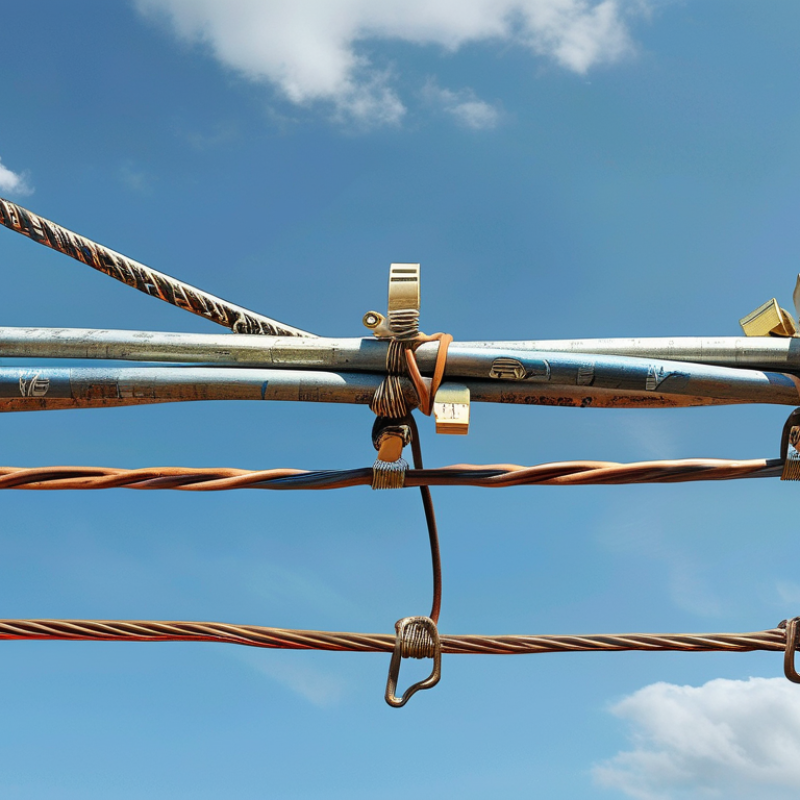
Common options include AAC, AAAC, ACSR, ACAR, aerial bundled cable, single-core XLPE, multicore XLPE, PVC-insulated, armored, and concentric aluminum cables. Each serves a different setting. AAC suits short overhead spans, while ACSR adds steel strength for longer routes. XLPE cables handle higher thermal demands. Armored designs add mechanical protection near trenches or industrial equipment.
IEC 60228 defines conductor construction and resistance. Class 1 uses solid conductors. Class 2 uses stranded, rigid conductors. Classes 5 and 6 support flexible applications. This detail matters when cables pass through bends, trays, or moving equipment. Do not assume every “flexible” label means Class 5.
A useful purchasing check compares conductor class, measured resistance, insulation rating, and temperature limits. IEC 60502-1 commonly covers low-voltage power cables, while IEC 60840 addresses certain higher-voltage designs. Flame, smoke, and gas performance may require additional standards.
Field inspections sometimes expose loose strands or undersized conductors. Packaging can look perfect. The cable may still fail dimensional checks. I would request test reports, conductor diameter data, and batch traceability before approving a shipment. Some specifications remain unclear. That deserves review, not guesswork.
Chart metric: Reference DC resistance at 20°C for ten commonly specified nominal aluminum conductor sizes, calculated using the 1350 aluminum resistivity value of 0.028264 Ω·mm²/m.
These sizes are widely used in low-voltage and medium-voltage cable designs. Actual finished-cable resistance may vary with conductor class, stranding, temperature, insulation system, and manufacturing tolerances. IEC 60228 defines conductor classes including Class 1, Class 2, Class 5, and Class 6; cable selection should also consider the applicable installation and product standards.
Top 10 Aluminum Cable Types by Voltage Range: 600 V, 1 kV, and 35 kV
Global buyers are comparing aluminum cables more carefully as grid expansion accelerates. The IEA’s Electricity Grids report estimates annual grid investment must exceed 600 billion dollars by 2030. Aluminum helps reduce conductor weight and installation effort. However, its larger conductor size needs proper terminal preparation.
For 600 V systems, common choices include XHHW-2, THHN/THWN-2, USE-2, and aluminum service-entrance triplex. These suit buildings, feeders, and outdoor connections. At 1 kV, buyers often evaluate XLPE, EPR, PVC, and armored aluminum cables. XLPE usually offers strong thermal performance. EPR can provide useful flexibility in demanding installations. At 35 kV, the practical group includes XLPE medium-voltage cable, EPR medium-voltage cable, and concentric-neutral cable. IEC 60502-1 covers many low-voltage power cables up to 1 kV, while IEC 60840 addresses cables above 30 kV. Regional rules still differ.
Tips: Confirm voltage, conductor class, insulation temperature, screen design, and short-circuit rating. Request routine-test records. Do not compare price alone. A cheaper 35 kV cable may require more expensive termination work. I have seen specifications fail because buyers ignored bending radius and aluminum oxidation control. That mistake is easy to repeat. Verify the installation standard, fault level, and local approval before ordering.
AAC uses stranded 1350-H19 aluminum, offering high conductivity and a light structure. It suits urban spans and moderate mechanical loads. However, its tensile strength limits longer crossings.
AAAC usually uses an aluminum alloy rather than pure 1350-H19 aluminum. The alloy improves strength and resistance to sag, while maintaining useful conductivity.
ACSR combines 1350-H19 aluminum strands with a galvanized steel core. The aluminum carries most current, and the steel provides mechanical support. This design performs well across long spans, windy corridors, and heavier ice conditions. Still, steel can increase weight, magnetic effects, and corrosion concerns.
The comparison is not always simple. A higher strength rating may reduce sag, but it can complicate installation and hardware selection.
Tips: Check ampacity, span length, sag limits, short-circuit performance, and local weather data together. Confirm the conductor diameter against existing fittings. Do not choose by conductivity alone. In practical procurement, a small mismatch in stranding or core diameter can delay installation. I have also seen weight estimates appear accurate but ignore temporary construction loads. That oversight deserves a second review. Temperature assumptions matter, too. A conductor rated at 75°C may behave differently under emergency loading. Procurement teams should request certified test reports, dimensional data, and clear material standards before approving a shipment.
Top 10 Aluminum Cable Types for Global Buyers
For 4–35 kV systems, voltage class is only the starting point. Common options include 4 kV shielded, 6 kV shielded, 8.7/15 kV, 12/20 kV, 18/30 kV, and 26/35 kV cables. Buyers can also choose single-core, three-core, steel-wire-armored, steel-tape-armored, direct-buried, and aerial bundled constructions. IEC 60502-2 provides key design guidance for extruded-insulation medium-voltage cables up to 30 kV, with 36 kV maximum system voltage. Always verify whether a 35 kV project requires a different national standard.
Aluminum weighs about one-third as much as copper, while its conductivity is approximately 61% IACS, according to technical data from the International Aluminium Institute. This reduces pulling loads, but usually requires a larger conductor cross-section. For underground routes, check soil thermal resistivity, burial depth, water exposure, screen bonding, and fault-current duration. Armoring improves mechanical protection. It does not replace correct grounding. For aerial installation, messenger strength, wind loading, ice loading, and sag calculations are critical. The IEA’s Electricity Grids and Secure Energy Transitions report estimates annual grid investment must exceed 600 billion US dollars by 2030, increasing demand for practical medium-voltage cable designs. A neat spreadsheet can still miss local installation conditions.
Tips: Match conductor size to ampacity and voltage drop, then confirm short-circuit performance. Request routine and type-test evidence. Do not compare price per meter alone. Check termination compatibility, because poor preparation can undermine an excellent cable.
Top 10 Aluminum Cable Types for Global Buyers
Choosing among AAC, AAAC, ACSR, insulated low-voltage, and medium-voltage aluminum cables requires more than comparing price. Start with ampacity. NFPA 70 Table 310.16 lists 120 amperes for 1/0 AWG aluminum conductors at 75°C under specified installation conditions. That figure changes with ambient temperature, grouping, conduit fill, and burial depth. The table is not universal.
Conductivity also deserves close checking. The International Annealed Copper Standard, or IACS, uses copper as its 100% reference. Many electrical-grade aluminum conductors target at least 61% IACS at 20°C, consistent with ASTM conductivity testing practices. Ask for test results, not only a catalogue claim. Small differences matter over long feeders.
Temperature ratings must match the insulation and installation method. IEC 60287 calculates cable current capacity through conductor losses, thermal resistance, and surrounding conditions. A 90°C insulation rating may improve ampacity, but terminals can still limit the usable value. Compliance requires evidence against the destination market’s rules, such as IEC 60502-1 or relevant national codes. Factory certificates help, but they do not replace project-level verification. A tidy datasheet can still mislead. I would recheck every correction factor before approving a shipment.
| Cable Type | Typical Conductor / Construction | Indicative Ampacity | Aluminum Conductivity at 20°C | Maximum Conductor Temperature | Typical Applications | Common Compliance References | Buyer Checklist |
|---|---|---|---|---|---|---|---|
| AAC (All-Aluminum Conductor) |
Stranded EC-grade aluminum, commonly 1350-H19; no steel core. | Approximately 250–700 A for common overhead sizes; rating depends on diameter, wind, solar heating, and allowable temperature. | Typically 61–62% IACS for EC aluminum 1350 at 20°C. | Usually 75–90°C continuous, subject to the utility design. | Short and medium-span overhead distribution; urban and coastal networks where high conductivity is preferred. | ASTM B231/B231M; IEC 61089; applicable national utility specifications. | Confirm sag, span length, corrosion exposure, strand count, and minimum breaking load. |
| AAAC (All-Aluminum Alloy Conductor) |
Stranded aluminum-magnesium-silicon alloy, commonly alloy 6201-T81. | Approximately 220–650 A for common overhead sizes; thermal rating must be calculated for the installation. | Typically about 52–55% IACS; higher mechanical strength than EC-grade 1350. | Commonly 75–90°C continuous; higher ratings require engineering approval. | Medium and long-span overhead lines; areas requiring improved strength-to-weight performance and corrosion resistance. | ASTM B399/B399M; IEC 61089; local overhead-line regulations. | Do not specify 61% IACS unless the selected alloy and temper are documented to meet it. |
| ACSR (Aluminum Conductor Steel-Reinforced) |
1350 aluminum strands surrounding a galvanized or aluminum-coated steel core. | Approximately 300–900 A for common sizes; ampacity is affected by steel-core ratio and operating temperature. | Aluminum strands are generally about 61% IACS; the complete composite conductor is lower because of the steel core. | Typically 75–90°C continuous; special designs may permit higher emergency temperatures. | Transmission and distribution lines requiring high tensile strength, long spans, and low sag. | ASTM B232/B232M; IEC 61089; EN 50182 where applicable. | Check steel-core coating, calculated sag-tension data, short-circuit performance, and wildlife or coastal corrosion requirements. |
| ACAR (Aluminum Conductor Aluminum-Reinforced) |
1350 aluminum strands around a high-strength 6201-T81 aluminum alloy core. | Approximately 300–850 A for common sizes; actual values depend on the aluminum area and installation conditions. | Outer EC aluminum is generally about 61% IACS; alloy reinforcement is normally about 52–55% IACS. | Usually 75–90°C continuous, depending on the line design. | Transmission and sub-transmission where good conductivity, reduced weight, and high strength are required without a steel core. | ASTM B524/B524M; IEC 61089; applicable utility standards. | Confirm the ratio of 1350 aluminum to 6201 alloy, rated tensile strength, and compatibility with fittings. |
| ABC (Aerial Bundled Cable) |
Insulated stranded aluminum phase conductors, commonly with an aluminum or messenger support conductor. | Approximately 100–300 A per phase for common low-voltage sizes; spacing, ambient temperature, and bundling affect the rating. | Usually about 61% IACS when EC-grade 1350 aluminum is used; alloy messenger conductivity may be lower. | Commonly 90°C continuous conductor rating; some designs use 70°C or 90°C limits depending on insulation. | Low-voltage aerial distribution, service drops, dense urban areas, and locations where reduced right-of-way is desired. | IEC 60502-1; HD 626 or EN 50397-1 where applicable; national low-voltage cable standards. | Verify insulation UV resistance, messenger strength, water blocking, torsion resistance, and phase identification. |
| XHHW-2 Aluminum Building Wire | Compact stranded 1350 or AA-8000 aluminum conductor with cross-linked polyethylene insulation. | Example: approximately 180 A for 4/0 AWG aluminum under common 75°C termination conditions. | 1350 aluminum is generally about 61% IACS; AA-8000 building-wire alloys are normally lower. | 90°C wet or dry rating; ampacity is limited by the applicable termination temperature. | Feeders, services, switchboards, panelboards, raceways, and industrial power distribution. | UL 44; CSA C22.2 No. 38; NEC or applicable national electrical installation code. | Confirm AA-8000 compliance, oxide-inhibiting compound requirements, torque values, and connector approval for aluminum. |
| RHW-2 / RHH Aluminum Cable | Stranded aluminum conductor with heat- and moisture-resistant cross-linked insulation. | Example: approximately 180 A for 4/0 AWG aluminum under common 75°C termination conditions. | Usually about 61% IACS when 1350 aluminum is specified; check the conductor alloy certificate. | 90°C wet or dry; may be rated 105°C for specific emergency or limited-duration conditions. | Industrial feeders, underground raceways, wet locations, and power distribution systems. | UL 44; CSA C22.2 No. 38; NEC or the relevant national wiring code. | Check wet-location marking, insulation thickness, bending radius, fire performance, and termination compatibility. |
| USE-2 Aluminum Underground Cable | Stranded aluminum conductor with sunlight-resistant, moisture-resistant cross-linked insulation; may be single-conductor or multi-conductor. | Example: approximately 180 A for 4/0 AWG aluminum under common 75°C termination conditions. | Commonly about 61% IACS for EC-grade aluminum 1350; alloy conductors may differ. | 90°C wet or dry; final circuit rating is controlled by terminations and installation code. | Direct burial, underground service entrances, photovoltaic interconnection routes, and utility distribution. | UL 854; UL 44 where dual-rated; NEC or applicable underground-cable regulations. | Confirm direct-burial approval, sunlight resistance, water resistance, minimum burial depth, and cable-jacket requirements. |
| PV Aluminum Cable | Fine-stranded or compact aluminum conductor with sunlight-, ozone-, and weather-resistant photovoltaic insulation or jacket. | Approximately 100–250 A for common larger cross-sections; installation grouping and ambient temperature require derating. | Approximately 61% IACS for 1350 aluminum; many specialized alloy conductors are below 61% IACS. | Typically 90°C wet/dry, with some photovoltaic constructions rated up to 105°C or 125°C. | Large photovoltaic arrays, inverter feeders, collector circuits, and outdoor renewable-energy installations. | UL 4703; IEC 62930; EN 50618 where applicable; relevant PV installation code. | Verify DC voltage rating, UV and ozone resistance, connector compatibility, bending radius, and galvanic-corrosion control. |
| Aluminum Armored Power Cable | Stranded aluminum conductor with XLPE or PVC insulation and aluminum wire armor or tape armor, often with an outer sheath. | Example: approximately 180–310 A for 4/0–500 kcmil conductors, depending on cores, armor, installation, and ambient temperature. | Typically about 61% IACS for 1350 conductor; complete cable resistance is affected by armor and construction. | Commonly 90°C conductor rating for XLPE; PVC designs are often limited to 70°C. | Industrial plants, commercial buildings, tunnels, substations, tray systems, and underground power routes. | IEC 60502-1 or IEC 60502-2; BS 6622 or other national standards where applicable; local fire and installation codes. | Check armor material, fault-current capacity, flame and smoke performance, gland compatibility, and indoor/outdoor suitability. |