

 +86 13777722188
Leave Your Message
-
 WHATSAPP
-
 PHONE
-
 E-MAIL
China has become a major source of Insulated Cable for international construction, energy, transport, and industrial projects. Its manufacturers serve buyers seeking dependable performance, competitive pricing, and flexible production. Yet choosing a supplier involves more than comparing catalog prices.
This guide introduces ten leading Chinese insulated cable manufacturers for global buyers. It examines product ranges, manufacturing experience, quality systems, testing capabilities, export service, and project suitability. Typical products may include low-voltage power cables, control cables, fire-resistant cables, solar cables, and medium-voltage solutions. Details such as conductor material, insulation compound, voltage rating, temperature range, and certification can strongly affect purchasing decisions.
Factory evidence matters. Buyers should review technical datasheets, sample reports, production photos, and independent test records. A professional supplier should explain conductor stranding, insulation thickness, sheath protection, and batch traceability clearly. Delivery performance matters too, especially when cable drums reach remote construction sites or busy ports.
No ranking remains permanent. Product quality can vary between factories, models, and production batches. Some public information may also become outdated. Buyers should verify current certificates, factory capacity, warranty terms, and compliance requirements before signing contracts. Local installation conditions deserve attention as well. A cable suitable for an indoor control cabinet may fail in sunlight, moisture, chemicals, or heavy mechanical environments.
This overview offers a practical starting point, not a substitute for technical verification. The best manufacturer is the one matching the project’s electrical design, risk level, timeline, and service expectations. Reliability must be demonstrated.
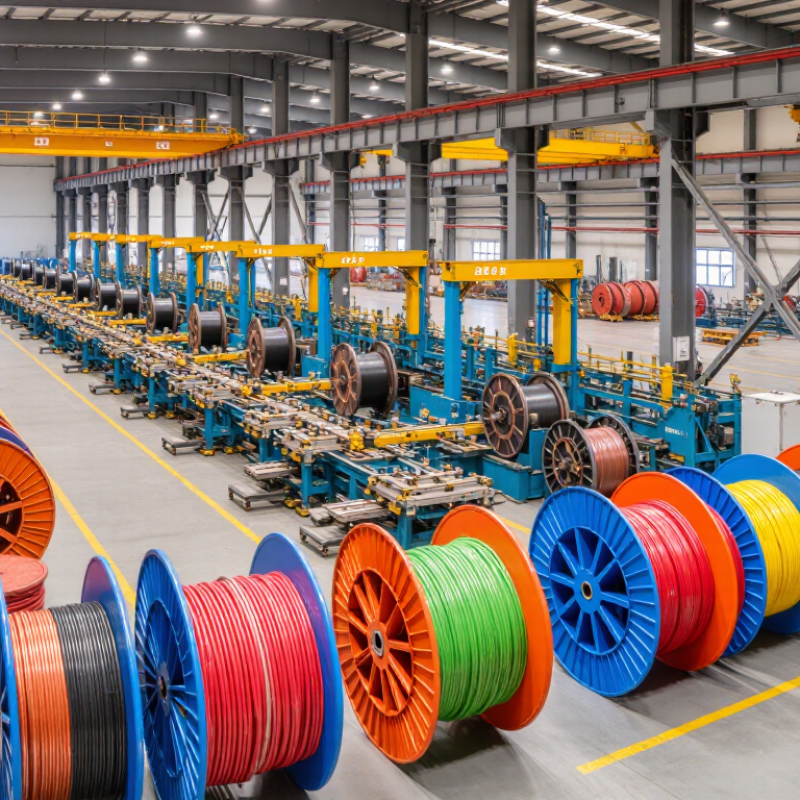
What Defines a Leading Insulated Cable Manufacturer in China
For global buyers, a leading insulated cable manufacturer offers more than competitive pricing. It combines material control, process discipline, verified testing, and dependable communication. The IEA’s Electricity Grids and Secure Energy Transitions report states that annual grid investment must exceed 600 billion US dollars by 2030. This growth increases demand for cables that withstand heat, moisture, mechanical stress, and long service periods.
A serious manufacturer should follow relevant IEC requirements, such as IEC 60502 for power cables, while adapting designs to project conditions. Buyers should review conductor resistance, insulation thickness, voltage tests, flame performance, and aging results. ISO 9001 certification supports process consistency, but it does not replace factory inspection. Ask for recent test reports, calibration records, batch traceability, and samples from normal production. A polished audit can still miss weak subcontracting controls. No supplier is flawless; transparency matters when problems appear.
Tips: Request a pilot order before signing a large contract. Compare test data with the purchase specification, not only the quotation. Visit the extrusion line and observe temperature monitoring, spark testing, and reel protection. Check whether the manufacturer can provide clear export documents and stable lead times. Independent inspection may add cost, but it can expose poor insulation concentricity or damaged packaging before shipment. Based on practical sourcing experience, small details often reveal larger quality habits.
| Rank | Anonymous Manufacturer Profile | Primary Product Coverage | Typical Insulation Materials | Relevant Voltage Range | International Standards to Verify | Key Buyer Qualification Evidence | Best-Fit Global Application |
|---|---|---|---|---|---|---|---|
| 01 | Profile A — Integrated High-Voltage Producer | Low-, medium- and high-voltage power cables; underground transmission systems | XLPE, PVC, PE and semi-conductive shielding compounds | Up to 500 kV project capability, subject to design | IEC 60840; IEC 62067; IEC 60228 | Type-test reports, partial-discharge results, routine-test records and traceable conductor data | Transmission and utility networks |
| 02 | Profile B — Medium-Voltage Utility Specialist | Distribution cables, feeder cables and screened medium-voltage cables | XLPE or EPR insulation with copper or aluminium conductors | 3.6/6 kV to 18/30 kV | IEC 60502-2; IEC 60228; IEC 60811 | Conductor-resistance tests, insulation-thickness records, ageing tests and approved drawings | Industrial and distribution grids |
| 03 | Profile C — Renewable-Energy Cable Producer | Solar photovoltaic cables, wind-farm collection cables and flexible power cables | Cross-linked low-smoke, halogen-free or irradiation-resistant compounds | 600/1000 V and 1.8 kV DC for PV designs | IEC 62930; EN 50618; IEC 60228 | UV, ozone, thermal-cycling, flame and outdoor-ageing test evidence | Solar farms and wind projects |
| 04 | Profile D — Industrial Control and Automation Specialist | Control, instrumentation, motor and industrial flexible cables | PVC, PUR, XLPE and low-smoke, halogen-free compounds | 300/500 V to 1.8/3 kV | IEC 60227; IEC 60502-1; IEC 60332 | Bending-cycle data, EMC construction details, flame tests and conductor flexibility results | Factories and process plants |
| 05 | Profile E — Building-Wire and Construction Supplier | Single-core building wire, multicore fixed-installation cables and fire-rated cables | PVC, LSZH and flame-retardant thermoplastic insulation | 300/500 V to 450/750 V | IEC 60227; IEC 60332; IEC 60754 where applicable | Flame-retardancy reports, smoke-acidity results and dimensional inspection records | Commercial and residential buildings |
| 06 | Profile F — Marine and Offshore Cable Producer | Marine power, control, communication and offshore platform cables | XLPE, SHF or other low-smoke, halogen-free marine compounds | Up to 1.8/3 kV for many marine power designs | IEC 60092 series; IEC 60332; IEC 60754 | Marine type approval, saltwater resistance, fire-survival and smoke-toxicity test records | Ships and offshore facilities |
| 07 | Profile G — Railway and Transit Cable Supplier | Rolling-stock, railway infrastructure, signalling and transit power cables | Low-smoke, halogen-free, flame-retardant and oil-resistant compounds | 300/500 V to 1.8/3 kV | EN 45545-2; EN 50264; IEC 60332 | Hazard-level classification, smoke-density results, vibration and flexing test data | Rail vehicles and metro systems |
| 08 | Profile H — Mining and Heavy-Industry Cable Producer | Mining, crane, reeling, trailing and heavy-duty power cables | EPR, chlorinated elastomer, PUR or other abrasion-resistant compounds | Up to 35 kV, depending on construction | IEC 60502; IEC 60228; applicable mining regulations | Torsion, tensile, impact, abrasion, oil and low-temperature performance tests | Mines, ports and steel plants |
| 09 | Profile I — Data, Telecom and Low-Voltage Cable Supplier | Data, communication, coaxial, alarm and low-voltage signal cables | PVC, PE, FEP, LSZH and foam polyethylene constructions | Extra-low voltage to 300 V, depending on product type | IEC 61156; IEC 60332; ISO/IEC 11801 where applicable | Impedance, insertion-loss, return-loss, crosstalk and shielding test reports | Data centers and communication networks |
| 10 | Profile J — Customized Export and Private-Label Manufacturer | Custom conductor sizes, special jackets, non-standard packaging and project-specific cables | PVC, XLPE, LSZH, PUR, EPR and other specified compounds | Defined by the approved technical specification | Applicable IEC, EN, ASTM or national project standards | Factory audit, sample approval, inspection plan, certificate of origin and export packing records | OEM, distributors and project procurement |
Note: The profiles are intentionally anonymized. Ranking should be confirmed through current factory audits, independent test reports, applicable certifications, production capacity checks and project references rather than company size alone.