Leave Your Message

Top Aluminum Cable Manufacturers for Global Buyers?

Choosing the right Aluminum Cable manufacturer can influence project safety, installation speed, and long-term operating costs. Global buyers often compare suppliers across price, conductivity, insulation quality, production capacity, and delivery reliability. A polished website is not enough. Factory evidence matters more.

This guide examines leading manufacturers through practical purchasing criteria. It considers conductor grades, cable construction, voltage ratings, flame resistance, and environmental performance. It also reviews quality systems, laboratory testing, product traceability, and certification practices. Buyers should check whether certificates match the actual factory and product specification. That detail is easy to overlook.

Real projects reveal more than brochures. A reliable supplier should explain how it controls aluminum purity, strand consistency, insulation thickness, and joint performance. Clear technical drawings help prevent costly misunderstandings. Sample testing can expose problems before full production begins. It is a simple step. Yet some buyers skip it under schedule pressure.

The shortlist should also reflect regional requirements. Standards, customs procedures, packaging rules, and delivery distances can change the final cost. Manufacturers with responsive engineering teams may solve installation issues faster. Still, no ranking is permanent. Capacity, raw material pricing, and service quality can change over time. Buyers should request current test reports, recent references, production photographs, and realistic lead times. These checks create a more balanced view of manufacturer capability and reduce dependence on marketing claims. The strongest choice is not always the cheapest or most famous. It is the supplier that consistently matches technical needs with verifiable performance.
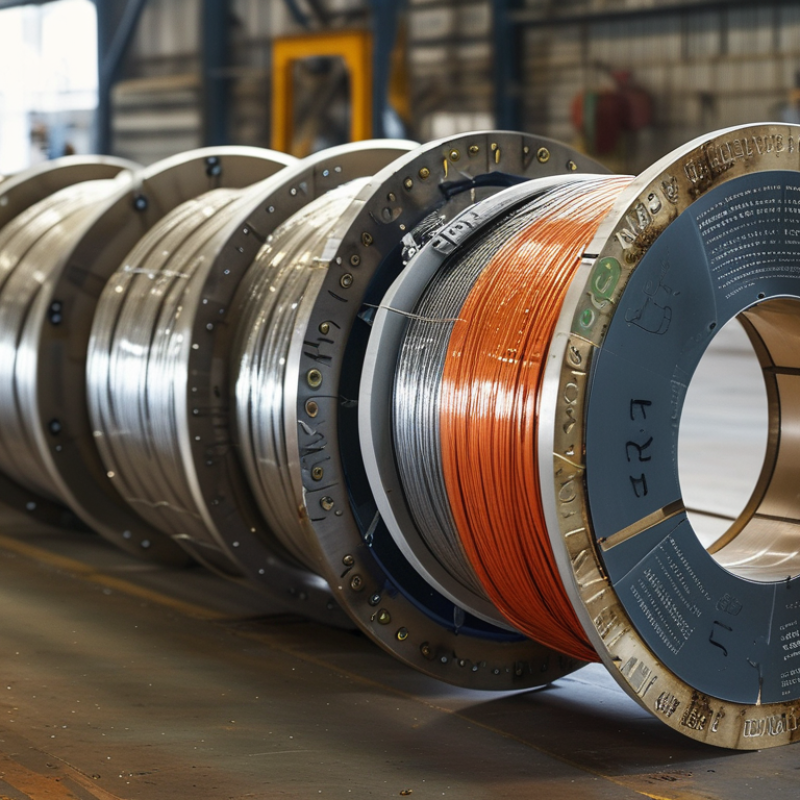
Top Aluminum Cable Manufacturers for Global Buyers?

How Aluminum Cables Are Defined and Classified

Top Aluminum Cable Manufacturers for Global Buyers?

How Aluminum Cables Are Defined and Classified

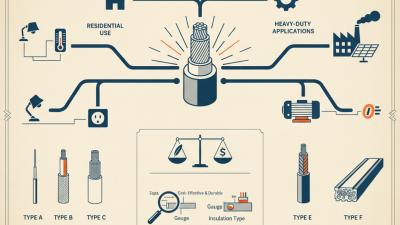
For global buyers, aluminum cable classification begins with conductor material and construction. An aluminum cable uses aluminum strands to carry electrical current. Its design may include insulation, shielding, armor, or a protective outer jacket. Bare or insulated? That distinction changes the installation method, safety requirements, and expected service life.

Manufacturers commonly classify conductors as solid, stranded, compacted, or steel-reinforced. Solid conductors suit fixed installations and simple routing. Stranded designs provide better flexibility during handling. Compacted strands reduce the cable diameter slightly.

Insulation types also matter. PVC, XLPE, and elastomeric compounds behave differently under heat, moisture, and mechanical stress. Voltage classification separates low-voltage, medium-voltage, and higher-voltage products. Application categories may include building wiring, overhead lines, industrial equipment, and renewable energy systems.

Experienced buyers should request the cross-sectional area, conductor resistance, ampacity, temperature rating, and bending radius. Check the jacket marking against the technical datasheet. A clear marking often shows size, voltage class, insulation type, and production details. I have seen specifications conflict with printed cable markings. That small mismatch deserves attention.

Classification terms can also vary between markets and testing systems. Ask for test reports, material declarations, and traceable production records. A dependable manufacturer should explain these details without vague promises. Even experienced teams can overlook installation temperature or connector compatibility. That mistake can affect performance.
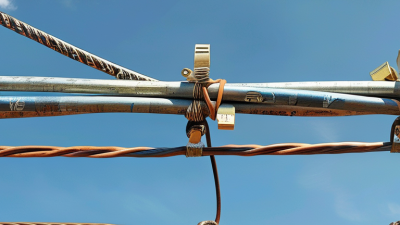

Key Capabilities of Leading Aluminum Cable Manufacturers

Top Aluminum Cable Manufacturers for Global Buyers?

Leading aluminum cable manufacturers combine material expertise, controlled production, and reliable quality testing. They select alloys according to conductivity, flexibility, corrosion exposure, and installation conditions. Their engineers can recommend compact conductors for limited spaces or stranded designs for easier handling.

Strong manufacturers inspect conductor diameter, insulation thickness, tensile strength, and electrical resistance during production. They also use routine testing, including voltage and aging checks, before shipment. Clear technical drawings, batch records, and inspection reports help global buyers verify each order. However, testing alone is not enough. A supplier should explain its sampling methods and admit possible production limits.

Tips: Ask for recent test reports, conductor standards, packaging photos, and production lead times. Request a sample before placing a large order. Check whether the supplier can adjust insulation color, length, marking, and reel size. Small details matter.

Practical experience also separates capable manufacturers from ordinary exporters. Experienced teams understand port handling, moisture protection, and installation challenges in different climates. They should provide accurate specifications instead of vague promises. A reliable supplier communicates quickly when copper prices, aluminum grades, or delivery schedules change. No manufacturer is perfect. Careful buyers should compare evidence, not impressive claims.

Top Aluminum Cable Manufacturers for Global Buyers? - Key Capabilities of Leading Aluminum Cable Manufacturers
Evaluation Dimension Typical Capability or Product Range Relevant Technical References Why It Matters to Global Buyers
Aluminum Conductor Types
  • AAC: all-aluminum conductor
  • AAAC: all-aluminum alloy conductor
  • ACSR: aluminum strands reinforced with a steel core
  • ACSS: aluminum conductor with a steel-supporting core
IEC 61089; ASTM B231, ASTM B232, ASTM B399 and ASTM B856 Conductor construction affects mechanical strength, current capacity, weight and suitability for overhead transmission or distribution networks.
Low-Voltage Power Cables Insulated aluminum power cables commonly designed for systems up to 1 kV, with PVC, XLPE or other approved insulation and protective sheathing. IEC 60502-1; applicable national electrical codes Useful for building services, feeders, industrial distribution and utility connections where installation conditions are clearly defined.
Medium-Voltage Power Cables Single-core or multicore aluminum cables with XLPE insulation, metallic screens and outer sheaths for medium-voltage distribution systems. IEC 60502-2; IEC 60840 may apply to higher voltage classes Proper insulation, screening, testing and sheath design are essential for network reliability and safe operation.
Conductor Cross-Section Common metric sizes include 16 mm², 25 mm², 35 mm², 50 mm², 70 mm², 95 mm², 120 mm², 150 mm², 185 mm², 240 mm², 300 mm² and larger project-specific sizes. Final selection depends on the applicable product standard, voltage rating, installation method and permissible temperature. Correct sizing helps control voltage drop, thermal loading, material cost and long-term energy losses.
Conductor Material and Temper Electrical-grade aluminum is commonly supplied in conductor forms such as stranded, compacted or shaped conductors; alloy selection varies according to electrical and mechanical requirements. Applicable ASTM, IEC, BS, EN or project specifications Material chemistry, resistivity, tensile performance and strand quality influence electrical efficiency and installation performance.
Insulation Systems Common insulation materials include PVC for many low-voltage applications and XLPE for low-voltage and medium-voltage power cables. IEC 60502 series and relevant national standards Insulation determines operating temperature, dielectric performance, moisture resistance and allowable service conditions.
Shielding and Armoring Available designs may include copper-tape screens, copper-wire screens, steel-wire armor, steel-tape armor or unarmored constructions. Product-specific requirements under IEC, BS, EN, ASTM or utility specifications Screening supports electric-field control, while armor can improve mechanical protection in buried or industrial installations.
Temperature Ratings Typical continuous conductor ratings are approximately 70°C for many PVC-insulated designs and approximately 90°C for many XLPE-insulated designs, subject to the applicable standard and construction. IEC 60502 series; manufacturer test data and installation conditions Temperature rating affects ampacity, overload capability, service life and cable routing requirements.
Manufacturing Process Control
  • Rod breakdown and wire drawing
  • Stranding and compacting
  • Insulation extrusion
  • Screening, armoring and sheathing
  • Online dimensional and spark testing
Documented process controls and traceable inspection records Consistent production controls reduce dimensional variation, conductor resistance deviations and insulation defects.
Routine and Type Testing Typical tests include conductor resistance, dimensional checks, voltage tests, insulation resistance, tensile testing, elongation testing and verification of construction. Applicable clauses of IEC, ASTM, BS, EN or customer specifications Independent or witnessed testing provides evidence that supplied cable matches the approved design and purchase requirements.
Quality and Compliance Systems Global suppliers commonly operate documented quality, environmental and occupational-health systems, subject to certification scope and audit status. ISO 9001, ISO 14001 and ISO 45001 may be relevant where certified and within scope Management-system certification supports repeatability, corrective action, environmental control and supplier qualification.
Customization Capability Possible customizations include conductor size, insulation color, sheath material, armor construction, drum length, voltage rating, printing and technical documentation. Must be confirmed against the applicable standard and approved technical datasheet Customization enables compliance with local regulations, utility specifications, installation constraints and project documentation requirements.
Packaging and Export Readiness Common export formats include wooden drums, steel-wood drums and coils for shorter lengths, with cable ends sealed against moisture where required. Packaging should be agreed with the buyer according to cable diameter, length, transport mode and destination Correct packaging reduces transit damage, drum deformation, moisture ingress and unloading difficulties.
Technical Documentation Typical documents include datasheets, construction drawings, certificates of conformity, routine-test reports, packing lists, invoices and shipping documents. Document format should match the purchase contract and destination-country requirements Complete documentation simplifies customs clearance, inspection, installation approval and project handover.
Application Coverage Typical applications include overhead distribution, utility networks, building feeders, industrial power distribution, renewable-energy collection systems and underground installations. Application suitability depends on voltage, environment, installation method, load profile and local regulations. Matching the cable construction to the operating environment is critical for safety, reliability and total lifecycle cost.
Buyer Verification Checklist
  • Confirm the governing standard and voltage class.
  • Review conductor size, resistance and construction.
  • Check insulation, sheath and armor specifications.
  • Request routine-test results and sample approval.
  • Verify production lead time, drum dimensions and warranty terms.
Use the approved datasheet, purchase specification and inspection plan as controlling documents. A structured verification process helps buyers compare suppliers on measurable technical, quality and logistics criteria rather than price alone.
Technical values and standards should be confirmed against the latest edition of the applicable specification, local regulations, installation method and approved product datasheet before procurement.

Major Aluminum Cable Manufacturers by Product and Region

Top Aluminum Cable Manufacturers for Global Buyers?

Major aluminum cable manufacturers differ by product focus and regional strengths. Asian producers often supply building wire, low-voltage cables, and large export volumes. European manufacturers commonly emphasize fire performance, insulation quality, and documented testing. North American suppliers frequently serve utility, industrial, and renewable-energy projects. Middle Eastern factories are strong in power cables for infrastructure and harsh climates. Product selection matters more than factory size. Low-voltage cables suit buildings, while medium- and high-voltage cables require stricter insulation, shielding, and partial-discharge testing. Overhead conductors, such as aluminum alloy and steel-reinforced designs, need different quality controls.

Regional experience also affects delivery reliability. A manufacturer near major ports may reduce shipping delays, but local certification remains essential. Buyers should request test reports, conductor resistance data, insulation thickness records, and batch traceability. During procurement reviews, physical samples can reveal uneven stranding, rough insulation, or weak packaging. These details are easy to miss in a polished catalog. No supplier fits every project. That is worth remembering.

Tips: Compare factories by product category, not advertising claims. Check operating temperature, voltage rating, conductor class, and applicable standards. Ask for recent inspection records and production photographs. Confirm whether technical support covers installation conditions in your region. A lower quotation may reflect thinner insulation, limited testing, or unclear warranty terms. Small wording differences can create large project risks.

How Global Buyers Can Evaluate Aluminum Cable Suppliers

How Global Buyers Can Evaluate Aluminum Cable Suppliers

Global buyers should evaluate aluminum cable suppliers through evidence, not polished websites. Ask for conductor grade, temper, cross-sectional tolerance, insulation type, and rated voltage. A reliable supplier should provide current test reports from qualified laboratories. Check electrical resistance, tensile strength, elongation, and insulation performance against the agreed specification.

Request samples from a real production batch. Measure the conductor diameter and inspect the insulation for uneven thickness, pinholes, or surface marks. Small details matter. Ask how each coil receives a batch number and how records are retained. Clear traceability helps buyers investigate defects without guessing. Factory visits can reveal practical conditions, including storage humidity, calibration records, and whether testing equipment is actually used.

Supplier experience also appears in technical communication. Engineers should explain aluminum oxidation control, joint preparation, bending limits, and installation requirements in plain language. Ask for references from comparable projects, but verify them independently. A low quotation may exclude packaging, testing, or replacement terms. Read every line. No supplier is flawless, and an attractive audit can miss seasonal production problems. I would request a pilot order before a large contract, then compare delivered weight, packaging quality, test data, and delivery timing. That extra step feels slow. It often exposes assumptions that a spreadsheet cannot.

Aluminum Cable Supplier Evaluation: IEC 60228 Resistance Benchmarks

Buyers can compare supplier test certificates with the maximum DC resistance values specified for Class 2 aluminum conductors under IEC 60228 at 20°C. A lower measured resistance than the applicable benchmark indicates stronger electrical performance, provided the conductor size, construction, and test conditions are equivalent.

Reference: IEC 60228 resistance limits for stranded aluminum conductors, Class 2, at 20°C. Values are shown in Ω/km.

International Standards for Aluminum Cable Manufacturing and Trade

International standards shape how global buyers should evaluate top aluminum cable manufacturers. A reliable manufacturer follows recognized specifications, not only attractive pricing. IEC 60228 defines conductor resistance, size, and electrical performance. IEC 60502 covers many power cable designs and insulation requirements. In North American trade, ASTM standards may apply to aluminum conductors and mechanical properties. Buyers should confirm the exact standard edition before comparing quotations. Details matter.

Tips: Request a complete technical datasheet, routine test report, and material certificate. Check conductor class, cross-sectional area, insulation thickness, voltage rating, and cable markings. Ask whether testing occurs in an accredited laboratory. A factory certificate alone is not enough. I would also compare sample dimensions with the stated specification, because small differences can affect installation and heat performance.

International trade requires more than a compliant production line. Export documents should match the product description, packing list, test records, and applicable customs classification. For European projects, buyers may need additional fire-performance or environmental documentation. Other markets may require national approval, independent inspection, or local-language labels. Manufacturer audits can reveal practical weaknesses, such as poor drum protection or inconsistent sealing. No process is perfect. Even experienced suppliers should review failed tests, rejected batches, and changing regulations. This habit supports safer purchasing and more dependable long-term supply.