Leave Your Message

Top Insulated Cable Manufacturers for Global Buyers

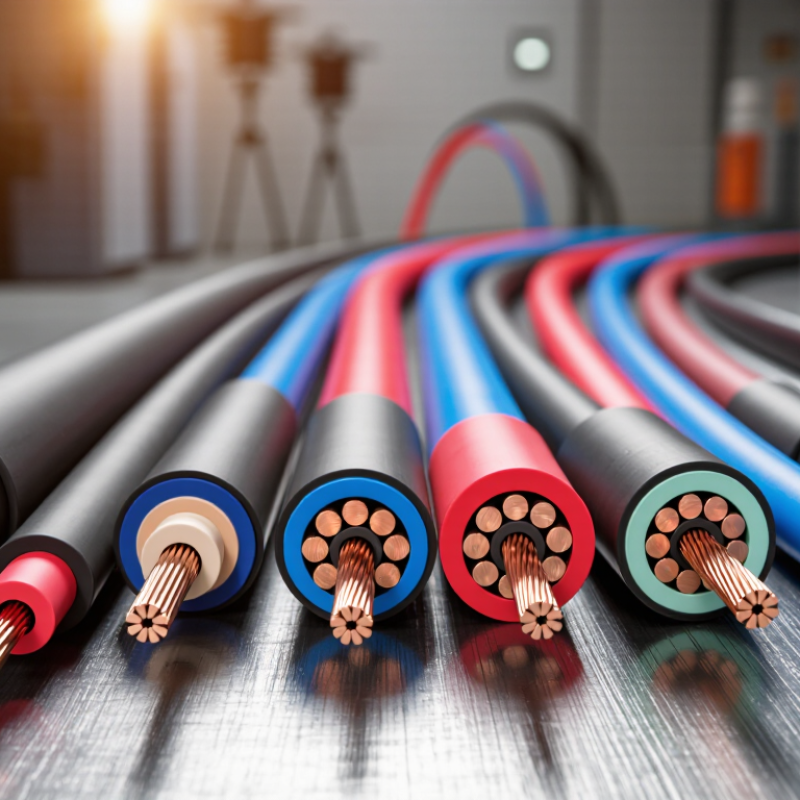
Global buyers are reassessing cable suppliers as grids expand, renewable projects multiply, and data centers consume more electricity. Insulated Cable is central to this transition. It protects conductors from moisture, heat, abrasion, and accidental contact. In real projects, jacket quality can determine whether a cable survives a crowded tray or fails inside a hot industrial enclosure.

The International Energy Agency’s Electricity 2024 report expects global electricity demand to grow by an average of 3.4% annually from 2024 to 2026. That increase creates pressure for dependable transmission, distribution, building, and industrial wiring. Mordor Intelligence also forecasts continued expansion in the insulated wire and cable market through 2029, supported by infrastructure investment and electrification. These figures suggest opportunity, but they do not prove that every manufacturer deserves global trust.

“Electrification is the backbone of the energy transition,” said Christopher Guerin, Chief Executive Officer of Nexans. His observation explains why cable selection now involves more than price. Buyers must examine conductor materials, insulation compounds, voltage ratings, fire performance, factory testing, traceability, and delivery records. International certifications matter, yet certification alone is not enough.

No ranking is flawless. Supplier capacity can change. Raw-material costs can shift suddenly. A manufacturer with an impressive catalogue may still struggle with documentation or after-sales support. This guide therefore evaluates leading Insulated Cable manufacturers through practical criteria, including product consistency, technical experience, compliance evidence, export capability, and project performance. The aim is simple: help global buyers compare credible options before a small specification mistake becomes a costly field problem.

Top Insulated Cable Manufacturers for Global Buyers

What Insulated Cables Are and Why They Matter

Insulated cables are conductors wrapped in protective materials such as PVC, XLPE, rubber, or specialized low-smoke compounds. The conductor carries electricity, while insulation limits leakage, shocks, heat damage, and short circuits. In a factory, this protection separates copper strands from steel trays, moisture, and nearby wiring. Small failures can still create serious downtime.

Their importance is growing with electrification. The International Energy Agency’s Electricity 2024 report projected global electricity demand would increase by about 4% in 2024 and 2025. More power infrastructure means more cables in buildings, vehicles, renewable-energy sites, and data centers. Cable selection therefore requires more than checking voltage and price. Buyers should verify conductor size, temperature rating, bending radius, fire behavior, and installation conditions. Standards such as IEC 60502 and IEC 60227 provide useful reference points for power and low-voltage cable requirements.

Installation experience also matters. A cable rated for dry indoor use may deteriorate quickly in wet soil or direct sunlight. Yet technical sheets are sometimes treated as complete answers. They are not. Actual performance depends on routing, joints, pulling tension, and maintenance. The U.S. Energy Information Administration continues to report rising electricity consumption across major sectors, reinforcing the need for dependable distribution systems. Still, no insulated cable is universally best. A careful specification, independent testing, and traceable quality records often matter more than impressive marketing language.

Top Insulated Cable Manufacturers for Global Buyers: What Insulated Cables Are and Why They Matter

Insulated cables use a non-conductive layer to protect the conductor from electrical leakage, moisture, mechanical contact, and heat. The chart compares typical maximum continuous conductor operating temperatures for widely used insulation materials.

Values shown are typical industry ratings used in common low-voltage cable designs: PVC is generally rated at 70°C, while XLPE, EPR, and many LSZH compounds are commonly rated at 90°C. Actual limits depend on the applicable IEC or national standard, cable construction, installation method, and product specification.

Key Standards for Evaluating Global Cable Manufacturers

Top insulated cable manufacturers for global buyers should be judged by evidence, not catalog promises. The IEA’s Electricity 2024 report expects global electricity demand to grow by an average 3.4% annually through 2026. That pressure increases the need for stable insulation, accurate conductor sizing, and dependable delivery. Buyers should verify compliance with IEC 60228 for conductor classes and IEC 60502-1 for many low-voltage and medium-voltage power cables. Ask for current certificates, not scanned documents from years ago.

Testing depth matters. IEC 60332 evaluates flame propagation, while IEC 60754 and IEC 61034 address corrosive gases and smoke density. These details become critical in tunnels, stations, hospitals, and crowded industrial buildings. A serious supplier should provide routine-test records, type-test reports, batch traceability, and calibration evidence from laboratories operating under ISO/IEC 17025. ISO’s 2023 Survey recorded more than 1.2 million ISO 9001 certificates worldwide, but certification alone does not prove cable quality.

Look closer.

During procurement reviews, compare conductor resistance, insulation thickness, tensile strength, aging results, and packing conditions. The manufacturer should explain deviations clearly. I would also inspect how copper or aluminium is stored before production; humidity and contamination can create problems that paperwork misses. A factory audit is useful, though not perfect. One visit cannot represent every batch. This is where independent sampling and pre-shipment testing remain valuable, especially when products cross different climate zones and regulatory markets.

Leading Insulated Cable Manufacturers by Region and Specialty

Top Insulated Cable Manufacturers for Global Buyers

Leading manufacturers increasingly specialize by region and application. In Asia-Pacific, producers often focus on high-voltage XLPE cables for railways, solar parks, and urban grids. The IEA’s World Energy Investment 2024 report estimates global energy investment will exceed $3 trillion, with clean energy receiving about $2 trillion. That shift is strengthening demand for durable insulated conductors.

European manufacturers commonly serve offshore wind and submarine interconnectors. Their products require strong moisture resistance, mechanical protection, and strict testing under IEC standards. North American suppliers often emphasize utility distribution, data centers, and fire-performance systems. The U.S. Energy Information Administration reported continued electricity-demand growth from data centers and industrial facilities. This creates pressure for cables with stable thermal performance and reliable installation records.

Regional climate also changes material choices. Middle Eastern projects may require heat-resistant jackets and low-maintenance designs. In crowded Asian buildings, low-smoke, zero-halogen cables can reduce toxic emissions during fires. IEC 60502, IEC 60331, and EN 50575 help buyers compare voltage ratings, fire behavior, and construction quality. Yet compliance alone is not enough. Field experience matters.

Small details matter.

Buyers should request factory test reports, batch traceability, bending-radius data, and samples exposed to local temperatures. Some supplier claims remain difficult to verify. A careful review should include third-party inspections and installation feedback. The best regional match may not be the cheapest quotation, and this is where procurement teams sometimes misjudge long-term reliability.

Comparing Product Quality, Capacity, Certifications, and Services

Global buyers should compare insulated cable manufacturers beyond price. Product quality begins with conductor consistency, insulation thickness, and controlled extrusion. IEC 60502-1 and IEC 60840 provide useful benchmarks for low-, medium-, and high-voltage cables. In factory audits, test records matter as much as polished samples. Look for partial-discharge testing, tensile tests, ageing tests, and batch traceability. A cable that passes laboratory checks may still fail when storage conditions are poor. That detail is easy to miss.

Capacity must mean dependable output, not only a large factory. Ask for monthly capacity by cable type, current utilization, spare production slots, and realistic lead times. The International Energy Agency’s Electricity 2024 report expects global electricity demand to grow by about 4% annually through 2026. Grid expansion will pressure delivery schedules and raw-material planning. Certifications add another filter. Verify valid ISO 9001, ISO 14001, and ISO 45001 certificates, plus independent product test reports. Confirm certificate scopes and production sites. Service quality appears after shipment: engineering drawings, installation guidance, inspection access, complaint response, and replacement procedures. Some suppliers promise rapid support, yet respond slowly during technical disputes. That gap deserves attention.

Tips: Request three recent batch reports, one witnessed factory test, and a sample inspection plan. Compare conductor resistance, insulation diameter, packing, and delivery performance. Ask how nonconforming cable is isolated. Do not rely on a certificate PDF alone. The IEA estimates annual grid investment must exceed 600 billion dollars by 2030 to meet transition needs. Buyers should test whether manufacturers can scale without weakening quality controls. No supplier is flawless; contract terms should address that reality.

Selecting the Right Manufacturer for International Projects

Top Insulated Cable Manufacturers for Global Buyers

Selecting the Right Manufacturer for International Projects

Choosing an insulated cable manufacturer requires more than comparing prices. The right supplier should understand your voltage class, conductor material, insulation type, and installation environment. Ask for recent test reports, production records, and traceability documents. Reliable manufacturers can explain how each cable performs in heat, moisture, chemicals, and mechanical stress.

International projects also need strong quality control. Check whether the factory follows recognized standards required in the destination market. Request samples before approving large orders. Examine insulation thickness, conductor resistance, sheath markings, and packaging quality. A supplier should also provide clear lead times and realistic shipping plans. Vague answers can create expensive delays. Compliance paperwork matters too.

Tips: Compare at least three qualified manufacturers. Review factory audit results, not only brochures. Confirm testing methods with an independent laboratory when project risks are high. Ask how rejected products are handled. A low quote may hide weaker materials or limited support. No checklist is perfect. Specifications can change after installation begins, so keep communication open and record every revision. Be careful with assumptions; even an experienced procurement team can overlook local certification or unusual site conditions.

Top Insulated Cable Manufacturers for Global Buyers - Selecting the Right Manufacturer for International Projects
Selection Dimension What International Buyers Should Verify Relevant International Standard or Reference Practical Benchmark Why It Matters for the Project
Voltage Range Confirm that the manufacturer routinely designs and tests cables for the project voltage, including accessories and installation conditions. IEC 60502-1 for 1 kV and 3 kV cables; IEC 60502-2 for medium-voltage cables from 6 kV to 30 kV; IEC 60840 for cables above 30 kV up to 150 kV; IEC 62067 for cables above 150 kV up to 500 kV. The selected cable family should match the exact system voltage and applicable standard. Using a cable designed for a lower voltage class can create insulation, testing, and regulatory risks.
Conductor Construction Review conductor material, cross-sectional area, compacting method, flexibility, and conductor class. IEC 60228 defines conductor classes and electrical resistance requirements for insulated cables. Copper or aluminium conductors should comply with the specified IEC conductor class and maximum DC resistance. Conductor design affects ampacity, voltage drop, weight, installation force, and overall system losses.
Insulation Material Check whether the insulation is XLPE, PVC, EPR, or another approved compound, and verify its temperature rating. IEC 60502 series and IEC 60811 test methods are commonly used for cable insulation and sheath materials. XLPE power cables commonly use a maximum continuous conductor operating temperature of 90°C, subject to the applicable cable standard. Insulation selection determines thermal performance, service life, short-circuit capability, and installation suitability.
Rated Temperature Confirm continuous operating temperature, short-circuit temperature, ambient temperature, soil conditions, and grouping assumptions. Applicable IEC cable standard, project ampacity calculations, and IEC 60287 for cable current-rating calculations. The manufacturer should provide current-rating data based on clearly stated installation conditions. Incorrect thermal assumptions can cause overheating, premature ageing, or an undersized power system.
Fire Performance Determine whether the project requires flame retardance, low smoke emission, halogen-free construction, or circuit integrity. IEC 60332 for flame propagation; IEC 60754 for halogen acid gas emission; IEC 61034 for smoke density. For public, transport, tunnel, and indoor installations, specify the required fire-performance tests before procurement. Fire-performance requirements vary by building code, location, occupancy, and authority having jurisdiction.
Mechanical Protection Assess whether the cable needs armour, a metallic screen, water blocking, rodent resistance, or enhanced impact protection. Applicable IEC 60502, IEC 60840, IEC 62067, and project-specific mechanical requirements. Armoured construction and water-blocking measures should be selected according to burial depth, soil, moisture, and installation method. Correct mechanical design reduces damage during transport, pulling, installation, and long-term operation.
Water Resistance Verify longitudinal and, where required, radial water-blocking features for buried, submarine, wet-location, or high-groundwater projects. Applicable product standard, purchaser specification, and documented water-penetration test method. The cable design should state the type and location of water-blocking materials and the applicable test requirements. Water ingress can reduce insulation performance and accelerate ageing, especially in medium- and high-voltage systems.
Routine and Type Testing Request test plans, test certificates, sampling procedures, and traceability from conductor to finished cable. Relevant IEC product standard; routine, sample, and type tests must be identified in the purchase specification. Test documentation should identify cable construction, voltage rating, length, production batch, test date, and acceptance criteria. Complete records support factory acceptance, customs documentation, claims management, and project handover.
Quality Management Check the scope and validity of the manufacturer’s quality-management certification and production controls. ISO 9001 is the internationally recognized standard for quality-management systems. Certification should cover the relevant manufacturing site and cable product scope, not only a corporate office. A valid, relevant quality system improves consistency, nonconformance control, corrective action, and audit readiness.
Production Capacity Confirm available extrusion lines, conductor facilities, metallic-screening capability, drum capacity, and monthly output for the required cable type. Project procurement schedule, approved production plan, and factory capacity evidence. Capacity should be assessed against total required length, delivery sequence, testing time, and contingency needs. Nominal annual capacity alone does not prove that a manufacturer can meet a specific international project schedule.
Length and Joint Planning Review standard manufacturing lengths, maximum shipping lengths, allowable joint locations, and expected installation drum sizes. Project cable schedule, installation method statement, and applicable product standard. Manufacturing lengths should be coordinated with route sections, pulling tension, minimum bending radius, and joint-bay locations. Proper length planning reduces field joints, installation waste, handling difficulty, and commissioning risk.
Documentation Package Require datasheets, drawings, bills of materials, certificates, test reports, drum schedules, installation manuals, and packing lists. Contract requirements, applicable IEC standards, customs requirements, and the project document-control procedure. Documents should use consistent cable identification, revision control, units, and traceable batch information. Accurate documentation supports engineering approval, import clearance, installation, inspection, and maintenance.
International Logistics Evaluate export experience, shipping routes, drum dimensions, Incoterms, moisture protection, lifting points, and customs support. Contractual Incoterms, carrier requirements, destination-country import rules, and project logistics procedures. Each drum should have durable identification showing cable type, length, gross weight, net weight, direction of rolling, and destination. Correct logistics planning prevents shipping damage, delays, demurrage, and handling accidents at the destination.
Installation Support Confirm availability of pulling calculations, bending-radius guidance, drum-handling instructions, jointing requirements, and technical support. Manufacturer installation instructions, project method statement, and applicable IEC requirements. Technical guidance should state maximum pulling tension, minimum bending radius, sidewall pressure limits where applicable, and storage conditions. Installation errors can damage the cable even when the product itself meets all factory requirements.
Warranty and After-Sales Service Review warranty duration, exclusions, response times, spare-length policy, failure investigation, and site-support availability. Purchase contract, technical specification, and project defect-liability requirements. Warranty terms should clearly define coverage, claim evidence, inspection procedures, and responsibilities for cable and accessories. Clear post-delivery obligations reduce uncertainty during commissioning and early operational periods.
Total Cost of Ownership Compare purchase price with conductor losses, installation cost, joints, accessories, testing, transport, maintenance, and expected service life. Project life-cycle cost model, IEC 60287 ampacity calculations, and owner-specific economic criteria. The lowest initial quotation should not be treated as the lowest project cost without a complete technical and logistics comparison. A technically optimized cable can reduce energy losses, installation time, outages, and long-term replacement costs.