+86 13777722188


Global sourcing demands more than a competitive unit price. It requires stable quality, clear specifications, and dependable supplier communication. Bundle Cable can simplify procurement by combining related wires, connectors, and protective materials into one organized assembly. This approach may reduce installation time, packaging volume, and the risk of mismatched components. It also gives engineers a clearer connection between design requirements and the finished product. That matters in real projects.
Experienced sourcing teams examine conductor size, insulation material, temperature ratings, bend performance, shielding, and connector compatibility. They also request traceable test records, sample approvals, and controlled production documents. A qualified supplier should explain manufacturing tolerances rather than hide them behind attractive pricing. Factory audits, incoming inspections, and batch-level checks can strengthen purchasing confidence. Small details often decide performance. A loose terminal or inconsistent jacket can create expensive delays.
Bundle Cable is not automatically the best choice for every application. Complex assemblies may require higher tooling costs, longer approval cycles, or revised maintenance procedures. That assumption needs testing. Buyers should compare the complete landed cost, including freight, inspection, installation labor, and potential replacement work. Reliable global sourcing also depends on transparent communication, ethical production, and compliance with applicable technical standards. Requirements differ by market, so professional review remains essential. When suppliers share evidence and buyers challenge assumptions, Bundle Cable becomes more than a convenient package. It becomes a practical sourcing decision built on measurable performance, controlled risk, and long-term cooperation.
Why Choose Bundle Cable for Global Sourcing?
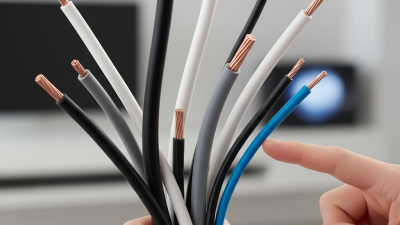
Bundle cable is not simply several wires tied together. It is a designed assembly of insulated conductors, fillers, binders, shielding layers, and an outer jacket. Each conductor carries power or signals, while the jacket controls abrasion, moisture, heat, and bending. Some constructions also include drain wires, separators, or molded connectors. The structure depends on voltage, current, temperature, and installation movement.
The International Energy Agency reported that global electric vehicle sales exceeded 14 million in 2023. This growth increases demand for compact, high-reliability cable assemblies in vehicles and charging equipment. The Global Wiring Harness Market report by MarketsandMarkets projects continued expansion through the decade, driven by electrification and industrial automation. Yet market growth does not remove design risks. A tighter bundle may save space, but it can increase heat buildup and bending stress. The drawing is rarely perfect.
Tips: Confirm conductor size, insulation material, bend radius, shielding, and temperature rating before requesting quotations. Ask suppliers for cross-section drawings, test records, and sample measurements. IEC 60228 can help verify conductor classes, but it does not replace application testing. A practical sourcing review should examine terminal retention, jacket thickness, labeling, and packing protection. Small omissions become expensive during cross-border production.

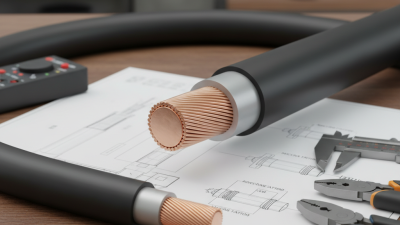
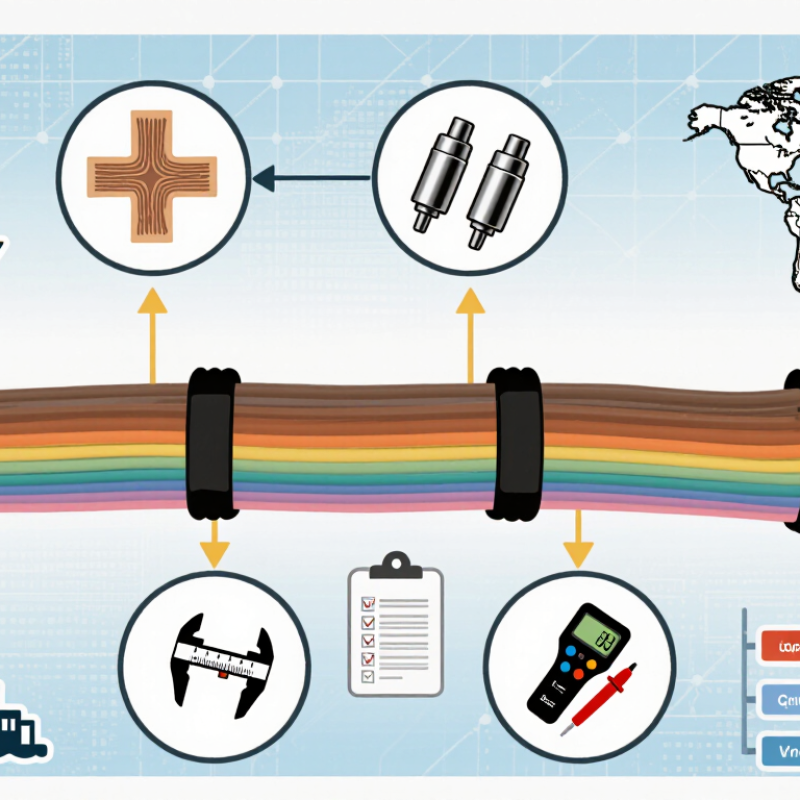
A bundle cable combines multiple insulated conductors inside one organized cable assembly. This typical 12-core example contains 12 conductors and 12 insulation layers, supported by one filler system, one optional shielding layer, and one protective outer jacket. The integrated structure can simplify installation, improve routing consistency, and make global sourcing specifications easier to standardize. Actual construction varies according to voltage, current, shielding, flexibility, environmental, and safety requirements.
Bundle cable serves industries that need several conductors organized inside one protective structure. Automotive manufacturers use it around dashboards, doors, battery systems, and engine compartments. Its grouped design reduces loose wiring and simplifies installation in narrow spaces.
Industrial machinery uses bundle cable for sensors, motors, control panels, and robotic arms. Factory equipment often faces vibration, oil mist, heat, and repeated movement. A properly selected jacket can improve protection and maintenance access. Space matters. Technicians can trace one organized assembly faster than many separate wires.
Renewable energy projects use bundle cable inside solar tracking systems, battery storage units, and wind equipment. Telecommunications facilities apply it in data cabinets, network rooms, and power distribution areas. Medical equipment and laboratory instruments may also use compact cable bundles where cleanliness and stable signal transmission are important. Construction systems use them for building controls, security devices, and lighting networks. The application decides the cable structure, conductor size, shielding, and flexibility.
During sourcing, engineers should review temperature ratings, bending cycles, flame performance, connector compatibility, and testing records. Visual neatness is not enough. A bundle can look strong but fail after repeated flexing. In production audits, unclear labeling has caused avoidable installation errors. That risk deserves attention. Some projects also over-specify materials, increasing cost without improving performance. Comparing real operating conditions with verified test data supports a more reliable decision.
| Industry | Typical Applications | Common Bundle Cable Configuration | Key Performance Requirements | Global Sourcing Considerations | Relevant Standards and Tests |
|---|---|---|---|---|---|
| Automotive and Commercial Vehicles | Engine compartments, body electronics, lighting, doors, seats, dashboards, battery systems and vehicle communication networks. | Multi-core power and signal harnesses; shielded twisted pairs; high-temperature cables; sealed connector assemblies. | Vibration resistance, abrasion resistance, temperature stability, compact routing, low smoke and resistance to automotive fluids. | Confirm conductor size, insulation material, bend radius, connector sealing level, terminal retention and traceability requirements. | ISO 6722, ISO 19642, LV 112 or equivalent customer specifications; continuity, insulation resistance, voltage withstand and environmental tests. |
| Industrial Automation | PLC cabinets, sensors, actuators, machine tools, conveyor systems, control panels and factory communication networks. | Control cable bundles, power-and-signal combinations, screened data cables and pre-assembled cabinet wiring harnesses. | Flexibility, resistance to electrical interference, oil resistance, clear identification, reliable termination and easy installation. | Standardize wire colors, labels, pinouts and testing procedures to simplify multi-country production and replacement sourcing. | IEC 60227, IEC 60228, IEC 60332, IEC 61034 and applicable machine-wiring or control-panel requirements. |
| Robotics and Motion Systems | Robotic arms, linear axes, automated assembly equipment, welding systems and cable carriers. | Continuous-flex cable bundles, drag-chain assemblies, hybrid power/data bundles and robot dress packs. | High flex-life, torsion resistance, low friction, small bending radius, shielding effectiveness and resistance to welding sparks where required. | Specify travel distance, cycle frequency, torsion angle, acceleration, carrier type and minimum dynamic bend radius before quotation. | IEC 60228, IEC 60332 and manufacturer-validated flexing, torsion, drag-chain and electrical performance tests. |
| Renewable Energy | Solar photovoltaic arrays, battery energy storage, wind-turbine controls, inverters and monitoring equipment. | UV-resistant DC cable bundles, inverter harnesses, battery interconnects, control/data bundles and weather-resistant assemblies. | UV and ozone resistance, outdoor durability, moisture resistance, temperature cycling, flame performance and secure connector mating. | Verify conductor material, voltage rating, outdoor service life, connector compatibility, polarity identification and packaging for long-distance shipping. | IEC 62930, EN 50618, IEC 62852, IEC 60502-1 and applicable battery-system safety requirements. |
| Telecommunications and Data Infrastructure | Base-station equipment, network cabinets, fiber distribution, power systems and equipment interconnections. | Fiber-optic bundles, copper data bundles, DC power harnesses, hybrid fiber-power assemblies and rack wiring kits. | Controlled impedance, low insertion loss, bend protection, electromagnetic compatibility, low smoke and organized high-density routing. | Define fiber count, connector polish, cable category, shielding, rack length, labeling format and test-report requirements. | IEC 60793, IEC 60794, ANSI/TIA-568.2-D, ISO/IEC 11801 and applicable fire-performance classifications. |
| Medical and Laboratory Equipment | Diagnostic instruments, patient-monitoring equipment, imaging systems, laboratory analyzers and mobile medical devices. | Low-noise signal bundles, power harnesses, sensor cables, shielded assemblies and sterilization-compatible cable sets where required. | Low electrical noise, biocompatibility where applicable, cleanability, flex life, dimensional consistency and reliable insulation. | Use controlled specifications for materials, cleanliness, labeling, change management and lot-level documentation. | IEC 60601-1 for medical electrical equipment safety, IEC 62353 where applicable, and material or biocompatibility requirements based on use. |
| Rail Transportation | Traction systems, passenger information systems, doors, lighting, signaling, braking controls and onboard electronics. | Fire-resistant control bundles, shielded communication assemblies, flexible inter-car connections and equipment wiring harnesses. | Fire and smoke performance, vibration resistance, mechanical durability, temperature range and electromagnetic compatibility. | Confirm vehicle-zone classification, installation location, fire rating, vibration profile, cable routing and documentation requirements. | EN 45545-2, IEC 61373, IEC 60332 and applicable rolling-stock cable specifications. |
| Marine and Offshore Systems | Navigation equipment, engine controls, deck machinery, communication systems, monitoring equipment and offshore platforms. | Flame-retardant marine cable bundles, shielded instrumentation bundles, watertight harnesses and flexible equipment connections. | Salt-mist resistance, moisture protection, flame performance, oil resistance, vibration durability and corrosion-resistant terminations. | Select jacket materials and connectors according to exposure, installation area, classification rules and inspection requirements. | IEC 60092 series, IEC 60332, IEC 60754, IEC 61034 and applicable marine classification requirements. |
| Building Systems and Security | Access control, fire alarm systems, CCTV, building automation, elevators and emergency communication equipment. | Low-voltage control bundles, alarm cable assemblies, Ethernet bundles, power-and-signal harnesses and elevator traveling cables. | Low smoke and flame performance, signal integrity, installation flexibility, clear identification and dependable termination. | Check local building codes, fire classification, cable segregation rules, conductor size, jacket marking and installation environment. | IEC 60332, IEC 60754, IEC 61034, ISO/IEC 11801 and applicable national fire and building codes. |
| Industrial Equipment and Heavy Machinery | Construction equipment, agricultural machinery, packaging lines, compressors, pumps and material-handling systems. | Rugged multi-core harnesses, control-and-power bundles, abrasion-resistant assemblies and sealed outdoor cable sets. | Mechanical strength, impact resistance, oil and chemical resistance, temperature endurance and protection against dust and water. | Provide complete operating conditions, routing drawings, connector part specifications, length tolerances and replacement requirements. | IEC 60228, IEC 60332, IP testing under IEC 60529 and application-specific mechanical and environmental tests. |
Bundle cable can reduce installation time, simplify routing and improve wiring consistency. For international sourcing, buyers should define electrical ratings, environmental conditions, assembly drawings, labeling, inspection criteria and required compliance documents before production.
Global sourcing depends on predictable assembly, not only low unit price. Bundle cable supports this by combining conductors, connectors, and protective sleeves into one prepared assembly. In a factory audit, a labeled bundle can be checked faster than separate loose wires. It also reduces picking errors during installation. Small details matter. Clear part numbers, cut lengths, and pin maps prevent confusion across time zones.
For international buyers, supplier capability must be visible. Request drawings, material specifications, sample approval records, and inspection criteria before mass production. A reliable supplier should trace copper, insulation, terminals, and batch records to defined purchase orders. Dimensional checks, continuity tests, pull tests, and visual inspections provide practical evidence. Packaging matters too. Each bundle should be protected from bending, moisture, and connector damage during long transport. Regional labeling and consistent documents can help customs and receiving teams work efficiently. Local regulations still require careful review.
Bundle cable can also improve planning when designs change. Modular lengths and standardized connectors may simplify replacement and reduce inventory variety. However, “standard” is not universal. A connector may fit mechanically but fail electrically or environmentally. Field experience shows that some sourcing plans overlook bend radius until installation begins. That mistake is avoidable, but only when samples face realistic testing. Leave room for engineering review, tolerance checks, and a small pilot order before scaling across markets.
Why Choose Bundle Cable for Global Sourcing?
Buyers should evaluate bundle cable beyond its quoted price. The International Energy Agency reported 473 GW of renewable capacity additions in 2023. This growth increases demand for reliable, project-ready cable assemblies. However, product suitability still depends on voltage, conductor size, insulation, temperature range, bending radius, and installation environment. Check whether the supplier follows relevant IEC standards and provides traceable test records. A certificate alone is not enough. Ask for sample reports, batch identification, and evidence of routine inspection.
Tips: Compare total landed cost, not unit price. Include tooling, packaging, freight, duties, testing, and replacement risk. Confirm minimum order quantities and realistic lead times. The World Bank’s 2023 Logistics Performance Index shows that customs efficiency and shipment reliability vary widely between sourcing markets. Build buffer time into project planning. A low quote can still become expensive after delays or rejected goods.
Factory capability also deserves close review. Buyers should examine copper consistency, crimp quality, protective sleeving, and automated inspection controls. Request a pre-production sample that matches the final drawing. Review change-control procedures, because a substituted material may look identical but perform differently. I would also question unusually perfect claims. In practice, specifications can be incomplete, and suppliers may interpret them differently. Clear drawings, acceptance limits, and independent verification reduce that uncertainty. Track defect rates and on-time delivery over several orders, rather than trusting one successful shipment.
Why Choose Bundle Cable for Global Sourcing?
Global sourcing can lower costs, but cable quality and delivery risks need active control. The World Bank’s 2023 Logistics Performance Index compares logistics performance across 139 economies. Its findings show that border delays and unreliable transport still affect supply planning. Bundle cable sourcing adds another challenge: one failed component can stop an entire installation.
Use a qualified supplier with documented process controls. Request conductor-resistance results, continuity tests, insulation checks, bend-radius data, and flame-performance reports. Confirm each cable matches approved drawings and applicable IEC requirements. Check destination-market restrictions before production. Traceability should reach the batch, operator, and test record. It sounds demanding. It is cheaper than replacing thousands of meters onsite. McKinsey reported that 93% of supply-chain leaders planned resilience actions after recent disruptions, including dual sourcing and better inventory visibility.
Tips: Approve a sealed reference sample. Compare every production batch against it. Use independent testing for high-risk orders. Keep a small safety stock near the installation site, especially when ocean freight is involved. UNCTAD reports that over 80% of global trade by volume moves by sea, so shipping delays can quickly become project delays. Do not rely only on certificates; records can be incomplete, outdated, or misunderstood. A practical audit, with photos and random samples, often reveals more. No checklist is perfect. Review it after every shipment.